

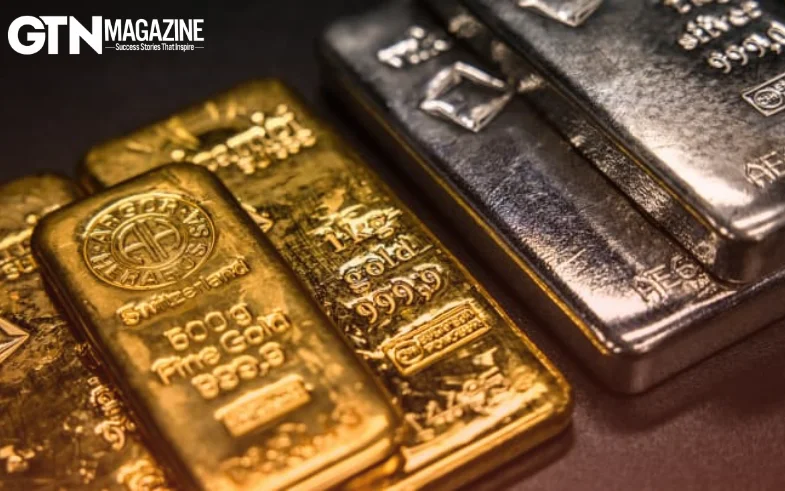
Gold and silver prices rebounded on Tuesday after suffering one of their sharpest sell-offs in decades, as analysts said the recent plunge was driven more by positioning and short-term catalysts than a fundamental shift in investor sentiment.
The recovery followed heavy losses late last week, when gold plunged nearly 10% in a single session and silver collapsed by around 30%, marking its worst one-day fall since 1980.
Spot gold rose as much as 4% during Tuesday’s session and was last trading more than 2% higher at around $4,770 an ounce. Gold futures in New York were also up about 3%.
Silver posted a stronger bounce, with spot prices jumping nearly 8% at their peak before paring gains to trade about 2.5% higher near $81 an ounce. US silver futures climbed roughly 7%.
Sell-off seen as positioning reset
The rebound comes as investors reassess whether last week’s rout marked a lasting turning point or an exaggerated reaction to near-term developments.
Strategists at Deutsche Bank said historical patterns suggest the move was driven by short-term catalysts, despite the unusually large scale of the decline.
They noted that speculative activity in precious metals had been elevated for months, but that positioning alone did not fully explain the speed and magnitude of the sell-off.
The bank said investor intentions across official, institutional and retail holders of precious metals have likely not deteriorated.
Dollar strength and Fed uncertainty
Analysts pointed to a rebound in the US dollar, position trimming ahead of the weekend, and uncertainty over the future direction of US monetary policy as key triggers for the sell-off.
Markets were also reacting to President Donald Trump’s nomination of Kevin Warsh as the next chair of the Federal Reserve, which led investors to reassess interest-rate expectations.
Higher rates and a stronger dollar tend to pressure non-yielding assets such as gold and silver.
Long-term case for gold remains intact
Despite the volatility, analysts said the broader investment rationale for gold remains unchanged.
Deutsche Bank said gold’s key thematic drivers, including geopolitical risk, reserve diversification and policy uncertainty, continue to support demand, and that conditions do not currently point to a sustained reversal in prices.
Barclays echoed a similar view, acknowledging that positioning had become stretched but arguing that gold could remain supported by ongoing global uncertainty and central bank demand.
Silver volatility reflects its structure
Silver’s price swings have been more extreme, reflecting its smaller market size, higher volatility and greater participation from retail investors.
Analysts say speculative positioning has played a role in silver’s sharp moves, making it more sensitive to rapid changes in sentiment.
However, longer-term fundamentals for silver remain supportive due to its industrial uses, particularly in data centres, artificial intelligence infrastructure and renewable energy.
Industrial demand underpins outlook
Studies project that global silver demand could rise sharply this decade, driven largely by solar power installations and more silver-intensive technologies.
Forecasts suggest annual demand could reach up to 54,000 tonnes by 2030, while supply growth may lag significantly, potentially meeting only around two-thirds of total demand.
Analysts said that demand outlook has not changed, and that silver’s recent drop reflects a market that ran ahead of fundamentals before correcting.
For now, precious metals markets remain volatile, but analysts say the rebound suggests confidence in gold and silver’s longer-term role as both financial and industrial assets remains largely intact.