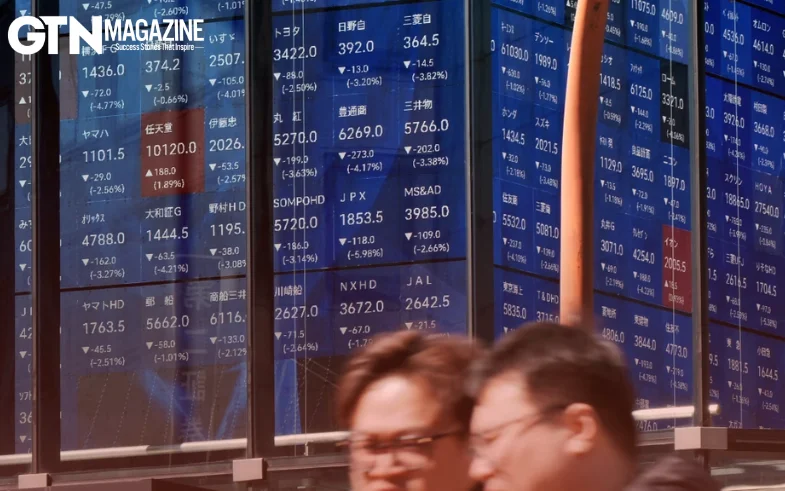
Stock market volatility has become one of the defining features of the global financial landscape. Sharp swings in equity prices, sudden sector rotations, and unpredictable investor sentiment are no longer occasional events, they are a recurring reality. For businesses and investors alike, volatility has shifted from being a short-term disruption to a long-term condition that demands strategic adaptation.
While volatility often attracts attention for its risks, it also reflects deeper structural changes in the global economy. Interest rate shifts, geopolitical tensions, policy uncertainty, and changing growth expectations all contribute to market instability. How companies and investors respond to these conditions can determine whether volatility becomes a threat or an opportunity.
This article explores what is driving stock market volatility today and how businesses and investors are adjusting their strategies in response.
Understanding Stock Market Volatility in Today’s Economy
Stock market volatility refers to the speed and magnitude of price movements in financial markets. When volatility is high, prices move sharply over short periods, often in response to news, data releases, or changes in expectations. While volatility is a normal part of market behaviour, its intensity and persistence in recent years have been unusually pronounced.
Several factors have contributed to this environment. Central banks have shifted between tightening and easing monetary policy, creating uncertainty around interest rates and liquidity. At the same time, geopolitical events and trade disruptions have increased risk premiums across markets. Rapid technological change and evolving business models have also reshaped investor perceptions of long-term value.
For businesses, volatility complicates planning and forecasting. For investors, it challenges traditional assumptions about risk, diversification, and return expectations.
How Businesses Are Responding to Market Volatility
Businesses are increasingly treating volatility as a strategic variable rather than an external shock. Instead of reacting only when markets fall, many companies are building resilience into their financial and operational structures.
One of the most visible responses has been a renewed focus on balance sheet strength. Companies are prioritising liquidity, reducing excessive leverage, and reassessing capital allocation decisions. Maintaining financial flexibility allows firms to withstand market downturns without sacrificing long-term objectives.
Corporate investment strategies have also evolved. Rather than committing to large, irreversible projects, many companies are adopting phased investment approaches. This allows management to adjust spending as market conditions change, reducing downside risk while preserving growth options.
Volatility has also influenced merger and acquisition activity. While uncertainty can delay deals, it can also create valuation gaps that favour well-capitalised buyers. Some companies are using market weakness to acquire assets or competitors at more attractive prices, strengthening their long-term competitive position.
Operational resilience has become another priority. Businesses are diversifying supply chains, renegotiating contracts, and improving cost structures to remain agile during periods of financial stress. These adjustments help firms manage both market-driven shocks and broader economic disruptions.
Common Business Responses to Market Volatility
-
Strengthening balance sheets and liquidity positions
-
Reducing reliance on short-term or high-cost debt
-
Adopting phased or flexible investment strategies
-
Reassessing mergers, acquisitions, and divestments
-
Improving operational efficiency and cost control
How Investors Are Adjusting Their Strategies
Investors are also reshaping their approach in response to persistent volatility. Traditional buy-and-hold strategies are being supplemented with more dynamic portfolio management techniques.
Diversification has taken on renewed importance. Investors are spreading exposure across asset classes, regions, and sectors to reduce dependence on any single source of return. Defensive assets, such as cash equivalents and lower-risk securities, are being used more actively as buffers during turbulent periods.
Risk management has become more sophisticated. Many investors are paying closer attention to downside protection, using hedging strategies or adjusting position sizes to manage exposure. Volatility itself has also become an investment theme, with some investors using options or volatility-linked instruments to benefit from market swings.
Long-term investors are increasingly distinguishing between short-term noise and structural trends. Rather than reacting to daily price movements, they are focusing on fundamentals such as earnings quality, balance sheet strength, and competitive advantage. This approach helps avoid emotional decision-making during market stress.
At the same time, short-term traders are finding opportunities in volatility, using rapid price movements to generate returns. This has increased market activity but has also contributed to sharper intraday fluctuations.
How Investors Are Responding
-
Increasing portfolio diversification across assets and regions
-
Prioritising risk management and downside protection
-
Focusing on company fundamentals over short-term price moves
-
Using volatility-based strategies selectively
-
Maintaining higher levels of cash or defensive exposure
Sectoral Differences in Volatility Response
Not all sectors experience or respond to volatility in the same way. Defensive industries such as healthcare, utilities, and consumer staples often attract investor interest during uncertain periods due to their relatively stable demand.
In contrast, cyclical sectors like technology, industrials, and consumer discretionary tend to experience larger price swings. These sectors are more sensitive to economic expectations, interest rates, and changes in consumer confidence.
Businesses operating in highly volatile sectors are placing greater emphasis on clear communication with investors. Transparent guidance, realistic forecasts, and disciplined capital management help maintain credibility when markets are unstable.
The Role of Communication and Transparency
During periods of volatility, communication becomes a strategic asset. Companies that provide clear, consistent updates on performance, risks, and strategy are better positioned to retain investor confidence.
Uncertainty is often amplified when information is limited or inconsistent. By addressing risks openly and outlining contingency plans, businesses can reduce speculation and support more stable valuations.
Investors, in turn, are rewarding companies that demonstrate discipline, realism, and long-term focus, even when near-term performance is under pressure.
Looking Ahead: Volatility as a Long-Term Reality
Market volatility is unlikely to disappear in the near future. Structural shifts in the global economy, evolving monetary policy frameworks, and geopolitical complexity suggest that periods of instability will remain a feature of financial markets.
Rather than attempting to predict short-term market movements, businesses and investors are increasingly focused on adaptability. Resilience, flexibility, and disciplined decision-making are becoming more valuable than precise forecasting.
Key Takeaways for the Future
-
Volatility should be planned for, not avoided
-
Financial flexibility is a competitive advantage
-
Long-term fundamentals matter more than short-term market noise
-
Clear communication reduces uncertainty
-
Adaptability is critical in unstable markets
Conclusion
Stock market volatility has reshaped how businesses and investors operate. For companies, it has reinforced the importance of strong balance sheets, flexible investment strategies, and operational resilience. For investors, it has driven a renewed focus on risk management, diversification, and long-term fundamentals.
While volatility introduces uncertainty, it also creates opportunities for those prepared to respond strategically. In an environment where market stability can no longer be assumed, success depends less on predicting the next move and more on building the capacity to adapt when it happens.
You may also like:-