

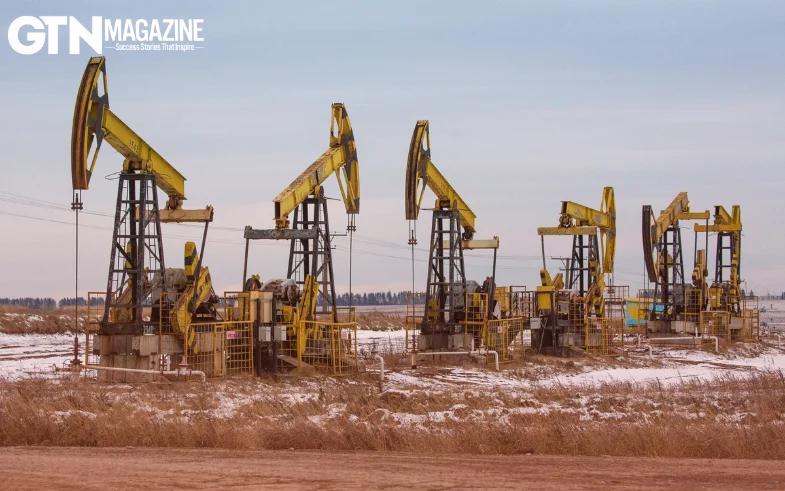
Revenue from Venezuela’s oil exports has exceeded $1 billion under U.S. oversight, with proceeds no longer routed through a Qatar-based account, according to U.S. Energy Secretary Chris Wright.
In an interview with NBC News, Wright confirmed that funds from Venezuelan crude sales will now be deposited directly into a U.S. Treasury Department account, replacing a previously established account in Qatar that had been controlled by the U.S. government.
“An account was set up in Qatar, controlled by the U.S. government the whole time, to land that money in and then send the money from there down to Venezuela,” Wright said. “Now we have an account at the U.S. Treasury. The money won’t go to Qatar anymore.”
Revenue Tops $1 Billion
The Trump administration assumed control over Venezuela’s oil sales after former President Nicolás Maduro was captured in a military operation last month. Wright traveled to Caracas this week and met interim President Delcy Rodríguez, marking the highest-level U.S. visit to the OPEC member nation in nearly three decades.
According to Wright, revenue generated from Venezuelan oil sales has now surpassed $1 billion. The U.S. has also secured short-term agreements to sell an additional $5 billion worth of crude in the coming months. So far, shipments have been directed to U.S. refineries and European buyers.
The initial $500 million in oil revenue was deposited in the Qatar-based account before being transferred to Venezuela, Wright said.
Congressional Scrutiny Grows
The arrangement has drawn criticism from some Democratic lawmakers, who have questioned both the transparency and legal framework surrounding the fund’s management.
Senate Minority Leader Chuck Schumer and Senator Adam Schiff introduced legislation directing the Government Accountability Office to conduct an independent audit of the Qatar account. Lawmakers have raised concerns about oversight mechanisms and the handling of proceeds from a country facing significant sovereign debt obligations.
Venezuela owes tens of billions of dollars to creditors after defaulting on sovereign debt and nationalizing assets of major energy companies including Exxon Mobil and ConocoPhillips.
Wright explained that the decision to initially route funds through Qatar was designed to reduce the risk of creditors freezing the money.
“Since Venezuela has so many creditors and they owe a lot of money, we had some risk if we put it into a U.S. bank account set up quickly that creditors could freeze that money,” he said. “We want those creditors ultimately to get their money back, but that money urgently needs to get to Venezuela.”
Legal and Diplomatic Complications
The shift of funds to a U.S. Treasury account introduces additional legal complexities. Washington does not formally recognize the current government led by Rodríguez. During his first term in 2019, President Donald Trump recognized Venezuela’s opposition-led 2015 National Assembly as the legitimate governing body.
Secretary of State Marco Rubio told the Senate Foreign Relations Committee in January that the U.S. must resolve the issue of government recognition before fully formalizing fund transfers under American jurisdiction.
“You have to recognize a government, but we don’t recognize this government,” Rubio said. “We recognize the 2015 National Assembly, so we have to find some creative way legally to meet that standard.”
Legal experts note that if oil revenues are deposited in the United States, control could theoretically fall under the authority of the opposition-recognized National Assembly, raising further questions about governance and political transition.
Wright indicated that elections and a potential transition of power could occur in Venezuela during President Trump’s current term, after which U.S. oversight would conclude.
“It is a question of a process to get there,” Wright said. “Ultimately, what the long-term political leadership in Venezuela is going to be, it’s going to be up to Venezuela.”
The evolving arrangement places Venezuela’s oil sector at the center of geopolitical, legal and economic negotiations, with billions in revenue and creditor claims hanging in the balance.