


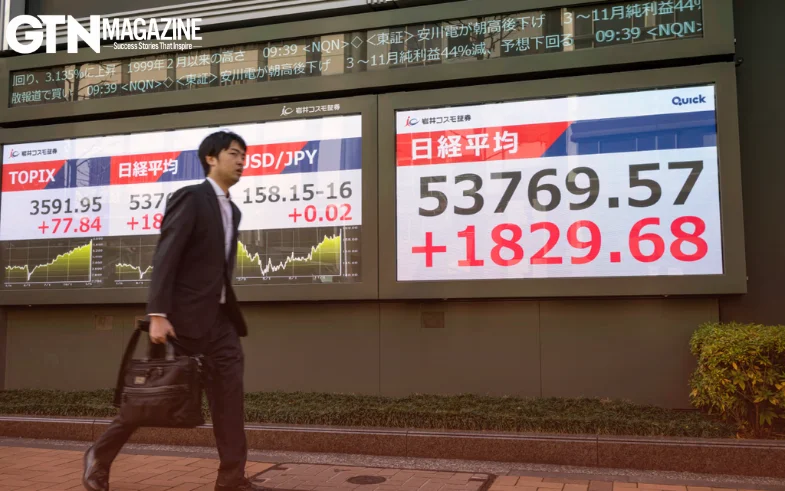
Japanese equities extended their rally on Wednesday, pushing key indexes to new record highs as investor optimism grew over expectations that Prime Minister Sanae Takaichi may call a snap general election as early as February.
Markets have continued to price in what traders describe as the “Takaichi trade,” driven by expectations of looser monetary policy, large-scale fiscal stimulus, and a pro-growth agenda under Japan’s new leadership. If an election is called, it would mark Takaichi’s first test at the ballot box since assuming office.
The Nikkei 225 surged 1.6%, crossing the 54,000 level for the first time on record, following gains of more than 3% in the previous session. The broader Topix also advanced, rising 0.9% to fresh highs.
Currency markets reflected similar dynamics, with the Japanese yen weakening past the 159 mark against the U.S. dollar. The move pushed the currency to its lowest level since July 2024, when authorities last intervened to stem excessive depreciation.
Across the rest of Asia, markets were mixed. South Korea’s Kospi edged slightly higher, while the tech-heavy Kosdaq slipped. Hong Kong’s Hang Seng Index gained close to 1%, supported by strength in consumer non-cyclical and basic materials stocks. Mainland China’s CSI 300 also posted solid gains, rising over 1%.
Australia’s S&P/ASX 200 was largely unchanged.
In commodities markets, spot silver surged above the $90-per-ounce level for the first time, climbing nearly 4%. The metal has emerged as one of the strongest performers over the past year amid heightened investor interest in precious metals.
Overnight in the United States, equities closed lower as markets reacted to renewed political uncertainty. All three major U.S. indexes fell following a wave of policy proposals from President Donald Trump, which added to market volatility. The S&P 500 and Nasdaq posted modest declines, while the Dow Jones Industrial Average recorded sharper losses.
Analysts say Japanese markets remain supported by expectations of continued policy accommodation and fiscal expansion, though currency weakness and global volatility could shape near-term trading sentiment.