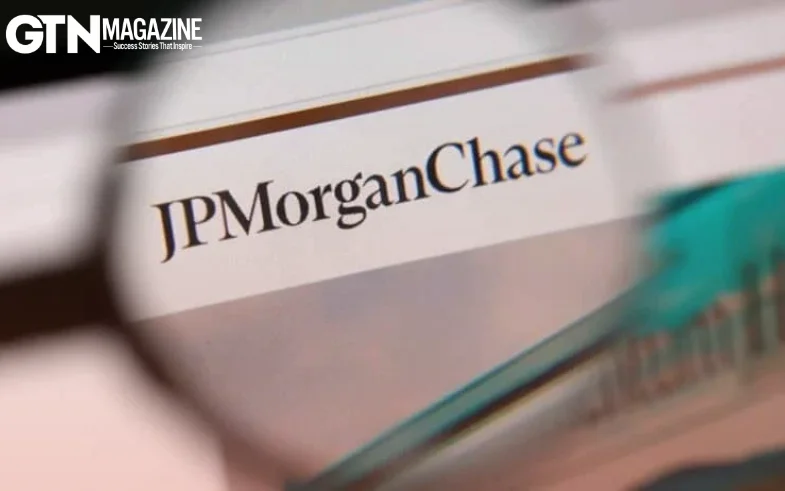
JPMorgan Chase has signaled that U.S. banks may be prepared to legally challenge President Donald Trump’s proposal to impose temporary price controls on credit card interest rates, warning that such a move could sharply restrict access to consumer credit.
Speaking to reporters after the bank released its fourth-quarter earnings, JPMorgan Chief Financial Officer Jeremy Barnum said the industry would consider all options if regulators attempted to enforce what he described as unjustified changes to the business model.
“If you wind up with weakly supported directives to radically change our business that aren’t justified, you have to assume that everything’s on the table,” Barnum said, adding that the bank has a duty to protect shareholder interests.
Barnum was responding to questions about whether banks would pursue litigation to block Trump’s call for credit card issuers to cap interest rates at 10% for one year, a demand the president floated late last week. The industry has previously pushed back successfully against regulatory attempts to limit fees, including efforts by the Consumer Financial Protection Bureau to cap late charges.
Bank executives and industry analysts warn that an interest-rate ceiling could lead lenders to scale back or close credit card accounts, particularly for higher-risk borrowers, reducing overall consumer spending and tightening credit conditions across the U.S. economy.
According to data from Bankrate.com, the average U.S. credit card interest rate currently stands at 19.7%, with rates for subprime borrowers and store-branded cards typically significantly higher.
“Our belief is that actions like this will have the exact opposite consequence to what the administration wants for consumers,” Barnum said. “Instead of lowering the price of credit, we’ll simply reduce the supply of credit, and that will be bad for everyone.”
Barnum declined to say whether JPMorgan would comply with the proposed cap, which Trump has suggested could take effect as early as January 20. The president said over the weekend that banks failing to follow the directive would be “in violation of the law,” though legal experts note that the United States currently has no federal statute setting a cap on credit card interest rates.
A bill introduced last year by Senators Josh Hawley and Bernie Sanders proposing a five-year, 10% cap on credit card annual percentage rates remains stalled in Congress.
Concerns about the broader economic impact have extended beyond the banking sector. Companies in retail and travel industries, which rely heavily on credit card partnerships, have warned that revenue streams could be disrupted.
Delta Air Lines said its co-branded card partnership with American Express generated $8.2 billion in revenue last year. Delta Chief Executive Ed Bastian said a rate cap would “upend the whole credit card industry” and questioned how such a policy could be implemented.
Political leaders have also urged caution. House Speaker Mike Johnson warned that efforts to reduce borrowing costs could produce unintended consequences if not carefully designed.
“You’ve got to be very careful,” Johnson said at a news conference. “In trying to bring down costs, you don’t want to create negative secondary effects.”
As debate intensifies, analysts say the proposal is likely to face significant resistance from financial institutions and could trigger legal challenges if enforcement mechanisms are pursued.