Global oil markets experienced a historic surge this week, with U.S. crude posting the largest weekly gain in futures trading history as escalating tensions in the Middle East triggered concerns over major disruptions to global energy supplies.
West Texas Intermediate (WTI) crude oil rose sharply on Friday, climbing 12.21% or $9.89 to close at $90.90 per barrel. Meanwhile, global benchmark Brent crude advanced 8.52%, or $7.28, settling at $92.69 per barrel.
For the week, U.S. crude oil surged 35.63%, marking the biggest weekly increase since the futures contract began trading in 1983. Brent crude prices also recorded a strong rally, gaining around 28%, their largest weekly rise since April 2020.
Middle East Conflict Sparks Supply Concerns
The sharp increase in oil prices follows escalating geopolitical tensions in the Middle East. On Friday, U.S. President Donald Trump called for Iran’s unconditional surrender, intensifying fears that the conflict could expand into a prolonged regional war.
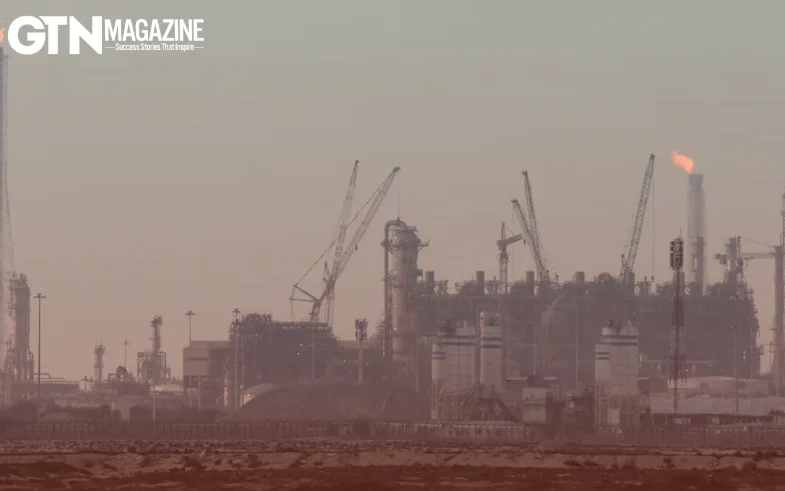
The situation has already significantly affected shipping activity in the Strait of Hormuz, one of the world’s most critical energy transport routes. The waterway is responsible for moving a substantial portion of global oil shipments, and traffic in the strait has reportedly slowed to near standstill amid security concerns.
Energy analysts warn that prolonged disruption in this strategic corridor could trigger major shortages in global fuel supplies.
Oil Could Reach $150 per Barrel
Qatar’s Energy Minister Saad al-Kaabi told the Financial Times that oil prices could climb as high as $150 per barrel in the coming weeks if oil tankers are unable to pass through the Strait of Hormuz.
According to al-Kaabi, such a scenario could have severe consequences for global markets and economic stability.
“If shipping through the Strait is blocked, exporters across the Gulf may have to declare force majeure,” he said, warning that companies could face legal liabilities if supply obligations cannot be fulfilled.
Production Cuts Add to Market Pressure
Production disruptions are already beginning to appear across parts of the region. Iraqi officials told Reuters that Iraq has shut down around 1.5 million barrels per day of oil production.
Meanwhile, Kuwait has reportedly begun reducing production after storage facilities reached capacity, according to sources cited by The Wall Street Journal.
Analysts at JPMorgan warned that the oil market is shifting from pricing geopolitical risk to confronting actual supply disruptions.
“The market is shifting from pricing pure geopolitical risk to grappling with tangible operational disruption,” said Natasha Kaneva, head of global commodities research at JPMorgan.
Kaneva noted that production cuts could reach six million barrels per day by next week if shipping through the Strait of Hormuz remains restricted. The bank also expects the United Arab Emirates to face supply constraints in the coming days.
Impact on Global Energy Costs
The surge in oil prices is already affecting consumer fuel costs. According to data from AAA, the average price for a gallon of regular gasoline in the United States rose nearly 27 cents over the past week, reaching $3.25 per gallon.
The ongoing conflict between the United States and Iran entered its seventh day on Friday. Speaking at a press conference on Thursday, U.S. Defense Secretary Pete Hegseth said the military campaign had “only just begun.”
“Iran is hoping that we cannot sustain this, which is a really bad miscalculation,” Hegseth said.
With geopolitical tensions continuing and key supply routes under pressure, energy markets remain on high alert as investors assess the potential impact on global oil supplies and economic stability.