


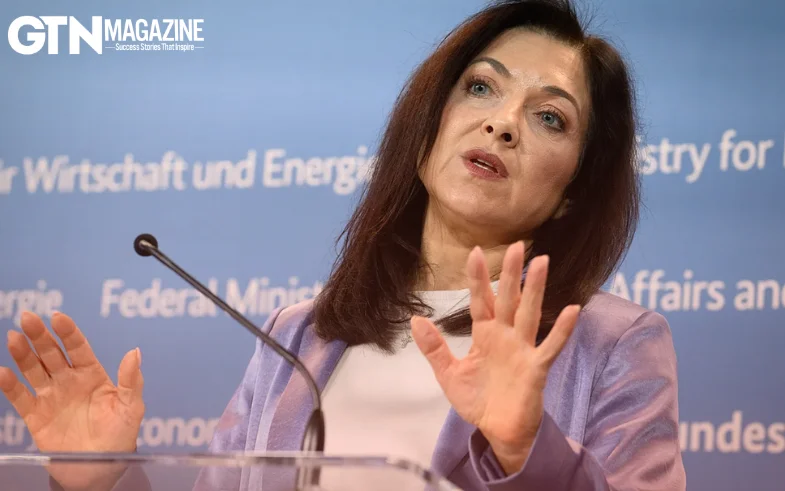
Germany has reduced its economic growth forecast for 2026 to 0.5%, down from 1% projected earlier this year, citing the impact of rising energy costs and supply disruptions linked to the ongoing Iran war. The revision was announced by Economic Affairs and Energy Minister Katherina Reiche, who said the downgrade reflects increasing pressure on Europe’s largest economy amid heightened geopolitical uncertainty.
The updated figures also show a weaker outlook for 2027, with growth now expected at 0.9%, compared with the previous estimate of 1.3%.
Officials said the downgrade was driven primarily by energy shocks following the escalation of conflict involving Iran. Germany’s industrial sector, which relies heavily on stable energy supplies, has been particularly affected by the surge in oil and gas prices.
Government data indicated that higher input costs and disrupted supply chains are reducing the competitiveness of German exports. At the same time, uncertainty surrounding the conflict has slowed private investment, with companies delaying expansion plans amid concerns over further market volatility.
Households are also facing rising energy bills, which are weighing on domestic consumption and adding to broader economic pressure.
Italy has also revised its outlook in response to the same external factors. The government in Rome lowered its 2026 GDP growth forecast to 0.6% from 0.7%, citing continued exposure to energy price volatility.
Italian Economy Minister Giancarlo Giorgetti said the current environment remains highly uncertain, adding that economic projections may require further adjustments in the coming weeks.
Italy’s budget deficit is now expected to reach 2.9% of GDP this year, slightly higher than earlier projections, while its 2025 deficit stood at 3.1%, according to official data.
The parallel revisions in Germany and Italy highlight broader economic pressure across the Eurozone, as energy-intensive industries struggle to absorb higher costs linked to geopolitical developments.
Economists warn that continued disruption in energy markets could further delay recovery across the region, reducing the likelihood of a near-term rebound in growth.
More News:-