

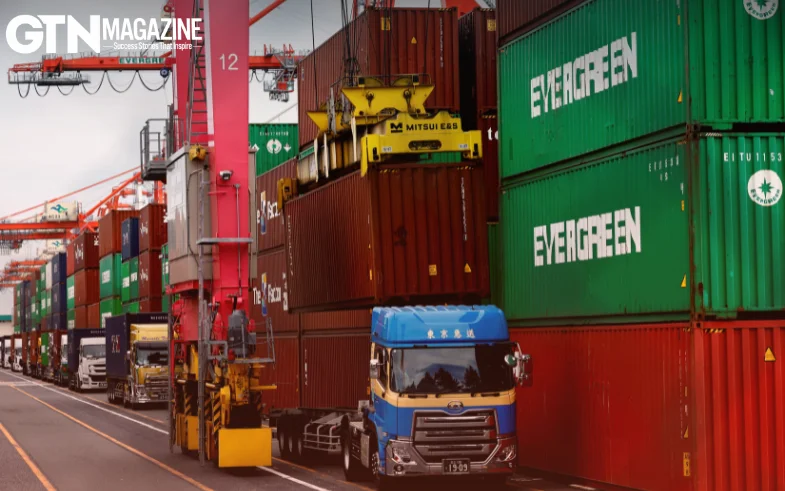
Tokyo: Japan’s exports grew 5.1 per cent in December, falling short of market expectations as shipments to the United States recorded a sharp decline, official trade data showed on Wednesday.
Analysts polled by Reuters had expected exports to rise 6.1 per cent, unchanged from November. The weaker-than-expected performance was largely driven by a renewed drop in exports to the US, Japan’s second-largest trading partner.
Exports to the United States fell 11.1 per cent year on year in December, reversing an 8.8 per cent increase recorded in November. The November rise had marked the first increase in shipments to the US since March.
By contrast, exports to China, Japan’s largest trading partner, increased 5.6 per cent, while shipments to Hong Kong surged 31.1 per cent. Exports to the wider Asia region rose 10.2 per cent.
Imports exceed expectations
Imports grew 5.1 per cent in December, accelerating sharply from a 1.3 per cent rise in November and beating expectations for a 3.6 per cent increase, according to the Reuters survey.
Japanese exports had weakened during the middle of 2025 amid concerns over higher US tariffs, before rebounding later in the year following a trade agreement that reduced duties to 15 per cent. However, December’s figures suggest demand from the US remains fragile.
Full-year performance
For 2025 as a whole, Japan’s exports rose 3.1 per cent, slowing from a 6.2 per cent increase in 2024. Shipments to China and the US declined 0.4 per cent and 4.1 per cent respectively, while exports to Hong Kong and Taiwan climbed 17.8 per cent and 15.1 per cent.
According to Moody’s Analytics, export growth last year was supported by front-loaded shipments ahead of tariff hikes, strong demand linked to artificial intelligence-related products, and a weak yen.
“Although shipments are holding up for now, the outlook is fraught with risks,” said Stefan Angrick, citing higher US import levies, global competition and rising trade tensions in the region.
The data comes as Japan prepares for snap elections next month, with trade and currency policy expected to remain in focus.