

Global oil prices fell sharply after investors reacted to remarks from U.S. President Donald Trump regarding the ongoing conflict with Iran and the future of oil shipments through the strategically important Strait of Hormuz.
Brent crude dropped to around $94 per barrel, while U.S. benchmark West Texas Intermediate (WTI) declined to approximately $91 per barrel in late trading. The decline came after oil prices had earlier surged past $100 per barrel amid fears that the Middle East conflict could disrupt global energy supplies.
The sharp price swings reflect growing uncertainty in global energy markets as investors closely monitor geopolitical developments in the region.
Oil prices initially surged nearly 20 percent earlier in the week, driven by concerns that the conflict involving the United States, Israel, and Iran could interrupt oil flows from major producers in the Middle East.
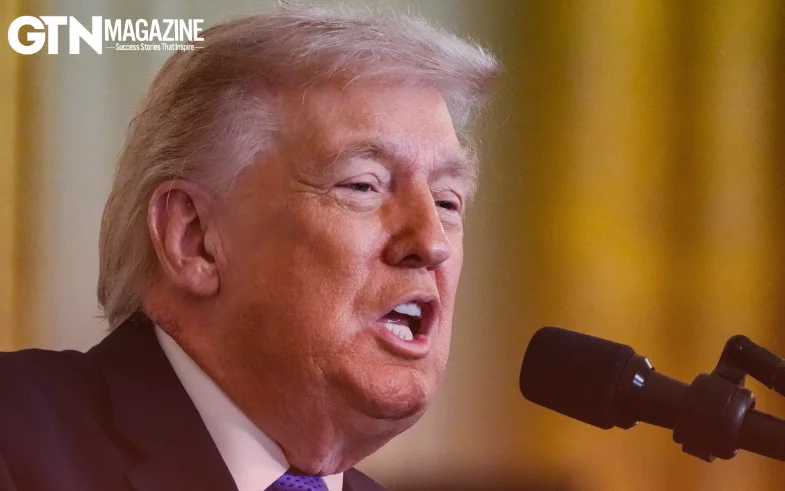
However, markets began to stabilize after President Trump suggested that the conflict with Iran could end “very soon,” easing concerns about prolonged disruptions to energy supply chains.
Later in the day, Trump issued a strong warning to Iran against attempting to block oil shipments through the Strait of Hormuz, one of the world’s most critical energy shipping routes.
In a statement posted on social media, Trump said the United States would respond forcefully if Iran attempted to halt the flow of oil through the waterway.
The Strait of Hormuz, located between Iran and Oman, plays a central role in global energy trade. According to shipping data, roughly 13 million barrels of oil per day passed through the route in 2025, accounting for about 31 percent of global seaborne oil flows.
The strait connects major oil-producing countries such as Saudi Arabia, Iran, Iraq, and the United Arab Emirates to international markets through the Gulf of Oman and the Arabian Sea.
Any disruption to shipping through the narrow passage could significantly affect global energy supplies and push oil prices higher.
Iranian officials have also issued warnings about tanker movements through the area, adding to the uncertainty surrounding oil transport routes in the region.
Despite the tensions, market analysts say traders appear cautiously optimistic that the situation will stabilize and that oil shipments will continue to move through the Strait of Hormuz.
Bob McNally, president of Rapidan Energy Group, said the market reaction shows how quickly oil prices can respond to political signals.
According to McNally, investors often interpret statements from political leaders as indicators of possible future developments in energy supply and geopolitical stability.
However, energy experts caution that the situation remains unpredictable.
Andy Lipow, president of Lipow Oil Associates, said it is still too early to determine how Iran will respond to the latest warnings from Washington or whether energy infrastructure in the region could become a target in the conflict.
In addition to the geopolitical developments, international policymakers are also considering measures to stabilize energy markets.
Energy ministers from the Group of Seven (G7) nations are expected to hold discussions on the possibility of releasing emergency oil reserves to ease potential supply shortages.
Sources familiar with the discussions say the proposed move could involve releasing between 300 million and 400 million barrels of oil from strategic reserves.
Such a coordinated release could help stabilize global markets if disruptions to oil supply routes intensify.
The International Energy Agency (IEA) has confirmed that member countries currently hold more than 1.2 billion barrels of emergency oil reserves, along with additional industry-held reserves maintained under government obligations.
IEA Executive Director Fatih Birol said international energy officials are closely monitoring the situation and exploring all available options to ensure global energy stability.
Birol added that he remains in contact with energy ministers from several major economies, including Saudi Arabia, India, Brazil, Azerbaijan, and Singapore, as governments evaluate potential responses to the crisis.
For now, global oil markets remain highly sensitive to developments in the Middle East, with investors reacting quickly to political signals and supply risks.
Analysts say continued volatility is likely as markets attempt to assess the potential duration and impact of the ongoing conflict on global energy supplies.