
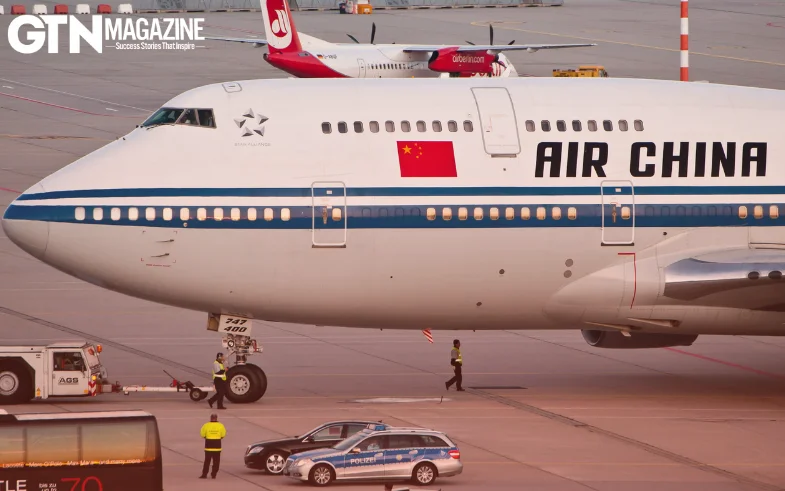
China’s leading airlines are entering one of their most difficult financial periods in recent years as soaring fuel costs, weak passenger pricing power, and expanding high-speed rail competition continue to pressure the aviation sector.
The country’s three largest carriers, Air China, China Eastern Airlines, and China Southern Airlines are expected to collectively lose nearly $3.2 billion in 2026, according to estimates from HSBC analysts.
The financial outlook has deteriorated rapidly following the outbreak of the Iran conflict earlier this year, which triggered a sharp rise in global oil and jet fuel prices. While airlines worldwide have faced similar pressures, Chinese carriers are considered particularly vulnerable due to limited fuel hedging strategies and an increasingly price-sensitive domestic market.
Jet fuel prices surged significantly across Asia after geopolitical tensions escalated in the Middle East. The Singapore jet fuel benchmark climbed from $93 per barrel in February to a record $242 per barrel in March before moderating slightly in recent weeks.
Unlike many international airlines that use fuel hedging to protect against price volatility, China’s major airlines entered the crisis with minimal protection. Analysts noted that only China Eastern had limited hedging exposure during 2025, while Air China and China Southern were largely unprotected against rising oil prices.
The worsening cost environment has already affected operations across China’s aviation sector. Airlines have reportedly reduced or suspended several domestic and international routes as passenger demand weakens and operating expenses climb.
During the week ending May 14, domestic passenger flights in China declined by nearly 13 percent year-on-year, while cancellation rates approached 30 percent, according to Goldman Sachs data.
To offset rising fuel expenses, Chinese airlines introduced multiple rounds of fuel surcharge increases on domestic routes. However, analysts believe these increases will not fully compensate for the dramatic surge in operational costs.
Experts say airlines face major limitations in transferring higher costs to consumers because Chinese travelers remain highly sensitive to ticket prices. Additionally, the country’s rapidly expanding high-speed rail network continues to provide a cheaper and highly efficient alternative for many domestic routes.
China’s railway infrastructure has increasingly challenged airline dominance on short and medium-distance travel corridors. Analysts warn that aggressive airfare increases could further reduce passenger demand as travelers shift toward rail transportation.
While airlines in countries such as Japan and parts of Europe also compete with strong rail networks, stronger consumer spending and different market dynamics allow carriers in those regions to maintain greater pricing flexibility.
Despite the difficult outlook, analysts note that China’s state-backed airlines benefit from strong government support, making them less vulnerable to bankruptcy compared to privately owned global carriers facing similar economic conditions.
Industry experts believe the coming months will remain challenging for Chinese aviation as fuel prices, geopolitical uncertainty, and competitive transport alternatives continue to weigh heavily on profitability and investor confidence.
More News:-