


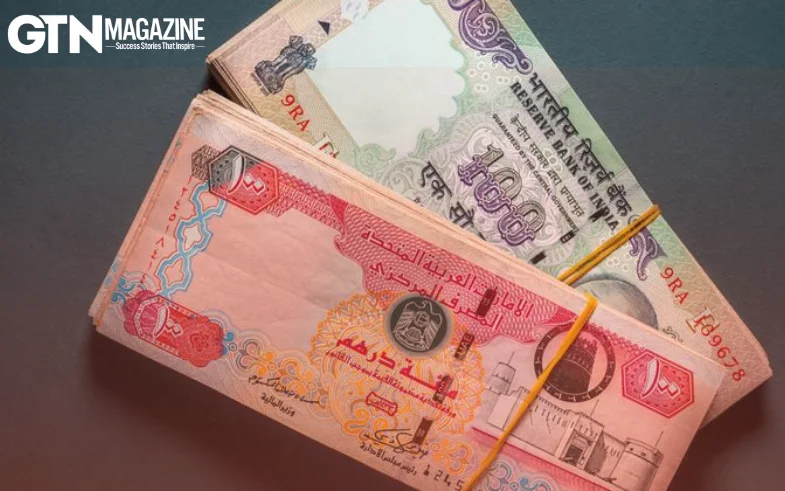
The Indian rupee fell to its weakest level ever against the US dollar on Friday, sending the United Arab Emirates dirham above the INR26 mark for the first time and significantly boosting remittance value for Indian expatriates living in the Gulf region.
During intraday trading, the rupee dropped to a record low of 96.14 against the US dollar after opening at 95.86 in the interbank foreign exchange market. At current exchange levels, one UAE dirham is valued at approximately Rs26.15 due to the dirham’s peg to the US dollar.
The sharp decline follows continued weakness in the Indian currency over recent sessions. A day earlier, the rupee had already touched a then-record low before recovering slightly by market close.
Currency analysts attributed the latest fall to rising global oil prices, a strengthening US dollar, and concerns surrounding foreign capital outflows from India. Increasingly hawkish commentary from US policymakers has also strengthened the dollar globally, placing additional pressure on emerging market currencies.
International benchmark Brent Crude climbed above $109 per barrel during Friday trading, intensifying concerns over India’s import costs. As one of the world’s largest oil importers, India remains highly vulnerable to rising crude prices, which can widen the trade deficit and weaken the domestic currency further.
Forex traders also pointed to slowing foreign direct investment inflows and persistent global uncertainty as factors impacting investor confidence toward Indian markets. Some market observers noted that high domestic market valuations and limited breakthrough technology-driven investment opportunities have also contributed to weaker capital inflows.
The weakening rupee is expected to benefit overseas Indians sending money home, particularly from Gulf countries such as the United Arab Emirates, where remittances to India remain among the highest globally.
However, economists warn that a prolonged depreciation could increase imported inflation pressures within India, especially in fuel, transportation, and essential commodity sectors. Investors and traders are now closely monitoring oil markets, US monetary policy signals, and central bank responses for further direction on the rupee’s trajectory.
More News:-