

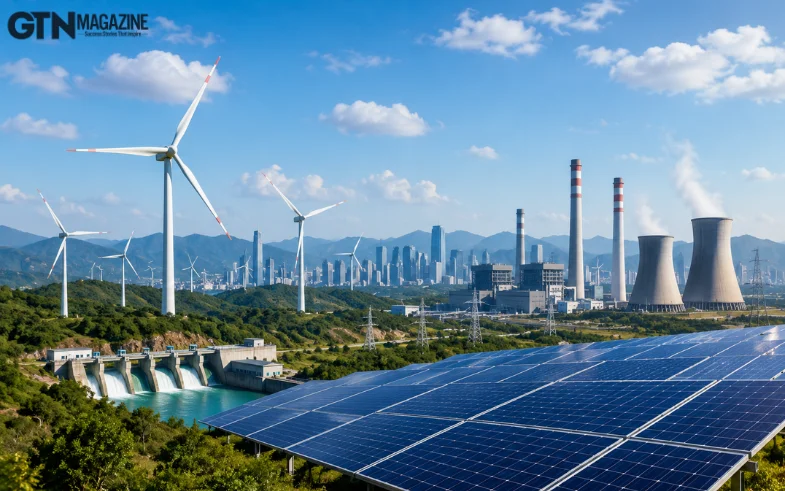
China’s total installed power generation capacity rose to 3.96 billion kilowatts by the end of March 2026, registering a 15.5 percent increase compared to the same period last year, according to official data released by the National Energy Administration. The figures underline the country’s ongoing expansion of its power infrastructure, with renewable energy emerging as the primary driver of growth. Solar power capacity saw the sharpest rise, increasing by 31.3 percent year on year to reach 1.24 billion kilowatts. Wind energy also recorded significant growth, climbing 22.4 percent to 660 million kilowatts.
The data reflects a broader transformation in China’s energy mix, as the country continues to scale up clean energy production while maintaining overall capacity growth. At the same time, the average utilisation hours of power generation equipment stood at 703 hours in the first quarter, a decline of 66 hours from the previous year.
Experts note that the drop in utilisation hours suggests that capacity is being added faster than it is being fully used. This may be due to factors such as grid constraints, seasonal demand variations, or the time required for new facilities to reach optimal output levels.
China’s rapid capacity expansion is closely linked to its industrial development strategy. A larger and more diversified power base supports manufacturing activity, facilitates the electrification of transport, and strengthens the foundation for emerging sectors such as artificial intelligence and advanced manufacturing. It also reduces the country’s dependence on imported fossil fuels, improving energy security.
Compared to major economies such as the United States and those in Europe, China’s electricity system continues to expand at a much faster pace. While demand growth in Western markets remains relatively stable, China’s power capacity is increasing in line with its industrial growth and large-scale electrification efforts.
The scale of China’s power network now places it among the largest in the world, with ongoing investments reinforcing its position in the global energy landscape. Recent industry assessments indicate that the country’s clean energy capacity has already surpassed fossil fuel-based generation, highlighting the speed of its transition.
China’s continued focus on renewable energy development, alongside its industrial ambitions, is expected to influence global energy markets. The combination of expanding clean power and manufacturing strength provides the country with greater flexibility and resilience in meeting future energy demands.
More News:-