


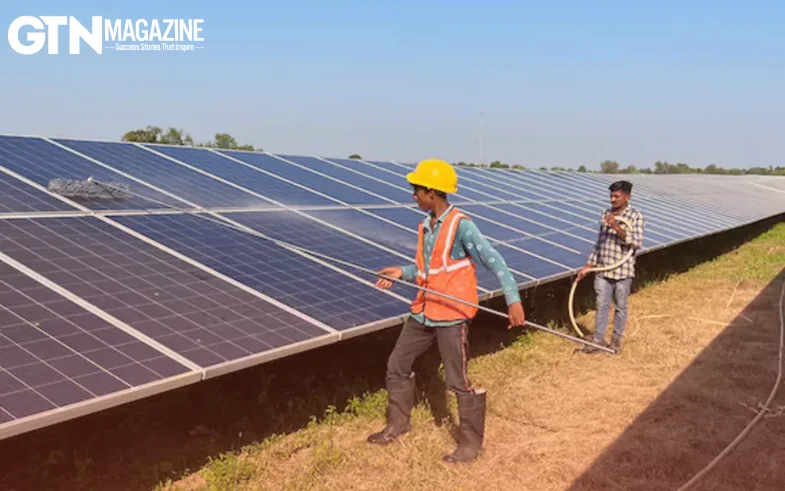
India has reached a major milestone in its energy transition, achieving more than 50% of its installed electricity capacity from non-fossil sources five years ahead of its 2030 target under the Paris Agreement. According to recent data, the country’s total non-fossil power capacity has crossed approximately 283 gigawatts (GW), out of an overall installed capacity exceeding 520 GW. This includes a significant contribution from renewable sources such as solar, wind, hydro, and bioenergy, along with nuclear power.
The achievement highlights India’s accelerated push toward clean energy amid growing global concerns over climate change and energy security. The country’s renewable sector has witnessed rapid expansion over the past decade, driven by policy support, falling technology costs, and increased private sector participation.
Solar energy continues to lead the growth, with installed capacity rising dramatically to over 150 GW, reflecting a sharp increase from just a few gigawatts a decade ago. Wind power, hydroelectric projects, and bioenergy have also contributed steadily to the overall expansion.
In the financial year 2025-26 alone, India added a record volume of non-fossil capacity, underlining the pace of its transition. The surge is further supported by rising electricity demand fueled by economic growth, urbanisation, and the expansion of digital infrastructure.
The growing adoption of artificial intelligence (AI) and data centre infrastructure is emerging as a key driver of energy demand. Large-scale data centres require continuous power supply, prompting increased investment in renewable energy, battery storage, and transmission networks.
India’s renewable progress places it among the top countries globally, following China and the United States in total capacity. However, analysts note that India’s growth rate stands out, especially given its stage of economic development and rising energy requirements.
Despite the progress, challenges remain, including grid integration, land acquisition, and the need for reliable baseload power. Experts emphasize the importance of scaling storage solutions, modernising transmission systems, and expanding hybrid energy projects to maintain stability.
Looking ahead, India aims to reach 500 GW of non-fossil capacity by 2030 and achieve net-zero emissions by 2070. Continued policy support, private investment, and technological innovation are expected to play a critical role in sustaining this momentum.
The milestone reflects not only a shift toward cleaner energy but also India’s broader ambition to strengthen energy security while supporting long-term economic growth.
More News:-