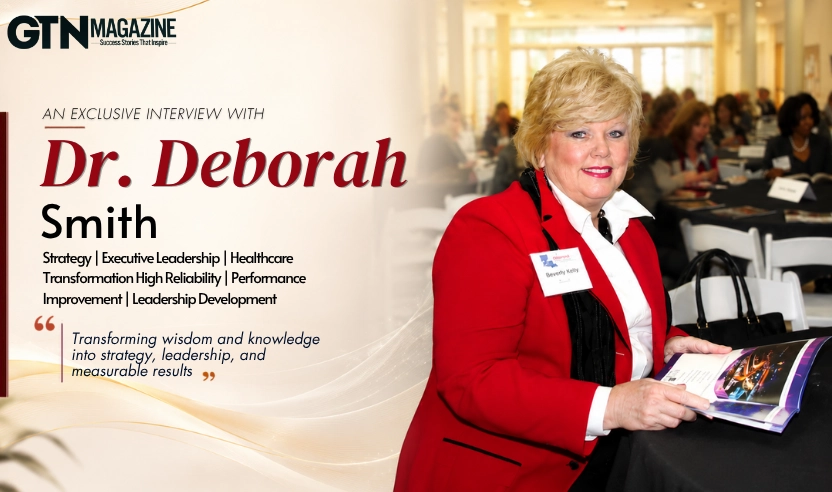
Leadership is often measured by the results achieved while someone is in the room. For Dr. Deborah Smith, its greater measure is what continues after they leave, the people developed, the knowledge transferred, the systems strengthened, and the possibilities others are empowered to pursue.
That perspective has been shaped by a journey spanning more than five decades, beginning with difficult circumstances in West Virginia and progressing from frontline healthcare in radiologic technology to increasingly complex roles across strategy, quality, operations, performance improvement, organizational transformation, and executive leadership. Along the way, Dr. Smith has experienced leadership from nearly every level, from employee, manager, and director to vice president, COO, CEO, consultant, entrepreneur, educator, author, coach, and mentor. Her professional profile further reflects this breadth, including extensive experience in healthcare operations, High Reliability, strategy deployment, Lean Six Sigma, change management, and leadership development.
Yet the thread connecting these different chapters has remained remarkably consistent: people. Whether helping an organization translate strategy into measurable action, creating environments where employees can speak up, developing future leaders, mentoring women, or turning decades of accumulated wisdom into practical resources, Dr. Smith approaches transformation as something that must engage people if it is going to last.
Today, that philosophy is captured through THE STRATVATOR™, representing her focus on moving beyond simply creating strategy to activating it through execution, engagement, measurement, and sustainable transformation. Guided by purpose, continuous learning, service, and faith, she remains equally committed to passing forward what experience has taught her.
In this interview, Dr. Deborah Smith reflects on the experiences that shaped her leadership philosophy, the realities of sustainable transformation, the importance of High Reliability and leadership development, her passion for empowering women, the role of faith in her journey, and why the most meaningful leadership legacy may ultimately be found in what others become capable of achieving.
From the Frontline to Leadership
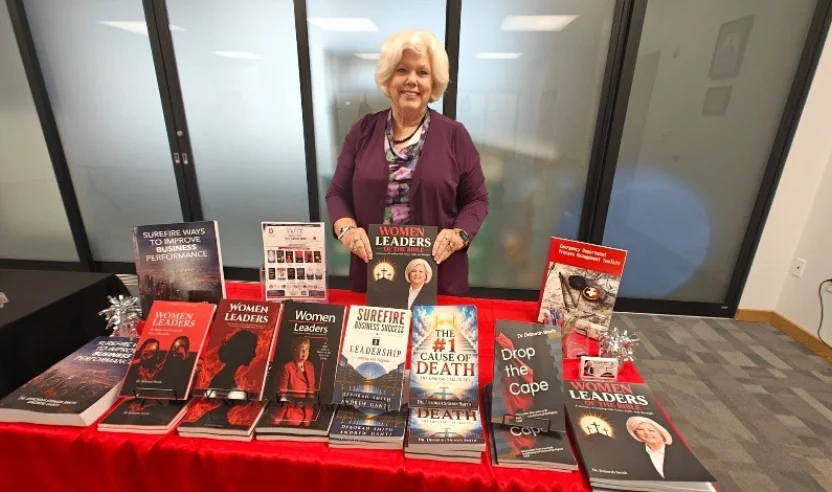
Dr. Deborah Smith’s leadership journey began in healthcare more than five decades ago. She started her career in radiologic technology, working directly with patients and learning very early that healthcare is ultimately about people, not systems, statistics, or processes, but people.
Her journey, however, began long before she entered healthcare. Growing up in West Virginia in a very difficult home environment, she understood from a young age that she needed to become capable of caring and providing for herself. That realization created a sense of independence and determination that stayed with her as she progressed from frontline healthcare into leadership.
As her career progressed, she moved into increasingly complex leadership roles involving performance improvement, strategy, quality, operations, physician enterprises, organizational transformation, and executive leadership. She has had the privilege of working with organizations and leaders across the United States and internationally.
Every experience reinforced one fundamental lesson for her: organizations do not transform simply because they have a good strategy. They transform when people understand the strategy, believe in it, and know how to turn it into action.
That realization has shaped her entire career.
Dr. Smith has held almost every title an organization can put on a business card, from employee and frontline leader to manager, director, vice president, executive vice president, COO, and CEO. She has also been a consultant, entrepreneur, author, educator, coach, and mentor. That breadth taught her something important: titles change, but the responsibility of leadership does not. At every level, leadership is about influencing people toward a meaningful result.
Leading with Purpose
Dr. Smith’s philosophy is built around purpose, people, strategy, and results.
For her, leadership is not about having the biggest title in the room. It is about creating clarity, developing people, removing barriers, and helping an organization accomplish something meaningful. She wants her legacy to reflect the positive investment she has made in the lives of those she has had the pleasure of working with. She considers herself a coach and mentor for life.
She believes leaders have a responsibility to create environments where people can succeed. That means listening to the people closest to the work, understanding the systems in which they work, using data intelligently, and creating accountability without losing compassion.
She often reminds leaders that sustainable excellence is not one initiative. It is a way of leading.
The Right Method for the Challenge
Dr. Smith has never believed that one methodology can solve every organizational problem.
Her work integrates strategy deployment, High Reliability principles, Lean, Six Sigma, Theory of Constraints, process improvement, change management, project management, AI, Rapid Decision Making, Work-Out, AI (Artificial Intelligence,and people-centered leadership.
Her approach is grounded in the belief that the methodology should fit the problem, not the other way around. No single methodology solves every problem; each has unique tools for unique issues.
Everywhere she goes, clients tell her their organizations are different, and they are. Culture, people’s work ethic, equipment, location, budgets, roles, skills, and many other factors shape each organization differently.
In healthcare, that distinction is especially important because the work affects human lives. Improving a process is not simply about saving time or reducing cost. It can mean preventing harm, improving access, reducing delays, supporting clinicians, and giving patients and families a better experience. This is why Dr. Smith has always connected performance improvement to an organization’s larger mission.
The performance improvement methodologies she has worked with have also taken her far beyond healthcare. Her experience has extended across manufacturing, windmills, springs, water and sewer companies, construction, security, research organizations, the military, the Veterans Administration, colleges, universities, education, churches, human trafficking initiatives, Boys & Girls Clubs, women’s clubs, and international businesses.
From Strategy to Execution
One of Dr. Smith’s biggest lessons is that strategy without execution is simply intention.
Organizations can spend months developing beautiful strategic plans that never fundamentally change how people work. Her focus is on helping leaders bridge that gap.
She does not believe in simply being the facilitator at a retreat to design a plan that may sit on a shelf until the next retreat. Instead, she wants to remain involved in implementation to ensure leaders understand how to achieve real, data-driven results and make sustainable changes that allow their organizations to move to the next level.
What is the organization trying to accomplish? How will success be measured? What processes must change? Who owns the work? What barriers are preventing success? How will leaders know whether the changes are sustainable? What are the tactical plans? What are the baselines and targets?
For Dr. Smith, those questions turn strategy into execution.
She also believes transformation cannot belong exclusively to the executive suite. The people doing the work every day often know where the greatest opportunities exist. Effective leaders create mechanisms for those voices to be heard. Transformation starts at the top but involves everyone in the organization.
Education and communication, she believes, are keys to success, not one time, but seven times, seven ways. People’s learning styles are different, and leaders need to understand those differences to be successful.
Creating a Culture of Reliability
For Dr. Smith, High Reliability is much more than achieving a low error rate. It is a leadership mindset.
It means being constantly attentive to risk, learning from weak signals before they become serious events, creating psychological safety for people to speak up, understanding how systems contribute to outcomes, and refusing to normalize preventable harm.
In healthcare, she believes High Reliability requires leaders to create cultures where safety and excellence become everyone’s responsibility. People must have the ability to speak up and challenge decisions without fear of retaliation.
Developing Leaders Who Last
Dr. Smith believes leadership development is essential because eventually every leader leaves.
For her, one of the most important measures of leadership is what remains after a leader is gone.
Did they develop other leaders? Did they establish a future leaders’ program? Did they build systems capable of functioning without them? Did they transfer their knowledge? Did they leave the organization stronger?
She wants leaders to understand that their legacy is not simply what they personally accomplished. Their legacy is also what other people are able to accomplish because they led them.
Passing Wisdom Forward
Writing has become another way for Dr. Smith to transfer what she has learned.
After decades of working with organizations, executives, clinicians, teams, and improvement professionals, she came to recognize that experience has limited value if it is not passed forward.
That is one reason she developed the 20 Volume Surefire Business Success series. Her aim was to take complex subjects, leadership, strategy, customers, finance, change, resources, improvement, technology, reliability, organizational portfolio management, facilitation, customer excellence, rapid decision making, human-centric approaches, AI, and other critical business disciplines, and make them practical.
She wants readers to be able to take an idea from a book and use it Monday morning.
For Dr. Smith, knowledge becomes powerful when people can turn it into action. She embraces the saying, “Knowledge is power, but not powerful until you give it away.” She also believes wisdom is more valuable than gold. Wisdom represents decades of accumulated experience, and she considers it her responsibility to transfer that wisdom to the next generation.
That connection to the next generation is also personal. Dr. Smith has two smart daughters who are making a difference and one granddaughter in college who is following her journey in healthcare. Plus her husband retired from healthcare.
Creating Change That Lasts
For Dr. Smith, transformation means creating change that lasts.
Anyone can generate enthusiasm around a new initiative for 30 or 60 days. The real test is what happens six months, a year, or several years later.
Sustainable transformation requires alignment between leadership, strategy, people, processes, technology, measurement, and culture. It also requires persistence.
Organizations rarely transform in a perfectly straight line. She believes leaders must be willing to learn, adjust, listen, measure, and continue moving forward.
Leadership Is a Privilege
Dr. Smith’s first piece of advice is to never stop learning.
Second, emerging leaders should learn to listen before they try to lead.
Third, they should understand both people and systems, because most organizational problems cannot be solved by focusing exclusively on one or the other.
Fourth, they should surround themselves with people who know things they do not know.
Finally, Dr. Smith encourages emerging leaders to remember that leadership is a privilege. Their decisions affect careers, families, patients, customers, communities, and sometimes generations.
That privilege should be used wisely.
The Spark of Possibility
Purpose continues to motivate Dr. Smith.
She still believes there are organizations that can perform better, leaders who can become stronger, employees whose ideas have not yet been heard, and patients and customers who deserve better systems.
She also believes there is a responsibility to share the wisdom people acquire throughout their careers.
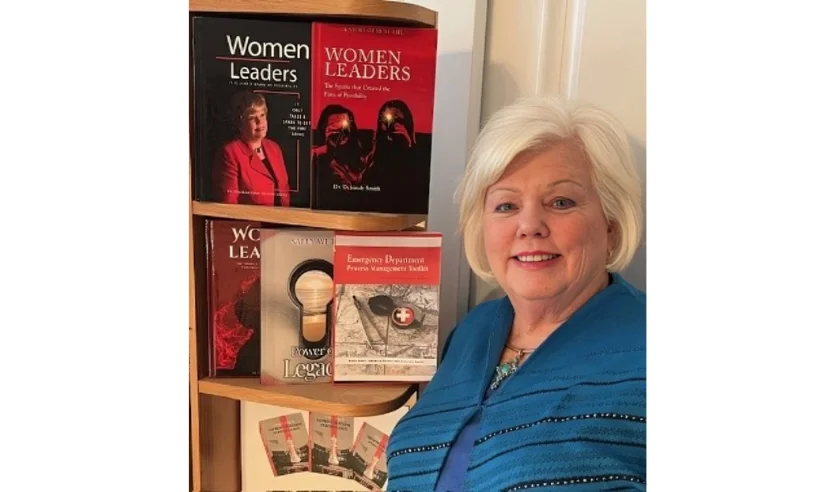
Dr. Smith has written several books about women leaders because she believes it only takes a spark to get a fire going. So many women have the capability to become some of the greatest leaders; sometimes, they simply need that spark of possibility to believe they can achieve.
Her passion for developing women is rooted in her own experience as a woman advancing through healthcare and executive leadership. The obstacles she encountered, the lessons she learned, and the guidance she would offer women entering leadership today are themes she explores through her books.
The STRATVATOR™ Approach
At this stage of her journey, Dr. Smith is particularly focused on transforming wisdom and knowledge into strategy, leadership, and measurable results.
That is the idea behind the name she uses today: THE STRATVATOR™.
For Dr. Smith, THE STRATVATOR™ represents someone who does not simply create strategy but activates it, translating strategy into execution, engaging people, measuring results, and sustaining transformation.
It represents the intersection of strategy, transformation, leadership, and real action.
A Legacy Built Through Others
Dr. Smith hopes people will not remember her simply for titles, methodologies, projects, or organizations.
She hopes they remember that she helped people see possibilities they could not see before; that she challenged leaders to think differently; that she helped organizations turn strategy into meaningful results; and that she shared what she learned.
Most importantly, she hopes to be remembered for developing and encouraging others to lead.
Faith at the Heart of Leadership
Dr. Smith’s Christian faith influences how she thinks about servant leadership, integrity, purpose, stewardship, giving, missions, and treating people with dignity.
She wants to be known as a Christian woman with deep faith who believes that all things are possible when God is on her side. She also believes in Faith Promise financial support for missions across the world.
Her perspective on leadership can ultimately be captured in one powerful belief:
Success is important. Sustainable success is better. But helping other people become capable of creating that success long after you leave, that is leadership.
Website: drdebsmith.com
Conclusion
For Dr. Deborah Smith, leadership has never been defined solely by how far an individual rises. Its deeper value lies in what a leader builds, what they share, and how effectively they prepare others to continue creating meaningful results long after their own role has ended.
Across more than five decades, her journey from frontline healthcare to executive leadership, consulting, coaching, mentoring, education, and authorship has given her a perspective shaped by both experience and continuous learning. Whether working with healthcare organizations, executives, emerging leaders, or professionals across other industries, she has remained focused on connecting people, strategy, processes, and measurable outcomes while ensuring that transformation is built to last.
That same commitment extends to the wisdom she hopes to pass forward. Through her books, mentorship, passion for developing women leaders, and work as THE STRATVATOR™, Dr. Smith continues to encourage others to recognize possibilities, translate knowledge into action, and approach leadership with purpose. Her Christian faith further anchors her belief in servant leadership, integrity, stewardship, giving, and treating people with dignity.
As she looks toward the chapters still ahead, Dr. Smith remains motivated by the belief that stronger leaders and better systems can create lasting impact for organizations, employees, patients, customers, and communities. Her journey ultimately reinforces a principle that has become central to her philosophy: success matters, sustainable success matters even more, but developing others who can carry that success forward is where leadership becomes a legacy.
You may also like:-