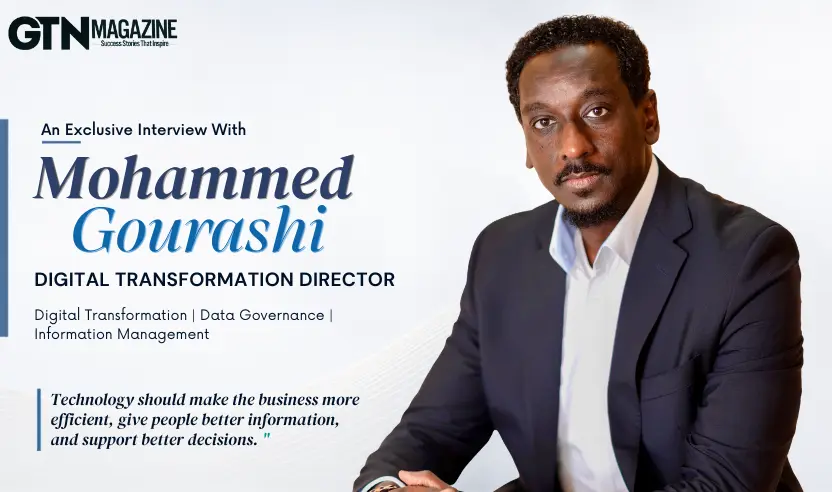
The most meaningful digital transformations are not defined by the technology introduced, but by how effectively they improve the way people, information, and organizations work together. For Mohamed Gourashi, this understanding has been shaped through more than two decades of experience spanning information and records management, enterprise information management, data governance, and digital transformation leadership.
From studying Computer Science at Bangalore University after completing his secondary education in Abu Dhabi to working across complex organizations in energy, government, transport, real estate, and construction, Mohamed’s journey reflects a steady evolution from managing information to helping organizations use technology and data more strategically. Along the way, his work with organizations including Etihad Rail and Aldar has reinforced his belief that transformation must be practical, well-governed, and connected to genuine business needs.
Today, as Digital Transformation Director, Mohamed continues to bring technology, data, processes, and people together with a focus on efficiency, better information, and stronger decision-making. As organizations increasingly explore automation and AI, his perspective remains grounded in responsible adoption, governance, security, and measurable business value.
In this journey article, Mohamed shares the experiences that have shaped his career, the lessons he has learned while navigating large-scale transformation, his vision for the future of digital organizations, and the advice he offers to professionals preparing to lead in an increasingly technology-driven world.
From Information to Transformation
Mohamed Gourashi’s journey has always been closely connected to technology, information, and how organizations work. He studied Computer Science at Bangalore University in India, following his secondary education in Abu Dhabi. He started his career in information and records management and gradually moved into enterprise information management, data governance, and, ultimately, digital transformation leadership.
Over more than 20 years, he has had the opportunity to work across different industries and complex organizations, including energy, government, transport, and real estate. Each experience taught him something different: successful transformation is not simply about implementing technology; it is about changing processes, improving information, and helping people work better.
Today, he focuses on bringing those experiences together to help organizations become more connected, efficient, and ready for the future.
Transformation in Action
Mohamed currently serves as Digital Transformation Director, where his focus is on using technology to improve how the business operates, manages information, and makes decisions.
What makes the role particularly interesting is that construction is a very operational and project-driven industry. Digital transformation, therefore, must deliver practical value, not just new systems. He is bringing together areas such as IoT, Enterprise Solutions, project management, Digital Construction and information management, automation, data governance, and emerging AI capabilities.
For Mohamed, the objective is simple: technology should make the business more efficient, give people better information, and support better decisions. Transformation is successful when people actually feel the difference in their day-to-day work.
Making Information Matter
One of Mohamed's most significant achievements was leading the Enterprise Information Management strategy for Etihad Rail’s major national infrastructure programme.
The challenge was managing enormous volumes of information coming from multiple international contractors and different stages of the project lifecycle. He and his team developed an integrated information environment connecting design, construction, asset information, and future operations.
Another achievement he is particularly proud of was establishing a formal Data Governance function at Aldar, including data ownership, quality standards, and governance frameworks.
Both experiences reinforced an important lesson for Mohamed: when information is properly governed and connected, it becomes a strategic business asset rather than simply something an organization stores.
Leading Through Complexity
The biggest challenges Mohamed has faced have generally been related to people, change, and organizational complexity rather than technology itself.
In large transformation programmes, different departments naturally have different priorities, systems, and ways of working. His approach has always been to first understand the business problem, involve stakeholders early, establish clear governance, and then introduce technology that supports the agreed business objectives.
He also believes in being practical. Not every problem needs a large technology programme. Sometimes, simplifying a process or improving the quality of information can create more value than implementing another system.
Ultimately, Mohamed believes that successful transformation requires patience, communication, governance, and the ability to bring people along the journey.
Shaping Smarter Organizations
Mohamed’s vision is to help build organizations where technology, data, and people work together more intelligently.
He believes the next stage of digital transformation will go beyond simply digitizing processes. Organizations will increasingly use trusted data, automation, and AI to anticipate problems, support decisions, and improve productivity.
His goal is to continue leading transformations that are practical and measurable, where technology creates genuine business value, not just another layer of complexity.
He is particularly interested in how AI can be responsibly introduced into areas such as contracts, procurement, finance, project management, and enterprise information management. However, he believes governance, security, and human judgment must remain central to that journey.
Learning, Leading, Delivering
Mohamed’s advice to aspiring professionals and future leaders is to never become too focused on technology itself. Instead, they should understand the business problem they are trying to solve.
Technology changes very quickly, but he believes the fundamentals of leadership remain the same: understand people, listen to the business, keep learning, and be willing to adapt.
He also encourages young professionals not to be afraid of starting from the ground up. His own career began in information and records management, and every stage of that journey contributed to where he is today.
Finally, Mohamed emphasizes the importance of building credibility through delivery. Professionals do not need to have all the answers; they need to be willing to learn, solve problems, take responsibility, and create value for the organization.
Conclusion
Mohamed Gourashi’s journey demonstrates how a career that began in information and records management can evolve into a broader responsibility for shaping how organizations use technology, data, and information to work more effectively. Across more than two decades, each stage of his professional path has strengthened a perspective that places practical business needs at the heart of digital transformation.
As technology continues to evolve, particularly with the growing role of automation and AI, Mohamed remains focused on transformations that are measurable, responsible, and genuinely useful. His emphasis on governance, security, trusted data, and human judgment reflects his belief that progress should not be driven by technology alone, but by how effectively it supports people, processes, and better decision-making.
For aspiring professionals and future leaders, his journey also carries a clear message: remain curious, understand the problems that truly need solving, and build credibility through consistent delivery. As Mohamed continues his work in digital transformation, his vision remains centered on helping build organizations where technology, data, and people work together more intelligently, creating meaningful business value while preparing for what comes next.
You may also like:-