

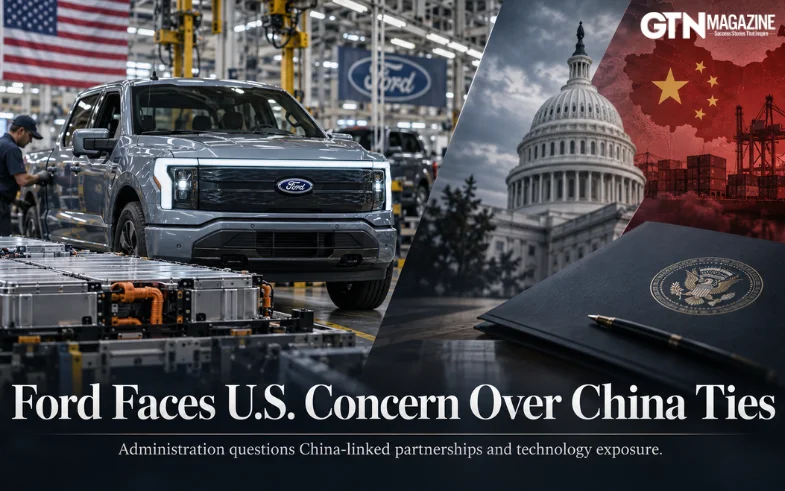
The Trump administration has sharply criticized Ford Motor Company’s business relationships with Chinese companies, warning that its growing reliance on China-linked technology and manufacturing raises national security concerns.
U.S. Transportation Secretary Sean Duffy sent a letter to Ford CEO Jim Farley expressing what he called “profound concern” over the automaker’s partnerships with Chinese battery manufacturer CATL and Chinese carmakers Geely and BYD. Duffy urged Ford to reduce or end those relationships.
The criticism adds to growing pressure on U.S. automakers to reduce their exposure to Chinese companies at a time when Washington is tightening restrictions on Chinese vehicles and technology.
Ford’s CATL Partnership Draws Attention
One of the administration’s main concerns is Ford’s use of technology licensed from CATL, one of the world’s largest electric-vehicle battery manufacturers.
Ford is building a battery plant in Marshall, Michigan, using CATL technology. Duffy raised concerns because CATL has been placed on a U.S. Defense Department list of companies accused of having links to China's military.
Ford, however, says the Michigan facility is firmly under American control. The company said it owns the plant, controls its operations and employs the workforce, while emphasizing that it is investing in battery manufacturing inside the United States.
China Relationships Extend Beyond Batteries
The administration's criticism is not limited to battery technology.
Ford has business relationships with Chinese automakers Geely and BYD, while the company has also discussed the possibility of Chinese joint ventures operating on U.S. soil.
Duffy specifically questioned comments Farley made earlier this year advocating for Chinese partnerships in the American automotive market. The administration is concerned that such arrangements could create long-term dependencies on Chinese technology and supply chains.
The issue is becoming increasingly sensitive as lawmakers debate measures that would further restrict Chinese involvement in the U.S. auto industry.
Lincoln Production Move Also Under Scrutiny
Ford's continued production of the Lincoln Nautilus in China has also drawn criticism.
The company has announced plans to move production of the model to the United States, but the transition is not expected to take place until 2030. Duffy argued that this timetable leaves Ford dependent on Chinese manufacturing for several more years.
The White House has previously highlighted Ford's decision to reshore Lincoln production as evidence that the administration's trade policies are encouraging more manufacturing in the United States.
The latest criticism therefore reflects a more complicated relationship between Ford and the administration: Washington welcomes Ford's plans to bring production home but remains concerned about the company's continued Chinese partnerships.
Ford Pushes Back Against the Criticism
Ford has rejected the administration's characterization of its business strategy.
The automaker described Duffy's letter as a misguided attempt to attract headlines and defended its investments in American manufacturing. Ford stressed that it is building batteries domestically rather than simply importing Chinese-made batteries into the U.S. market.
The response highlights the challenge facing automakers as they attempt to balance cost, technology and supply-chain considerations with Washington's push for greater economic separation from China.
Bigger Fight Over Chinese Cars
The dispute comes as the U.S. auto industry itself is calling for tougher restrictions on Chinese vehicles.
Major automakers, including Ford, recently urged Congress to permanently restrict Chinese-made passenger vehicles and prevent companies such as BYD, Chery and SAIC from receiving exemptions that could allow them to enter the American market.
That puts Ford in an unusual position: the company supports restrictions on Chinese vehicle imports while maintaining selected commercial and technology relationships with Chinese firms.
US-China Tensions Add to the Pressure
The confrontation with Ford comes just weeks before an expected meeting between President Donald Trump and Chinese President Xi Jinping.
U.S.-China relations remain tense across trade, technology and national security, with Washington increasingly examining Chinese involvement in strategically important industries.
For Ford, the latest dispute could force the company to rethink how much Chinese technology and manufacturing it relies on as it expands its electric-vehicle and battery businesses.
The immediate issue is not whether Ford will leave China entirely, but how far it is willing to go in reducing its exposure to Chinese partners. As Washington pushes for more domestic production and stronger supply-chain security, Ford and other American automakers are likely to face increasing pressure to make those decisions much sooner.
News Highlights:-