

Transforming outcomes for children does not always begin with creating another program. Sometimes, it begins by looking more closely at the communities surrounding them, listening to families, understanding the conditions shaping their lives, and ensuring that the resources they need are within reach.
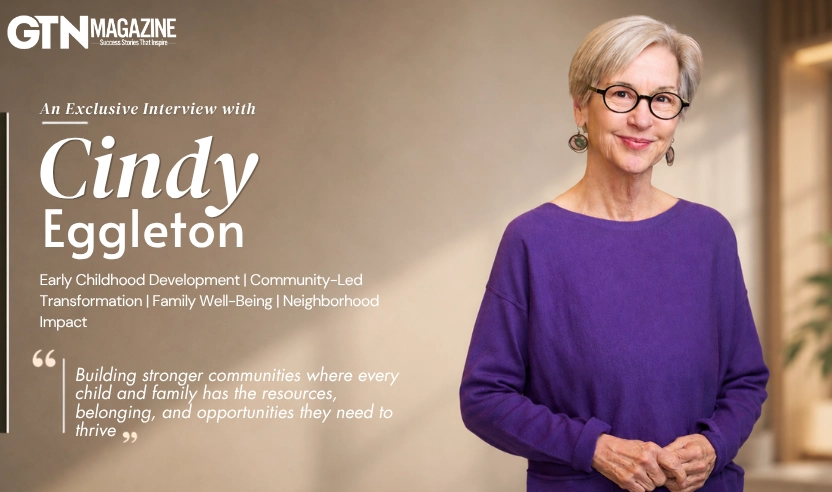
For Cindy Eggleton, this understanding is rooted in both professional experience and a deeply personal connection to the challenges faced by families. As a first-generation high school graduate whose family experienced poverty, Cindy learned early about resilience and the power of community in creating stability. Later, as a founder managing a $60 million portfolio, she gained another perspective: seeing what worked, what did not, and why even well-intentioned efforts did not always create the transformation children and families needed.
Those experiences ultimately shaped a different approach. Today, as Co-Founder and CEO of Brilliant Cities, Cindy is advancing a neighborhood-powered early childhood model that transforms repurposed houses into community hubs where children and families can access opportunities and support. Built around collaboration, listening, and the belief that families should be co-creators rather than simply recipients of services, Brilliant Cities has grown to 25 neighborhoods across two cities, serving more than 30,000 children and caregivers.
With an ambitious vision to reach 250,000 children and caregivers and bring the model to more than 30 cities, Cindy’s journey reflects a belief that meaningful change is strongest when communities themselves are at its center. In this conversation, she shares the experiences that shaped her purpose, the thinking behind Brilliant Cities, the impact the organization has achieved, and why non-judgmental listening remains fundamental to the work ahead.
Where Purpose Took Root
Two significant aspects of Cindy Eggleton’s journey led her to the work she does today.
First, she was a funder with a $60 million portfolio, where she saw firsthand what worked, and what did not, when it came to supporting children and families. While good things happened through this work, she recognized that it was not creating the level of transformation that is needed.
Second, Cindy is a first-generation high school graduate whose family grew up in poverty.
This work is deeply personal to her because her family experienced poverty and was able to find stability due to the care of their community. The experience taught Cindy about resilience while also helping her appreciate the ties that bind people together within a neighborhood ecosystem.
Too often, not-for-profit solutions focus on fixing children, fixing parents, or improving isolated programs without addressing the reality that children develop within ecosystems. These solutions frame inequitable outcomes as education problems rather than place-based system failures, and they prioritize remediation over early prevention.
Lastly, they treat families as service recipients instead of co-creators and underestimate the role that neighborhood conditions play in shaping developmental outcomes. Cindy has learned that communities are everything and that families, like her own, know what they need and simply need those resources to be accessible.
Building Brilliant Cities, One Neighborhood at a Time
Cindy often says that she is living a fairy tale because she is living her purpose. As Co-Founder and CEO of Brilliant Cities, she has built an early childhood model that coordinates high-quality programs through repurposed houses for families with young children and is spreading across cities.
Brilliant Cities is a neighborhood-powered model ensuring children ages 0–8 are school-ready, healthy, and supported. It does this by transforming houses into community hubs where children and families have what they need to thrive.
The approach is rooted in collaboration with local communities, working “with, for, and by” communities to transform literacy outcomes and ensure greater well-being and success for children. Brilliant Cities establishes hubs by renovating vacant houses in collaboration with local community organizations and leaders through listening sessions and advisory teams. The organization hires from the community and utilizes the hubs as focal points for fellowship and programming.
Brilliant Cities expands through cities, establishing enough hubs and serving enough families to have a population-level impact on key early childhood statistics. Its vision is to cultivate “Kid Success Cities” full of opportunities for young children and families to have what they need for a bright future.
In her role, Cindy spends most of her time making sure families have everything they need to thrive.
Measuring Impact Beyond the Numbers
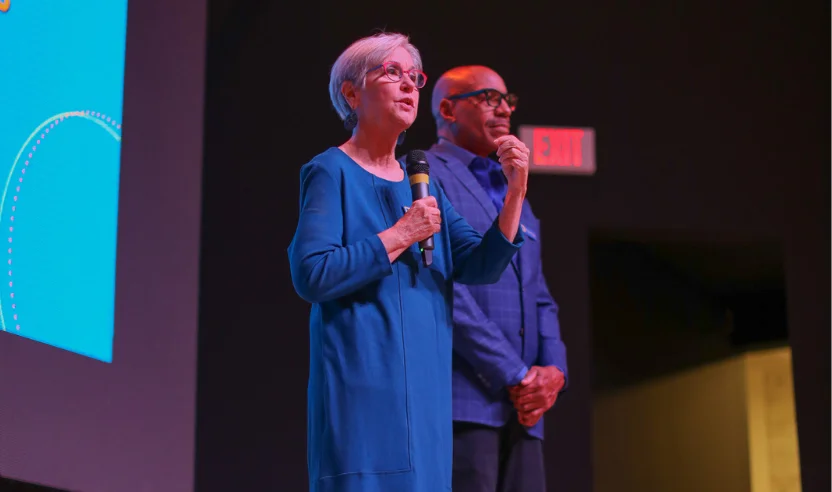
Cindy is deeply proud of the scale and impact of Brilliant Cities. Throughout its journey, the organization has grown to 25 neighborhoods in two cities, serving more than 30,000 children and caregivers and seeing significant growth across families’ education, health, and overall well-being.
Notably, Brilliant Cities’ tutoring programs have resulted in an average increase of three reading levels among participating youth. Deeper still, the number two reason people come to its hubs is a sense of belonging, which speaks to how communities coming together can truly drive impact.
A Vision for 250,000 Lives
Over the next 10 years, Brilliant Cities aims to have reached 250,000 children and caregivers through its model. To achieve this impact, the organization will need to bring its model to more than 30 cities through multiple replication approaches.
Its near-term work is focused on launching these various replication approaches, starting with a more direct, wholly supported approach in Philadelphia in Fall 2026 and Chicago in Spring 2027.
Choosing Collaboration Over Competition
Cindy and Brilliant Cities believe strongly in the concept of non-competition. Their work, in many ways, is that of coordination and service delivery. Communities trust Brilliant Cities and bring the organization into their neighborhoods, where it, in turn, coordinates existing programs and partners through community-based hubs.
By bringing people and organizations together behind community leadership and in service of children, Brilliant Cities moves past competition and toward recognizing the gifts and assets of its neighborhoods and partners.
The organization has a unique model that differentiates its work and drives impact at a relatively low cost, but Cindy and her team do not believe in competing with others to support children and families.
The Transformative Power of Listening
Cindy believes that there is no substitute for non-judgmental listening to others and that this is the secret sauce of the Brilliant Cities model.
All too often, organizations and entrepreneurs enter communities and contexts with a particular point of view rather than asking how they can be of service to others and engaging in that deep listening.
Through such listening, Cindy believes people can build authentic relationships and have a stronger collective impact, unmediated by individual egos.
Conclusion
Cindy Eggleton’s journey demonstrates how lived experience, careful listening, and a deep understanding of communities can shape a different approach to supporting children and families. From witnessing the role her own community played in helping her family find stability to managing a $60 million funding portfolio, each chapter has strengthened her belief that lasting progress requires looking beyond isolated solutions and recognizing the wider ecosystems in which children grow.
Through Brilliant Cities, that belief has developed into a neighborhood-powered model centered on collaboration, accessibility, and community leadership. Its growth to 25 neighborhoods across two cities, serving more than 30,000 children and caregivers, reflects the potential Cindy sees in bringing families, local leaders, organizations, and resources together around the well-being of children. Just as importantly, the sense of belonging families find within its hubs reinforces her conviction that communities themselves are essential to meaningful impact.
Looking ahead, Cindy’s vision is ambitious: reaching 250,000 children and caregivers and expanding the Brilliant Cities model to more than 30 cities through multiple replication approaches. Yet, even as the organization grows, the principle at the heart of her work remains remarkably simple: listen without judgment, recognize the strengths already present within communities, and work alongside families rather than approaching them merely as recipients of support.
For Cindy, building “Kid Success Cities” is ultimately about creating communities where young children and families have what they need to thrive. Her journey offers a powerful reminder that transformation can begin when people move beyond competition and individual perspectives, come together around a shared purpose, and truly listen to those they seek to serve.
You may also like:-