

The European Central Bank (ECB) has kept its key interest rates unchanged at 2% for the third consecutive meeting, as policymakers navigate a complex economic environment marked by rising inflation and slowing growth across the eurozone. The decision, widely anticipated by markets, reflects a cautious approach by the Frankfurt-based institution as it balances persistent price pressures with weakening economic momentum. The ECB confirmed that all three of its key rates, including the deposit facility rate, would remain steady.
In its latest policy statement, the central bank acknowledged that while recent data broadly aligns with its inflation outlook, risks are increasingly tilted in opposite directions. Inflationary pressures are building, driven largely by higher energy costs, while economic growth is showing signs of deceleration.
Inflation in the eurozone rose to 3% in April, exceeding the ECB’s medium-term target of 2%. Core inflation, which excludes volatile components such as food and energy, remained relatively stable at 2.2%. Meanwhile, economic growth across the 20-member bloc slowed to 0.8% year-on-year in the first quarter of 2026, underscoring concerns about a weakening economic trajectory.
A key factor influencing the outlook is the ongoing geopolitical tension in the Middle East, which has contributed to a surge in global energy prices. The resulting cost pressures are weighing on consumer sentiment and business confidence, complicating the ECB’s policy response.
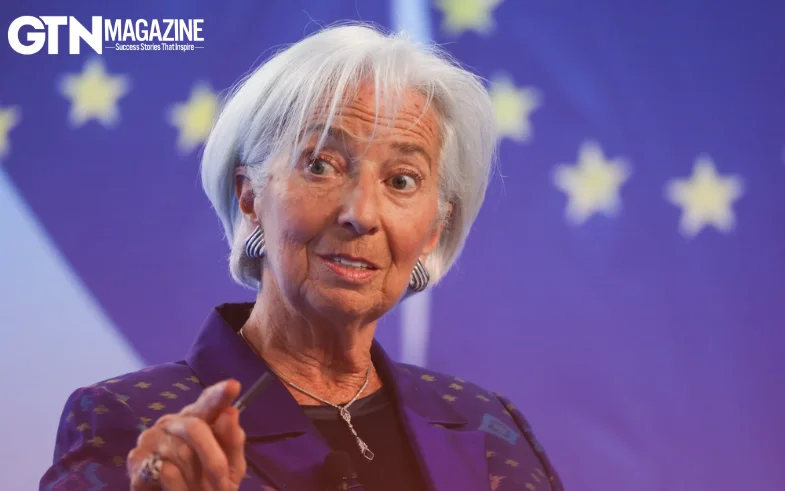
ECB President Christine Lagarde highlighted the uncertainty surrounding the current economic environment, noting that the unpredictable nature of geopolitical developments makes it difficult to assess the duration and impact of inflationary pressures. She emphasized that the central bank remains committed to bringing inflation back to its 2% target over the medium term.
Despite the challenges, the eurozone economy has demonstrated a degree of resilience, supported by a relatively strong starting position at the beginning of the year. However, Lagarde cautioned that continued volatility, including energy market disruptions and geopolitical risks, could further dampen growth prospects.
The ECB is also closely monitoring broader structural and external risks, including ongoing global conflicts and potential trade tensions, which may add further strain to the region’s economic outlook.
Looking ahead, policymakers have signaled a wait-and-watch approach, with future decisions likely to depend on incoming data and geopolitical developments. The ECB expects to reassess conditions in the coming weeks, aiming to gain clearer visibility on inflation trends and economic stability.
More News:-