Every breakthrough that reshapes an industry begins with someone willing to challenge convention. In modern agriculture, where the demand for sustainable solutions has never been greater, the leaders creating meaningful impact are those who combine scientific excellence with the courage to transform research into real-world innovation. Their success is measured not only by laboratory discoveries but also by the lasting value those discoveries create for growers, businesses, and the future of global food production.
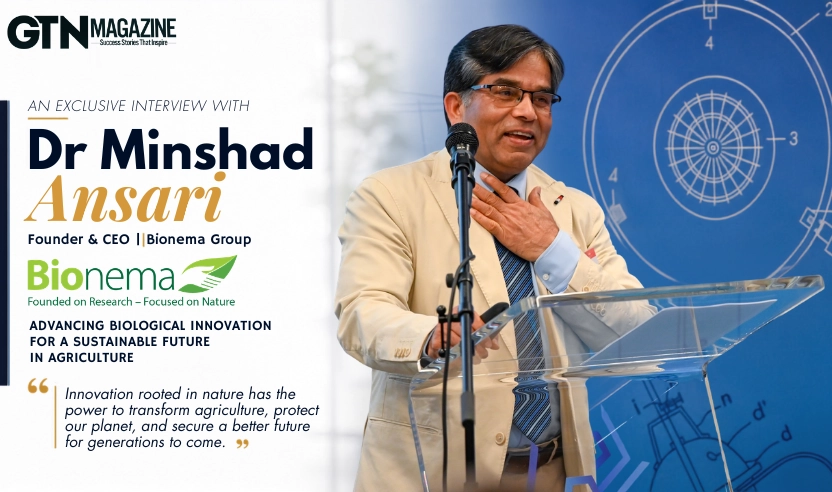
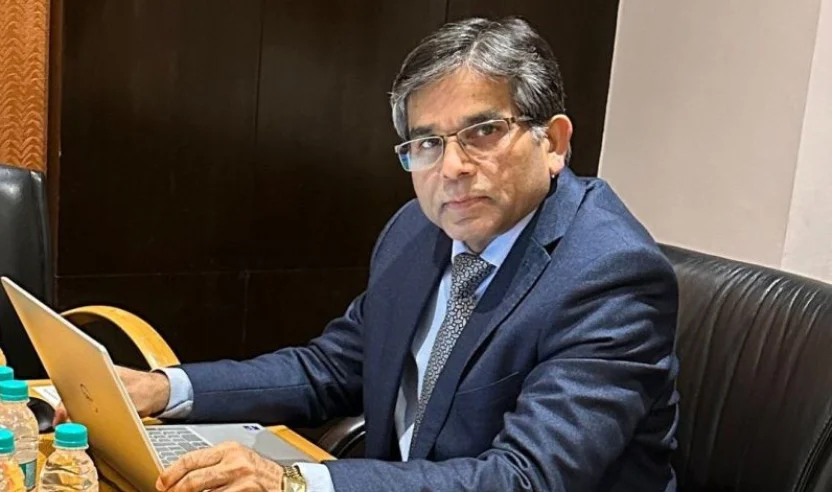
Dr Minshad Ansari embodies that vision. From humble beginnings in a village in India to becoming an internationally recognised scientist and the Founder and CEO of Bionema Group in the United Kingdom, his journey reflects decades of perseverance, scientific curiosity, and entrepreneurial determination. By bridging the gap between academic research and commercial application, he has helped advance biological crop protection technologies that are making agriculture more resilient and environmentally responsible.
In this exclusive conversation with Global Times Now, Dr Ansari shares the experiences that shaped his career, the milestones that defined Bionema's growth, his vision for the future of biological innovation, and the lessons he has learned while building a science-led global enterprise. Read on to discover how purpose-driven innovation, commercial discipline, and an unwavering commitment to sustainability are helping redefine the future of agriculture.
From Village Life to Global Innovation
Dr Ansari grew up in a village in India, where agriculture was part of everyday life and educational opportunities were limited. His early years were marked by considerable personal and financial challenges, but they also instilled in him resilience, discipline, and a firsthand understanding of the realities faced by farming communities.
He went on to study agricultural science and developed a particular interest in nematology, biological control, and the use of naturally occurring microorganisms to manage agricultural pests, disease and plant health. Later, he completed a PhD in Applied Agricultural Sciences at Ghent University in Belgium in 2005, where his research focused on biological approaches to insect control.
After completing his doctoral studies, Dr Ansari continued his academic and applied research career at Swansea University in the United Kingdom from 2025-2012. His work there strengthened his expertise in biocontrol research, technology development, commercialisation, and the practical challenges of translating scientific discoveries into real-world applications.
Swansea University became an important bridge between his academic career and his entrepreneurial journey. Through his research, he observed that many promising biological technologies were being developed, yet relatively few progressed into robust, commercially viable products.
The challenge was not simply discovering an effective microorganism. Commercial success also required consistent production, formulation, delivery, field validation, regulatory approval, intellectual property protection, and a credible route to market.
After approximately 15 years in academic research, he founded Bionema Group in 2012 to bridge that gap.
His journey, from a village in India to Ghent University, Swansea University, and eventually the creation of Bionema Group, has been driven by one central objective: translating strong science into practical biological solutions that help growers reduce their dependence on conventional chemical inputs while building more sustainable agricultural systems.
Building Bionema's Competitive Edge
Dr Ansari is the Founder and Chief Executive Officer of Bionema Group, a UK-based biological crop protection and plant health technology company.
Bionema is not built around a single product. The company has developed an integrated platform spanning microbial biopesticides, biostimulants, biofertilisers, biosurfactants, and advanced formulation and delivery technologies.
What differentiates Bionema is its focus on the complete commercialisation pathway.
Discovering an effective microorganism is only the beginning. It must also be manufactured consistently, protected during storage, delivered to the correct target, supported through regulatory processes, and proven under practical field conditions.
Its technology platforms include Incapsulex®, the company's patented microencapsulation platform, and Adhesulex™, its biosurfactant-based foliar and soil delivery platform. Bionema also develops microbial crop protection and plant health products for agriculture, horticulture, forestry, amenity, and sports turf.
The company's objective is to help biological products progress from scientific promise to consistent commercial performance.
Milestones That Shaped Success
One of Bionema's most significant commercial milestones came in 2021, when Syngenta acquired Bionema-developed products and technology in a seven-figure transaction.
For a small, science-led company, completing a transaction with one of the world's leading agricultural businesses was an important validation of its technology, technical standards, and ability to develop commercially relevant biological solutions.
Dr Ansari is also especially proud that Bionema has received two King's Awards for Enterprise: Innovation in 2024 and Sustainable Development in 2026.
These awards recognised not only the company's technological innovation but also its contribution to reducing dependence on conventional chemical inputs and supporting more sustainable agricultural systems.
According to Dr Ansari, these achievements belong not only to him but also to the scientists, employees, collaborators, commercial partners, and growers who have contributed to Bionema's growth and success.
Scaling the Future of Biologicals
The next phase of Bionema's journey is centred on a commercial scale.
The company has built a substantial portfolio of products and platform technologies. Its priority now is to convert that technical foundation into recurring sales, international licensing agreements, distribution partnerships, and strategic collaborations.
Bionema is particularly interested in working with companies that already have strong access to agricultural markets but require differentiated biological products, formulation expertise, or advanced delivery technologies.
Its growth model includes direct product sales, international distribution, licensing, white-label supply, local validation, and co-development with larger agricultural input companies.
The broader vision is to help establish biological crop protection and plant health as a reliable part of mainstream agriculture.
Dr Ansari believes biological products will not replace every conventional input, nor should the sector make unrealistic promises. However, when properly developed, biological solutions can help growers reduce chemical dependence, improve soil and plant health, manage resistance, and create more resilient production systems.
His goal is to build Bionema into a globally recognised biological platform company that creates value through both innovative products and strategic technology partnerships.
Science, Innovation, and Competitive Advantage
According to Dr Ansari, competitive advantage in the biologicals sector does not come solely from discovering another microorganism.
Many organisations can identify potentially useful strains. The greater challenge lies in converting them into products that remain viable, can be manufactured consistently, reach the intended target, and deliver repeatable results under commercial conditions.
Bionema maintains its competitive edge by integrating microbiology, formulation science, delivery technology, field validation, regulatory expertise, and commercial development.
The company also remains disciplined in its commitment to evidence. Sustainability alone is not enough to make a product commercially successful. Growers and commercial partners require clear performance data, practical application guidance, reliable supply, and an economically credible proposition.
Dr Ansari's experience has also reinforced the importance of partnerships. No smaller technology company can independently build every manufacturing capability, regulatory pathway, and international sales channel.
Bionema therefore focuses on developing strong science and differentiated intellectual property while collaborating with the right partners to validate, register, manufacture, and commercialise its technologies across global markets.
Lessons from an Entrepreneurial Journey
Dr Ansari's first piece of advice is to choose a meaningful problem rather than simply pursuing an interesting technology.
He believes a technically impressive invention has limited value if it does not solve a genuine customer need or cannot be developed into a commercially viable product.
He also emphasises that aspiring entrepreneurs should never underestimate the distance between research and commercial success. Scientific validation is only one stage of the journey. Entrepreneurs must also understand manufacturing, regulation, intellectual property, finance, sales, partnerships, and customer adoption.
Reflecting on his own experiences, Dr Ansari encourages professionals to listen carefully to rejection without allowing it to define the opportunity. Throughout his journey, he has experienced setbacks involving investment, product development, partnerships, and commercialisation. Some criticism reveals weaknesses that need to be addressed, while other criticism simply reflects a mismatch between the opportunity and the evaluator's perspective. The key, he believes, is learning to distinguish between the two.
Finally, he advises entrepreneurs to remain persistent, but not blindly persistent. The objective is not to defend every original assumption but to continually refine the strategy until the technology, market need, and commercial model are fully aligned.
According to Dr Ansari, building a science-led company takes longer and costs more than most founders initially expect. However, when strong science is combined with commercial discipline, the impact can be truly substantial.
Conclusion
As agriculture continues to evolve in response to growing environmental, economic, and food security challenges, leaders like Dr Ansari demonstrate that meaningful innovation is achieved by combining scientific excellence with commercial vision. His journey reflects the power of persistence, collaboration, and a long-term commitment to transforming research into practical solutions that create measurable impact for growers and the wider agricultural industry.
Through Bionema, Dr Ansari has shown that sustainable agriculture is not built on ambitious promises alone, but on technologies that deliver consistent performance, earn industry trust, and create lasting value. His leadership continues to advance biological crop protection while encouraging greater collaboration between science, industry, and global agriculture.
As he looks toward the next phase of growth, Dr Ansari remains focused on one enduring mission: making biological solutions integral to modern farming worldwide. His story serves as an inspiring reminder that when purpose, innovation, and perseverance come together, they can shape industries, improve lives, and contribute to a more sustainable future for generations to come.
- LinkedIn:- Dr. Minshad Ansari
- Instagram:- dr_minshad_ansari
- Facebook:- Minshad Ansari
You may also like:-