The leaders who stay ahead are rarely those who follow the most familiar path. They are the ones willing to question established thinking, anticipate change, and create new ways forward when conventional methods no longer provide the answers.
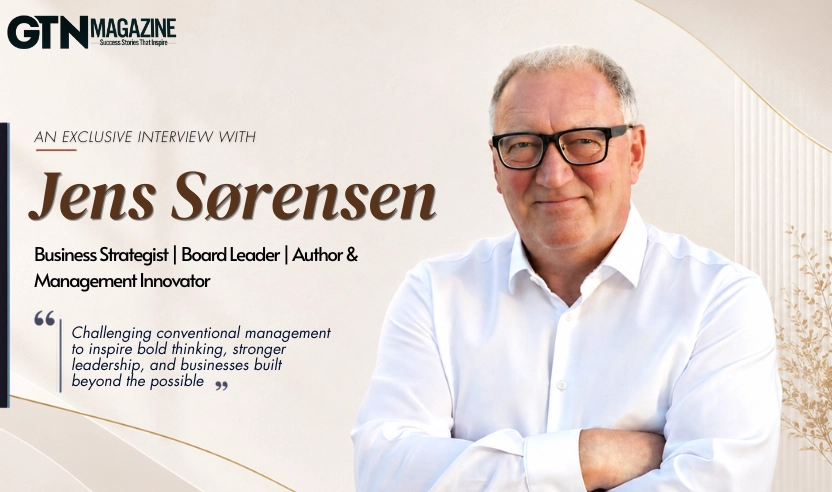
For Jens Sørensen, this mindset has shaped a business journey spanning nearly five decades and more than 30 years in executive leadership. Since beginning his professional career in 1977, he has worked across functions, markets, and leadership environments in Denmark and Germany, including roles with prominent companies such as Tenneco and Hella. Today, through The Wide View, he serves as a strategic advisor, top-management mentor, chairman, and professional board member, drawing on what he describes as 100% cross-functional expertise to help organisations move “Beyond the Possible.”
What makes Jens’s approach distinctive is his determination to challenge standard management thinking. From his concept of “Danish dynamite” and SBCF: Solutions by Coming First to the Chamber of Control and his “Power of Strong Principles,” his philosophy connects strategic foresight and financial discipline with people, creativity, responsibility, and freedom to act.
Beyond business, Jens’s ten books and five music albums reveal another dimension of a leader who views creativity and continuous learning as essential to meaningful progress. In this interview, he reflects on the experiences that shaped his leadership, the ideas behind his original management tools, and what organisations must do to remain prepared for the future. Read on to discover a perspective built on experience, curiosity, and the courage to think beyond familiar limits.
Leadership Built Through Experience
Jens Sørensen’s experience has taught him that success belongs to those who anticipate change rather than simply react to it. The business world is constantly evolving, and he believes leaders must be prepared to evolve alongside it.
Throughout his career in Denmark and Germany, including leadership roles with prominent companies such as Tenneco and Hella, Jens has worked across different functions, markets, and business situations. This has given him what he describes as 100% cross-functional expertise.
He was promoted to his first management role when he was only 28 years old. From that point forward, he learned that leadership is not simply about holding a title or following established methods. It involves understanding the entire organisation, accepting responsibility, making informed decisions, and inspiring people to work toward a common direction.
Most importantly, Jens has learned that sustainable success is built through people. Financial performance matters, but long-term recognition comes from creating value and earning the trust of employees, customers, and business partners.
As he often says, “If you can obtain recognition, you have reached the maximum.”
The “Danish Dynamite” Approach
For Jens, “Danish dynamite” represents the energy and courage required to challenge conventional business thinking.
He takes the best ideas from around the world and adds his own creative and powerful management tools. In his view, it is the only way to remain ahead of the rest.
Jens observes that the world is full of standard management tools. As a result, many managers become what he calls “copy managers.” They learn and lead through standard methods drawn from the same academic books, which are read and revisited year after year.
This creates the risk that leaders may run out of answers when situations become more difficult, complicated, and challenging. Established methods can provide a foundation, but Jens believes leadership also requires originality, curiosity, practical experience, and the willingness to develop new solutions.
Solutions by Coming First
Jens constantly challenges himself. He believes true mastery is achieved when every cornerstone surrounding a particular problem has been explored, analysed, and evaluated.
He summarises this philosophy as SBCF: Solutions by Coming First.
For Jens, coming first does not simply mean being faster than everyone else. It means seeing opportunities and risks before they become obvious, asking questions that others may overlook, and developing solutions before circumstances force the organisation to act.
Throughout his career, Jens has believed that transformation should begin long before the market demands it. Leaders who wait until a challenge becomes unavoidable are often already behind. Therefore, they must create systems that allow them to recognise what is approaching and respond with clarity.
Balancing People and Performance
Jens has always viewed budgets as strategic commitments rather than merely financial documents. He believes a budget should express realistic ambitions supported by clear execution, disciplined planning, and a deep understanding of the business.
At the same time, he does not believe that upfront financial goals alone should determine an organisation’s direction. Another approach he uses is to divide matters into blocks and temporarily put the financial goals “on hold.”
Before finalising those goals, Jens believes the organisational structure, and the way people can maximise results together, should be openly discussed by representatives from every function. He describes people as “the blood” of the organisation because they allow every part of the business to function.
Jens applied this approach openly throughout his many years in operational leadership. Once people understood the structure, their roles, and how they could contribute together, the financial goals that followed became easier to understand and accept.
He calls the outcome an “accumulation of satisfaction.” However, achieving it also requires people and organisations to change their habits.
The Power of Strong Principles
Over the years, Jens has developed what he calls his “Top 10: The Power of Strong Principles”:
-
Take leaders “for what they are”
-
Create a “smiling environment”
-
Generate excitement and energy
-
Be visionary and inspirational
-
Manage self-awareness
-
Balance competencies
-
Live with “freedom to act” and accept responsibility
-
Lead and work with passion
-
Behave with style
-
Express feelings and opinions
These principles reflect Jens’s belief that leadership should combine clarity, responsibility, energy, and authenticity. Leaders must understand themselves, communicate openly, and create an environment in which people feel trusted and motivated to contribute.
“Freedom to act” is particularly important to him. He believes people should have the space to use their abilities and make decisions, but that freedom must always be accompanied by responsibility.
Inside the Chamber of Control
During his career, Jens observed that organisations rarely fail because of one major event. More often, several smaller issues develop unnoticed until they combine and become serious challenges.
This observation inspired him to develop the Chamber of Control, a management philosophy intended to help leaders identify opportunities and risks before they become visible to everyone else.
Modern businesses must manage financial performance, customer expectations, supply chains, digital transformation, organisational culture, and global competition simultaneously. The Chamber of Control helps leaders simplify this complexity, improve visibility across the organisation, and make proactive decisions.
For Jens, great leadership is not only about solving problems. It is also about creating systems that prevent those problems from becoming crises.
Taking Businesses Beyond the Possible
Jens established The Wide View, guided by the philosophy “Beyond the Possible,” to help companies determine and pursue their individual paths forward.
Since launching the business, he has worked as a CEO, overall strategic advisor, top-management mentor, chairman, and professional board member. Jens has supported approximately 40 companies, including engagements involving strategy, transformation, mergers and acquisitions, and private equity.
He believes the strongest organisations understand who they are, where they are going, and why they exist. Many companies confuse growth with success, but sustainable growth only occurs when strategy, leadership, culture, finance, and execution work together.
In mergers and acquisitions, Jens believes successful integration is often more important than the negotiation itself. Signing an agreement is only the beginning. The real leadership challenge is bringing different people and structures together to create one stronger organisation.
He also encourages leaders to pause before making important decisions. One of his guiding principles is, “Step back before you go forward.” In his experience, reflection often produces stronger long-term decisions than reacting quickly under pressure.
A Wider View of Board Leadership
According to Jens, effective board leadership requires a wide perspective. A board must understand the company’s financial position, but it must also examine strategy, people, market developments, organisational capabilities, and long-term risks.
His cross-functional experience allows him to view businesses as complete systems rather than as separate departments. He believes a strong chairman or board member should challenge management constructively, ask difficult questions, and contribute practical experience without interfering unnecessarily in daily operations.
Trust and openness are also essential. The board and executive leadership must be able to express their opinions honestly while remaining aligned around the company’s long-term interests.
Today, Jens continues to serve actively as a chairman and board member within major businesses across Northern Europe. When time permits, he also delivers business lectures and shares the lessons he has developed throughout his career.
Where Business Meets Creativity
Jens has always believed that business and creativity strengthen each other.
In his experience, writing develops structured thinking and clear communication, while music teaches patience, collaboration, discipline, and emotional intelligence. These qualities are equally valuable in leadership.
Alongside his business career, Jens has written ten books and released five music albums, including one produced at Abbey Road in London. His first vinyl record, Memorial Picks, is also scheduled for release in 2026.
Jens believes creativity encourages leaders to look beyond familiar solutions. It keeps the mind open and makes it possible to approach challenges from different perspectives.
Curiosity has always been one of his greatest strengths. In his view, the moment leaders believe they have learned everything is the moment they stop growing. That is why another principle he often shares is, “Challenge yourself without time pressure.”
For Jens, learning should never stop, because continuous improvement remains one of the foundations of lasting leadership.
Conclusion
Jens Sørensen’s journey demonstrates that enduring leadership is not built by repeatedly following familiar formulas. It develops through the willingness to anticipate change, question conventional thinking, accept responsibility, and create solutions before challenges become unavoidable.
Across nearly five decades in business, Jens has brought together strategic foresight, financial discipline, cross-functional understanding, and a strong belief in the role people play within every organisation. Through The Wide View, his board responsibilities, and his work as a strategic advisor and top-management mentor, he continues to help businesses look beyond immediate outcomes and build stronger foundations for sustainable progress.
His original concepts, from SBCF: Solutions by Coming First and the Chamber of Control to his Power of Strong Principles, reflect a leadership philosophy grounded in clarity, preparation, freedom to act, and accountability. His work as an author and musician further reinforces his belief that creativity, curiosity, and continuous learning can help leaders see possibilities that conventional approaches may overlook.
Ultimately, Jens’s story offers a clear message: remaining ahead requires more than experience alone. It demands the courage to keep evolving, the discipline to examine every dimension of a challenge, and the imagination to move beyond what already appears possible.
You may also like:-