


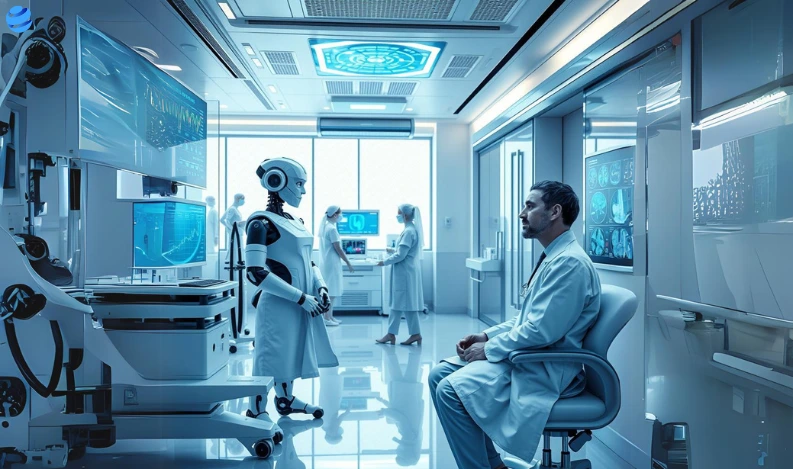
Healthcare is changing faster than ever. From digital health records to remote consultations, technology is becoming a bigger part of the way doctors, nurses, and patients manage health. Among the most promising developments is Artificial Intelligence (AI). AI is no longer just a futuristic concept. It is already being used to analyse medical images, support doctors in making diagnoses, monitor patients, organise health records, and even assist people with everyday health management. At its best, AI does not replace healthcare professionals. Instead, it gives them better tools, helps them work more efficiently, and provides insights that may otherwise be difficult to identify. Here is a closer look at how AI is reshaping modern healthcare and what its growing role could mean for the future.
Understanding AI in Healthcare
What Is AI?
Artificial Intelligence refers to computer systems that can perform tasks that normally require human intelligence. These tasks can include recognising patterns, analysing information, solving problems, understanding language, and making predictions.
In simple terms, AI allows computers to process large amounts of information and identify useful patterns much faster than humans can.
Healthcare is particularly suited to AI because medical professionals work with enormous amounts of information, including medical images, patient histories, laboratory results, genetic data, and clinical research.
Types of AI
Not all AI systems work in the same way. Most of the AI being used today is known as narrow AI, meaning it is designed to perform a specific task. For example, an AI system may be trained to analyse an X-ray or identify certain patterns in patient data.
Another concept is general AI, which would be capable of handling a much wider range of intellectual tasks similar to a human. This type of AI remains largely theoretical and is not what hospitals commonly use today.
How AI Is Improving Medical Diagnostics
Earlier Detection of Diseases
One of AI's biggest contributions to healthcare is its ability to support early disease detection.
AI systems can analyse medical images such as X-rays, CT scans, and MRIs and identify patterns that may be difficult to notice. In areas such as cancer detection, AI can assist medical professionals by highlighting suspicious areas that may require closer examination.
Earlier detection can make a major difference because many diseases are easier to manage when they are identified at an earlier stage.
Supporting More Accurate Diagnoses
Doctors have to make decisions based on a huge amount of information, and even highly experienced professionals can miss subtle signs or face diagnostic uncertainty.
AI can provide another layer of analysis. By comparing patient information with large datasets, AI systems can identify patterns and potential risks that may support a doctor's assessment.
The goal is not to replace clinical judgement. Instead, AI can act as an additional tool that helps healthcare professionals make better-informed decisions.
Moving Towards Personalised Medicine
Every patient is different, and the same treatment does not necessarily work equally well for everyone.
AI can help move healthcare towards more personalised treatment by analysing factors such as medical history, genetic information, lifestyle, and previous treatment outcomes. This information can help doctors determine which treatment approaches may be more suitable for an individual patient.
As AI technology continues to improve, personalised medicine could become an increasingly important part of patient care.
AI and Electronic Health Records
Making Health Records Easier to Manage
Electronic Health Records (EHRs) have made it easier to store and access patient information digitally, but they have also created another challenge: the sheer amount of data that healthcare professionals need to manage.
AI can help organise and analyse this information, making it easier for doctors to locate important details about a patient's medical history.
Instead of spending unnecessary time searching through large records, healthcare professionals can use AI-powered systems to identify relevant information more quickly.
Protecting Sensitive Health Information
Healthcare data is highly sensitive, so privacy and security are major concerns.
AI can help identify unusual activity and potential security threats. For example, systems can monitor access patterns and flag behaviour that may indicate unauthorised access.
However, AI itself must also be carefully managed. Strong cybersecurity, access controls, data protection policies, and appropriate regulation remain essential.
Predictive Analytics
One of the more interesting applications of AI is predictive analytics.
By examining historical and real-time health data, AI can identify patterns that may indicate a patient's risk of developing certain conditions. This can allow healthcare professionals to take action earlier rather than waiting until a problem becomes more serious.
Predictive tools are not perfect, but they can provide useful signals that support proactive healthcare.
AI in Hospitals
Smarter Medical Devices
Modern hospitals increasingly rely on connected and intelligent medical devices.
AI-powered systems can monitor vital signs and analyse patient data in real time. If a patient's condition changes, these systems can alert medical staff so they can respond quickly.
This can be particularly valuable in situations where patients require continuous monitoring.
Improving Hospital Efficiency
Healthcare is not only about diagnosis and treatment. Hospitals also have to manage appointments, staffing, documentation, patient flow, and countless administrative tasks.
AI can help automate some of these processes. It can assist with scheduling, organising information, coordinating workflows, and reducing repetitive administrative work.
When routine tasks are handled more efficiently, healthcare professionals can spend more time where it matters most, with their patients.
Supporting Nurses and Other Healthcare Professionals
Nurses often manage several responsibilities at once, from monitoring patients to administering medication and maintaining records.
AI can support them by automating certain routine processes and providing alerts when a patient's condition changes.
The technology is not intended to replace nurses. Instead, it can reduce some of the workload and give them more time to focus on direct patient care.
AI and Personal Health Management
Health and Wellness Apps
AI is also becoming part of everyday health management.
Many smartphone apps and wearable devices can track activity, sleep, heart rate, nutrition, and other health-related information. AI can analyse this data and provide personalised insights or reminders.
For example, an app might identify changes in activity levels or sleep patterns and encourage the user to pay closer attention to their routine.
These tools can support healthy habits, although they should not be treated as a substitute for professional medical advice.
Virtual Health Assistants
AI-powered virtual assistants are another growing area.
They can answer general health questions, provide basic information about symptoms, remind users about medications or appointments, and help people understand when they may need to speak with a healthcare professional.
Their biggest advantage is accessibility. A person can interact with a digital assistant at almost any time without having to wait for an appointment.
At the same time, AI assistants have limitations. They cannot replace a qualified doctor, particularly when symptoms are serious, complex, or unclear.
AI and Telemedicine
Telemedicine has made it possible for patients to consult healthcare professionals without visiting a clinic or hospital in person.
AI can make these services more useful by helping organise patient information, analyse symptoms, and support clinical decision-making during remote consultations.
This could be particularly valuable for people living in areas where access to healthcare specialists is limited.
The Future of AI in Healthcare
Continued Advances in Technology
AI technology is developing rapidly, and its role in healthcare is likely to expand.
Future systems may become better at analysing medical information, identifying health risks, supporting diagnosis, and helping doctors choose appropriate treatment options.
However, the most successful healthcare systems are likely to be those where AI and human expertise work together rather than treating technology as a replacement for professionals.
Faster Research and Drug Development
Developing new medicines can take years and requires enormous amounts of research.
AI can analyse large datasets and help researchers identify potential drug candidates, understand biological patterns, and predict how certain compounds may behave.
By helping researchers process information more efficiently, AI could contribute to faster and more targeted drug development.
Expanding Access to Healthcare
AI could also help address healthcare gaps around the world.
In regions where medical specialists are limited, AI-supported diagnostic tools may provide additional assistance to healthcare workers. Remote communities could potentially benefit from technologies that help identify health concerns without requiring immediate access to a specialist.
Used responsibly, AI could become one of several tools helping reduce differences in access to quality healthcare.
Challenges That Cannot Be Ignored
Privacy and Data Security
The more healthcare systems rely on AI, the more important data protection becomes.
Patient information must be handled securely, with appropriate safeguards against unauthorised access, misuse, and data breaches. Healthcare organisations also need clear policies explaining how patient data is collected, stored, and used.
Ethical Concerns and Bias
AI systems learn from data, which means the quality and diversity of that data matter.
If training data contains gaps or biases, an AI system can potentially produce unfair or inaccurate results for certain groups of patients. Healthcare providers therefore need to evaluate AI systems carefully and maintain human oversight.
Transparency is also important. Patients and healthcare professionals should be able to understand the role AI plays in important medical decisions.
Integrating AI Into Existing Healthcare Systems
Introducing AI into a hospital is not as simple as installing new software.
Healthcare professionals need training, existing systems need to work with new technologies, and organisations must establish clear processes for using AI responsibly.
Successful implementation requires both technology and people to work together.
Conclusion
Artificial Intelligence is changing healthcare from the way diseases are detected to the way patients are monitored and treated. It can help doctors analyse complex information, support earlier diagnosis, personalise treatment, streamline hospital operations, and make health management more accessible.
But AI is not a magic solution, and it should not replace the human side of healthcare. Medical expertise, empathy, communication, and professional judgement remain essential.
The real opportunity lies in combining human experience with the speed and analytical capabilities of AI. As the technology continues to mature, this partnership could lead to healthcare that is more personalised, efficient, accessible, and responsive to the needs of patients.
The future of healthcare may not be about choosing between people and technology. It may be about bringing the strengths of both together.
You may also like:-
















linda
This article is such an eye-opener! I never realized how much AI is already impacting healthcare. It’s amazing to see how technology is being used to not only speed up diagnosis but also to provide better care for patients. I do wonder, though, how safe it is to rely so heavily on machines. Will doctors still play a crucial role, or are we moving toward a future where AI takes over completely? 🤔 Great read, though! It got me thinking about the future of healthcare.