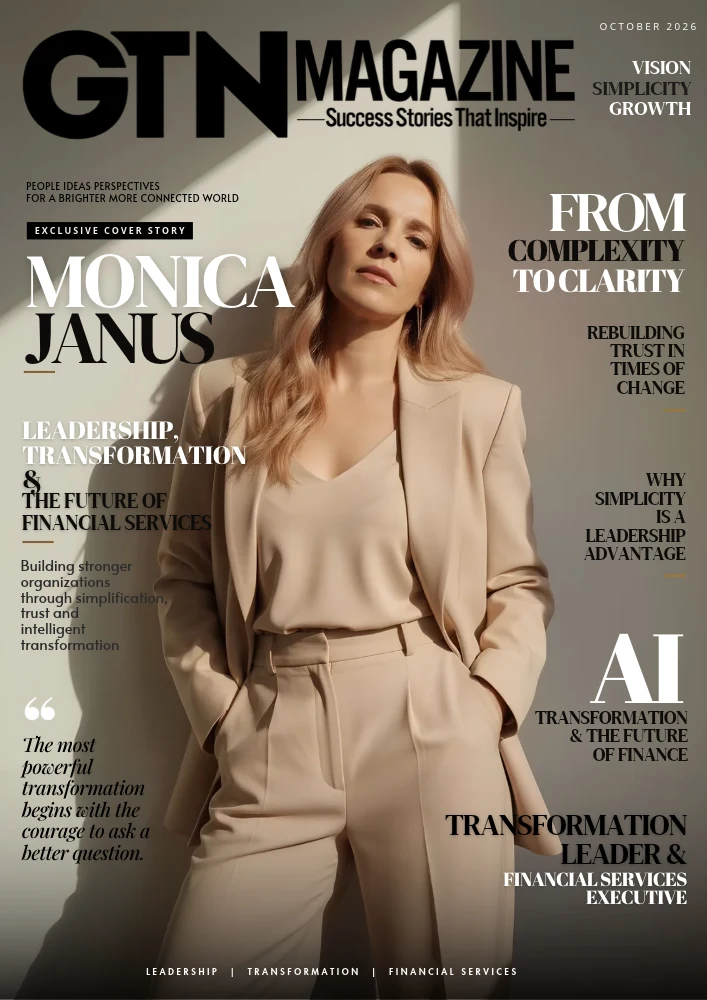



In financial services, complexity is often treated as an unavoidable part of doing business. Monica Janus has built her leadership philosophy around questioning that assumption. In an industry where sophisticated systems, expanding regulations and evolving technologies often shape the way organisations operate, the ability to simplify can be just as valuable as the ability to innovate. For Monica Janus, this understanding has become a defining principle of her professional journey, influencing how she approaches leadership, organisational transformation and the future of financial services.
With an international career spanning Ireland, the United States and Poland, Monica has developed extensive experience across derivatives, fund administration, financial reporting, operational management and enterprise transformation. Her journey has been shaped by a willingness to challenge established practices, rethink inefficient processes and build organisations where accountability, trust and individual potential can thrive. From leading operational improvements and redesigning complex operating models to exploring the opportunities presented by artificial intelligence, her work reflects a consistent belief that meaningful progress begins with questioning what no longer serves its purpose.
Yet Monica's perspective extends beyond operational efficiency and business performance. She believes that successful leadership is measured not only by the results an organisation achieves, but also by the confidence it builds in its people and the opportunities it creates for them to grow. Her experiences have also strengthened her conviction that professional ambition, personal fulfilment and family support are deeply connected, offering a more human perspective on what it means to build a meaningful career.
In this exclusive feature with GlobalTimesNow, Monica shares the experiences and principles that have shaped her leadership philosophy, her perspective on AI-driven transformation, and her vision for Poland's evolving role in global financial services. She also reflects on rebuilding trust during challenging times, the importance of simplifying organisational structures, and the legacy she hopes to leave through the people she has empowered. Her journey offers a thoughtful exploration of leadership that goes beyond authority and achievement, inviting readers to reconsider what it truly means to create lasting impact.
The Courage to Question Complexity
Monica Janus did not enter financial services with the ambition of managing increasingly large organisations. Instead, she became fascinated by a much more uncomfortable question: why do intelligent people, working incredibly hard, sometimes create systems that make their own lives unnecessarily difficult? That question has followed her throughout her career.
Having worked across different countries, cultures and financial institutions, from Ireland and the United States to Poland, Monica has experienced the industry from multiple perspectives, including derivatives, middle-office operations, fund administration, financial reporting and enterprise transformation. Throughout this journey, she began to notice a recurring pattern.
Organisations were surrounded by extraordinarily talented people. Yet those same individuals were spending enormous amounts of time managing problems that the organisations themselves had created. Controls were added because previous controls had failed. Processes became increasingly fragmented. Organisational structures expanded, but accountability became less clear. Technology was frequently introduced without fundamentally changing how work was performed.
In Monica's view, organisations were becoming exceptionally good at managing inefficiency. At some point, she began questioning whether managing complexity had become a substitute for challenging it. This marked a turning point in how she viewed her career.
She realised that her greatest contribution would not come from becoming better at running complicated operations. It would come from questioning why those operations needed to be so complicated in the first place. That realization gradually shifted her focus from operational management to transformation leadership.
It also shaped a principle that continues to guide her approach today: before asking how to make a process faster, leaders should first ask whether the process should exist at all. For Monica, the most important transformation does not always begin with a new strategy, technology or investment. Sometimes, it begins with the courage to ask a better question.
Leadership Beyond Authority
Early in her career, Monica believed great leadership meant having the answers. Today, she believes it means building an organisation that no longer depends on one person having them.
When individuals first become leaders, it is natural for them to measure their value by the number of problems they solve. They become the people others turn to. They make difficult decisions, remove obstacles and keep the organisation moving. It feels productive and can even create a sense of being indispensable.
However, experience taught Monica that indispensability is not necessarily a measure of successful leadership. Sometimes, it is a symptom of a poorly designed organisation. If every important decision requires the same person, every problem escalates through the same hierarchy and every exception depends on executive intervention, the organisation may not be well managed. It may simply be highly dependent.
Her leadership philosophy has evolved from managing performance to creating the conditions in which strong performance can be achieved consistently. That requires clear accountability, genuine empowerment and a culture where people are encouraged to challenge established practices rather than simply follow them. It also requires humility.
Monica has led organisations through periods of significant operational challenges, low employee engagement, high attrition and major organisational transformations. These experiences taught her something that leadership textbooks sometimes underestimate. People do not need a leader who appears invincible. They need a leader whose decisions they can trust. They need honesty when things are difficult, consistency when priorities change and confidence that accountability works in both directions.
She also learned that empowerment does not mean the absence of control. Rather, it involves the intelligent distribution of responsibility within a framework that people understand. Today, Monica judges leadership less by how many decisions a leader makes and more by how many good decisions the organisation can make without them.
For her, the ultimate achievement of leadership is not becoming irreplaceable. It is building something that no longer needs one individual to hold it together.
Beyond the Transformation Playbook

Monica believes most transformations do not fail because organisations lack strategy. They fail because organisations confuse activity with progress. A new organisational chart is not transformation. A new technology platform is not transformation. A cost-reduction exercise is not transformation. These are tools, and they create lasting value only when they fundamentally improve how an organisation operates.
Throughout her career, Monica has seen institutions spend significant resources on transformation programmes while preserving the very structures and behaviours that created their original problems. They automate inefficient processes instead of redesigning them. They move activities to another location without eliminating unnecessary work. They introduce new layers of governance while leaving accountability fragmented. To Monica, that is not transformation. It is an expensive rearrangement.
In one of her EMEA Financial Reporting initiatives, seven different operating models were challenged, with the organisation moving towards two standardised approaches. The objective was not simply to reduce variation. It was to create clearer ownership, simplify oversight, improve cross-country collaboration and establish a foundation for more effective technology and automation. The initiative questioned duplicated controls, unnecessary review cycles and activities that consumed resources without improving the quality of the final outcome.
In parallel, contractor optimisation across Ireland and Luxembourg generated approximately $1.2 million in annualised value. However, the most important lesson for Monica was not about financial savings. It was about understanding what sustainable efficiency really means. Real transformation does not simply remove people from a broken process and declare victory. It removes the reasons the process was broken in the first place.
That is why Monica approaches transformation from an end-to-end perspective. She believes organisations must understand the problem, redesign the operating model, establish clear requirements, work closely with technology teams, embed effective controls, prepare people for implementation and measure the results. Above all, the new model must become sustainable without constant intervention.
Otherwise, the business has not truly been transformed. It has merely created another programme to manage.
When Trust Becomes Performance
Monica believes people can accept difficult decisions. What destroys trust is being asked to believe a story that contradicts what they experience every day.
When an organisation is struggling, employees usually recognise the problems long before an executive presentation acknowledges them. They know which processes are broken. They know where unnecessary work is being created. They recognise when accountability is missing and when decisions are repeatedly postponed. And they understand the difference between genuine change and a communication campaign.
For this reason, Monica has never believed that trust can be rebuilt through motivational speeches alone. It begins with honesty, followed by visible action.
When she took responsibility for Poland Fund Administration at State Street, the organisation was facing operational performance challenges. The priorities were to rebuild stability, strengthen accountability and improve the everyday working environment. During 2024 and 2025, key operational performance indicators moved from amber and red to green. Between 2023 and 2024, overtime was reduced by more than 30%.
Within UK Financial Reporting, significant improvements in organisational stability were also achieved, including a substantial reduction in attrition. For Monica, these were not simply management statistics. They represented improvements that employees could experience directly. Work became more predictable. Problems were addressed more systematically. Expectations became clearer. People began seeing evidence that improvement was possible. And that matters enormously.
Confidence does not return simply because leaders promise a better future. It returns when people begin experiencing a better present. Monica also believes rebuilding trust requires leaders to challenge processes that have frustrated employees for years.
Sometimes, the most meaningful demonstration of respect is removing an unnecessary control, simplifying a workflow or giving a capable team the authority to make decisions. Trust grows when employees see that leadership is willing to change the system rather than constantly demanding that people adapt to its weaknesses.
That trust then becomes the foundation for performance. Because people who believe in an organisation do not simply work for it. They begin taking ownership of its success.
Rethinking Finance in the AI Era
For Monica, the greatest opportunity in artificial intelligence is not that machines will learn to do what humans do. It is that humans may finally stop doing what machines should have been doing all along.
For decades, financial institutions have invested heavily in technology while continuing to operate through fragmented processes, manual reconciliations, repetitive reporting and complex approval structures. Documents were digitised. Individual tasks were automated. Activities were moved between locations. But the underlying operating model was not always questioned. AI now presents an opportunity to do something fundamentally different.
During operational re-engineering work, Monica and her teams identified potential AI applications across approximately 41% of the activities assessed. For her, this was not simply an automation opportunity. It demonstrated how much human capacity might be released from repetitive work and redirected towards higher-value activities.
She envisions experienced financial professionals spending less time collecting information, reviewing predictable exceptions or preparing repetitive commentary. Instead, they could spend more time exercising judgement, anticipating risks, developing client solutions and improving how financial services are delivered. That is the opportunity she sees.
However, there is also a risk. If artificial intelligence is applied to an unintelligent operating model, organisations may simply produce inefficiency at unprecedented speed. Technology should not become an excuse to preserve unnecessary complexity. Before automating an activity, Monica believes leaders should ask why that activity exists, what value it creates and whether the process should be redesigned entirely.
In financial services, this transformation must also be responsible. Data quality, explainability, regulatory compliance, operational resilience and human accountability cannot be afterthoughts. The institutions that succeed will not necessarily be those that deploy the greatest number of AI tools. They will be those capable of combining intelligent technology with radically simpler operating models and better human decision-making.
Monica believes this transition will also challenge something even more fundamental: how professional value is defined. For generations, organisations have rewarded employees for their ability to manage complexity. But what happens when technology can manage much of that complexity more efficiently?
Perhaps the most valuable leaders of the AI era will not be those who know how to manage the most complexity, but those who know how to make it disappear.
Making Simplicity a Strength

One of the most expensive sentences in corporate life, according to Monica, is: "We have always done it this way." Not because tradition is inherently wrong, but because familiarity is often mistaken for necessity.
Complexity rarely arrives through one dramatic decision. It accumulates quietly. A problem occurs, so another control is introduced. An exception appears, so another approval is required. A new regulatory obligation emerges, so an additional reporting layer is created. Over time, organisations develop processes that nobody would deliberately design from scratch. Yet everyone is afraid to remove them.
The result is a system in which talented people spend enormous amounts of time navigating organisational obstacles instead of creating value. Monica's approach begins by making that complexity visible. Who owns the outcome? How many handoffs are required? Which controls genuinely reduce risk? Where are decisions delayed? And perhaps most importantly, which activities create value for clients, and which exist only because of organisational history?
In her experience, the greatest gains often come from addressing the interfaces between functions rather than optimising each function independently. For example, re-engineering financial reporting without understanding its dependence on upstream fund accounting processes can deliver only limited improvements. That is why Monica and her teams initiated work to bring the two functions closer together, challenging duplicated reviews, unnecessary draft cycles and fragmented communication.
The goal was not to make everyone work faster. It was to eliminate work that should never have been necessary. Monica believes high-performing organisations share a few essential characteristics: clear accountability, intelligent controls, simple processes, effective technology and people who have the confidence and authority to act.
For Monica, this is the essence of the “first-time-right” approach. It is not simply about correcting fewer mistakes, but about designing systems that prevent unnecessary errors and rework from being created. The true cost of complexity is not only the money organisations spend managing it. It is the innovation, speed and human potential they sacrifice because of it.
For Monica, simplification is therefore not merely an operational exercise. It is a leadership responsibility.
Poland's Next Global Chapter
For years, Poland's competitive advantage lay in its ability to deliver global financial services at a lower cost. Monica believes its next competitive advantage must be the ability to design how those services are delivered.
She considers this one of the most important strategic transitions facing the Polish financial services industry. Poland has developed a strong international services sector, supported by educated professionals, multilingual capabilities, operational expertise and experience serving complex global institutions.
However, the competitive environment is changing. AI and automation are transforming the economics of work. Activities that were once transferred across borders in search of labour-cost advantages may increasingly be automated or fundamentally redesigned. If Poland continues to compete primarily on cost, it risks competing against technology. Monica does not consider that a sustainable long-term strategy.
Instead, she believes Poland has an opportunity to redefine its position in the global value chain, moving from execution to ownership, from processing to decision-making, and from following global strategies to helping create them.
Throughout her career, Monica has seen firsthand how Polish teams can operate far beyond the traditional boundaries of shared services. In her EMEA leadership roles, she and her teams worked on cross-country operating model redesign, reporting governance, technology initiatives and expanding responsibilities for Polish teams.
One particularly important initiative involved securing regulatory permission for the Polish Financial Reporting hub to communicate directly with clients and auditors. For Monica, this represented more than an operational improvement. It challenged the assumption that strategic accountability and client-facing responsibilities must always remain in traditional financial centres.
Talent is not geographically determined. Neither is judgement. Neither is leadership.
Monica believes Poland no longer needs to prove that its professionals can execute instructions from London, Dublin or New York. That capability has already been demonstrated. What is needed now is greater ambition around intellectual ownership, transformation leadership, technology innovation and global decision-making.
This requires a shift in mindset, both within multinational institutions and within Poland itself. Monica believes the country must develop leaders who are comfortable challenging global assumptions, owning outcomes and influencing decisions beyond national boundaries.
The future of Poland's financial services industry should not be defined simply by the number of jobs created. It should be defined by the strategic value those jobs deliver. For Monica, the question is no longer whether Poland deserves a seat at the global table. It is whether the country is ambitious enough to help redesign the table itself.
The Human Side of Leadership
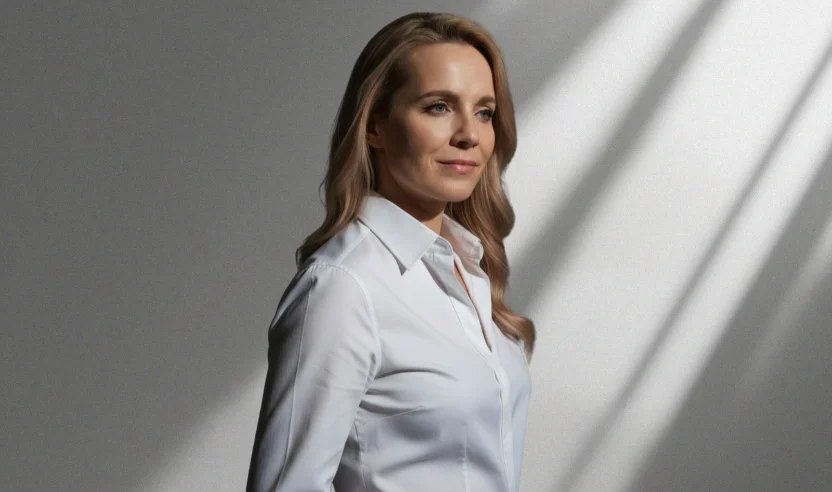
Monica has never wanted her legacy to be defined by the size of the organisation she managed. Instead, she wants it to be measured by the number of people who became capable of achieving things they once believed were beyond their reach.
Executive careers are often discussed in terms of titles, headcounts, financial results and organisational scale. These things matter because they demonstrate responsibility and impact. However, they are not what Monica remembers most vividly.
She remembers teams that regained confidence after difficult periods. She remembers individuals who grew into leadership roles they once thought were beyond them. She remembers organisations that moved from permanent crisis management to stability, confidence and ambition. And she remembers moments when challenging an established assumption opened the door to something better. To her, that is the real privilege of leadership.
But Monica also recognises another dimension of success that rarely appears in executive biographies, leadership interviews or annual reports. The people who make it possible.
She has built her career across countries, cultures and demanding international leadership roles. However, she has never believed that professional success happens in isolation. Behind every successful career, there is often an invisible infrastructure of love, sacrifice, understanding and support.
For Monica, combining motherhood with an international executive career would not have been possible without the support of her husband and family. She believes there needs to be far greater honesty about that reality.
For years, the conversation around women in leadership has focused on whether women can have it all. Monica believes that is the wrong question. The question is not whether women can do everything. It is why society still expects them to.
Balance, in her view, is not about giving every part of life equal attention every single day. That is neither realistic nor sustainable. Instead, it involves understanding priorities, making conscious choices and accepting that different moments in life require different things.
Sometimes, a career needs more attention. Sometimes, family does. And real partnership means neither person should have to carry the entire weight alone.
Monica is proud of what she has achieved professionally, but she is equally proud of the family life she and her family have built alongside her career. Because success loses much of its meaning if the people one loves are the price paid to achieve it.
This perspective has also influenced how she leads. She has become increasingly convinced that professional excellence and humanity should never be treated as opposing forces. Organisations achieve extraordinary things through people, not despite them. Leadership should therefore create opportunities for individuals to grow without losing sight of what makes their lives meaningful beyond work.
For the next generation of female leaders, Monica's message is clear: Be ambitious. Be courageous. Build an extraordinary career. But never confuse independence with having to do everything alone.
As for her professional legacy, she hopes to leave behind stronger organisations, more confident people and operating models that are simpler, more intelligent and more resilient. She wants people to remember that leadership is not about proving how much complexity one can handle. It is about having the courage to eliminate what no longer serves a purpose.
And perhaps, above all, she hopes the people she has worked with will remember that she believed in their potential, sometimes before they fully believed in it themselves.
Because at the end of a career, titles change, organisations evolve and financial results eventually become historical numbers. But the confidence a leader helps someone discover can last a lifetime.
For Monica, the most powerful thing a leader can build is not an organisation that depends on them, but one that becomes extraordinary without them. That, to her, is a legacy worth building.
Conclusion
Throughout her career, Monica Janus has approached leadership with a willingness to question established practices and reconsider how financial institutions operate. From improving operational performance and redesigning complex processes to exploring the possibilities of artificial intelligence, her experiences have reinforced the importance of building organisations that are both efficient and capable of adapting to change.
Her perspective on the future of financial services also reflects a broader ambition. She sees opportunities for Poland to move beyond its traditional role in global operations and take greater responsibility for innovation, strategic decisions and transformation. At the same time, she believes technological progress must be accompanied by clear accountability, sound judgement and an understanding of the people whose work it will reshape.
What makes Monica's journey particularly meaningful is the connection she draws between professional achievement and personal responsibility. Her appreciation for the support of her family, her commitment to developing future leaders and her belief in empowering people reflect a view of success that extends beyond organisational results. For Monica, meaningful progress is not simply about what a leader accomplishes during their career, but also about what others are empowered to achieve because of it.
You may also like:-