whatsapp

Exxon CEO Signals Potential Surge in Oil Prices as Iran Conflict Disruptions Deepen

  • 0
  • 752
/media/GTN__1_hJPmXJF.webp © Exxon CEO Signals Potential Surge in Oil Prices as Iran Conflict Disruptions Deepen

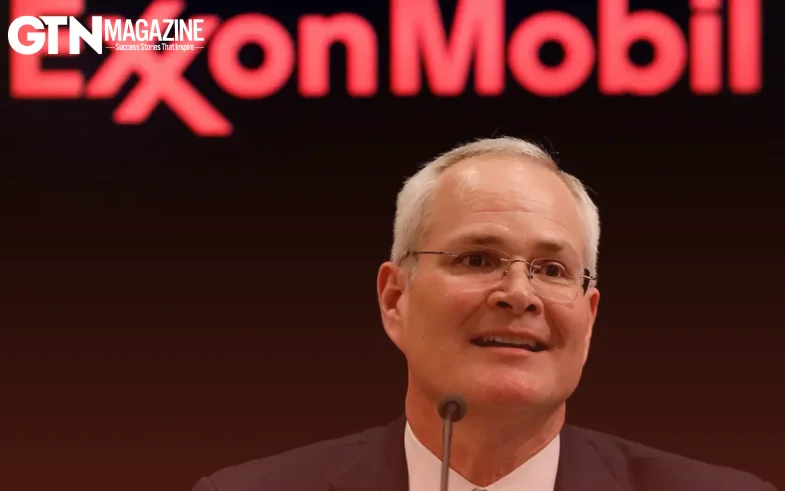
Global oil markets may be underestimating the long-term consequences of the ongoing Iran conflict, according to Exxon Mobil CEO Darren Woods, who warned that the full scale of supply disruptions has yet to be reflected in current pricing. Speaking during the company’s first-quarter earnings discussion, Woods emphasized that while oil prices have remained relatively stable in recent weeks, underlying market conditions suggest stronger upward pressure could emerge if disruptions persist.

At present, U.S. crude prices have hovered near $101 per barrel, while Brent crude has traded around $108. These levels, Woods noted, are more aligned with historical averages than with the magnitude of supply constraints currently affecting global markets.

According to Woods, several temporary factors have helped cushion the immediate impact of the conflict. These include oil tankers already in transit during the early stages of the war, the release of strategic petroleum reserves by governments, and the drawdown of commercial inventories across key markets.

However, he cautioned that these buffers are finite.

“As these supply sources begin to diminish, the market will start to feel the true weight of the disruption,” Woods indicated, adding that sustained closure or restrictions in critical shipping routes could accelerate price increases.

A major point of concern remains the Strait of Hormuz, a vital artery for global energy trade. Any prolonged disruption in this region significantly affects oil and natural gas flows, tightening supply chains worldwide.

Woods further explained that even if the strait reopens in the near term, normalization will not be immediate. Oil flows from the Persian Gulf are expected to take several weeks or potentially months to stabilize. Tankers will need to be repositioned, delayed shipments processed, and logistical backlogs cleared before supply levels return to equilibrium.

Beyond immediate disruptions, the aftermath of the conflict could introduce additional upward pressure on prices. Governments and energy companies will likely need to rebuild depleted reserves and inventories, increasing demand in an already strained market.

Exxon Mobil has also begun to feel the operational impact of the crisis. The company projected a potential decline of up to 750,000 barrels per day in Middle East production if disruptions continue through the current quarter. This represents a significant portion of its global output, with approximately 15% of total production affected by constraints linked to the conflict.

In addition, damage to liquefied natural gas infrastructure in the region has further complicated supply dynamics, highlighting the broader risks posed by geopolitical instability.

Despite the volatility seen in oil prices since the conflict began—with sharp increases followed by declines driven by shifting diplomatic signals Woods maintained that current pricing does not fully account for the scale of disruption.

Market analysts echo this sentiment, noting that continued uncertainty surrounding negotiations and regional security could lead to heightened volatility in the coming weeks.

For now, energy markets remain in a delicate balance supported by short-term supply measures but increasingly vulnerable to deeper structural shortages if tensions persist.

Related Posts
© ECB Holds Interest Rates at 2% Amid Rising Inflation and Slowing Eurozone Growth

ECB Holds Interest Rates at 2% Amid Rising Inflation and Slowing Eurozone Growth

The European Central Bank (ECB) has kept its key interest rates unchanged at 2% for the third consecutive meeting, as policymakers navigate a complex economic environment marked by rising inflation an...

  • 661
© India Surpasses 50% Non-Fossil Power Capacity, Achieves Target Ahead of 2030 Deadline

India Surpasses 50% Non-Fossil Power Capacity, Achieves Target Ahead of 2030 Deadline

India has reached a major milestone in its energy transition, achieving more than 50% of its installed electricity capacity from non-fossil sources five years ahead of its 2030 target under the Paris ...

  • 6742
© Jamie Dimon Warns of Potential Bond Crisis as Global Debt Pressures Mount

Jamie Dimon Warns of Potential Bond Crisis as Global Debt Pressures Mount

Jamie Dimon, Chairman and Chief Executive Officer of JPMorgan Chase & Co., has issued a stark warning about the growing risk of a global bond market crisis, citing rising government debt levels and mo...

  • 6301
© Markets flat as oil holds above $100 on stalled US–Iran talks

Markets flat as oil holds above $100 on stalled US–Iran talks

Global stock markets traded largely flat on Monday while oil prices rose above $100 per barrel, as stalled negotiations between the United States and Iran heightened concerns over supply disruptions. ...

  • 7831
© US Crude Oil Tanker Makes Landmark Delivery to Japan

US Crude Oil Tanker Makes Landmark Delivery to Japan

A tanker transporting approximately 910,000 barrels of crude oil from Texas has successfully arrived in Tokyo Bay, marking one of the largest direct shipments of US-produced crude to Japan in recent y...

  • 17939
© US Consumer Sentiment Falls to Record Low in April as Inflation Concerns Intensify

US Consumer Sentiment Falls to Record Low in April as Inflation Concerns Intensify

U.S. consumer sentiment declined to its lowest level on record in April, as rising fuel costs and inflation concerns continued to weigh on households despite a ceasefire in the Iran conflict. The U...

  • 28780
© China’s Power Capacity Jumps 15.5% by March 2026 as Renewables Drive Expansion

China’s Power Capacity Jumps 15.5% by March 2026 as Renewables Drive Expansion

China’s total installed power generation capacity rose to 3.96 billion kilowatts by the end of March 2026, registering a 15.5 percent increase compared to the same period last year, according to offic...

  • 37276
© Germany Cuts 2026 Growth Forecast to 0.5% as Iran War Hits Economy

Germany Cuts 2026 Growth Forecast to 0.5% as Iran War Hits Economy

Germany has reduced its economic growth forecast for 2026 to 0.5%, down from 1% projected earlier this year, citing the impact of rising energy costs and supply disruptions linked to the ongoing Iran ...

  • 28682
© US Businesses Begin Claiming Refunds on Trump Tariffs After Court Ruling

US Businesses Begin Claiming Refunds on Trump Tariffs After Court Ruling

US businesses have started filing claims to recover billions of dollars in tariffs imposed during the presidency of Donald Trump, after a court ruling found the measures unconstitutional. The U.S. ...

  • 45776
© U.S. Seizes Iranian-Flagged Ship Touska in Gulf of Oman, Trump Says

U.S. Seizes Iranian-Flagged Ship Touska in Gulf of Oman, Trump Says

The United States has seized an Iranian-flagged cargo vessel in the Gulf of Oman after a naval operation that involved warning fire and boarding by U.S. Marines, according to statements from President...

  • 44898
Commnets 0
Leave A Comment