


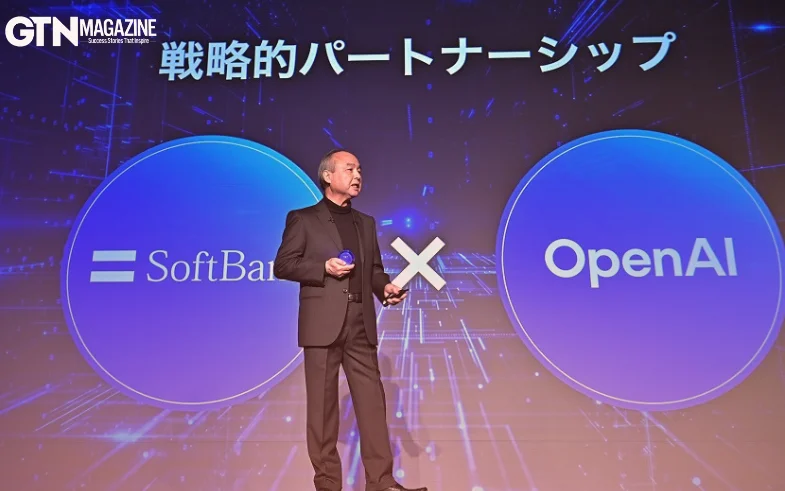
Investor enthusiasm surrounding artificial intelligence has propelled Japanese technology conglomerate SoftBank Group to become Japan’s most valuable listed company, but analysts are increasingly questioning whether the company’s aggressive investment strategy is creating new financial vulnerabilities.
Shares of SoftBank have surged nearly 70% since the start of the year, driven by optimism surrounding the AI sector, the soaring valuation of chip designer Arm Holdings and expectations that AI developer OpenAI could eventually launch a blockbuster public offering.
The rally recently allowed SoftBank to overtake Toyota Motor Corporation in market capitalization, marking a remarkable turnaround for a company that only a few years ago was grappling with losses linked to its failed investment in WeWork.
OpenAI Exposure Continues to Grow
SoftBank has significantly expanded its commitment to OpenAI over the past year.
The company participated in OpenAI's funding round in 2025 and later secured a $40 billion bridge loan in March to finance additional investments in the artificial intelligence company and support broader corporate activities.
According to financial disclosures, SoftBank's stand-alone interest-bearing debt stood at approximately 16.3 trillion yen ($104 billion) at the end of 2025.
Credit rating agency S&P Global Ratings estimated in March that OpenAI could account for roughly 30% of SoftBank's investment portfolio following an additional $30 billion investment in the ChatGPT developer. That would place OpenAI alongside Arm Holdings as one of the conglomerate's largest assets.
Credit Outlook Turns Negative
The growing concentration of investments has prompted concern among credit analysts.
In March, S&P Global Ratings revised SoftBank's credit outlook from stable to negative, citing concerns that the company's liquidity position, asset quality and financial flexibility could weaken because of its sizeable commitment to OpenAI.
Analysts say the issue is not only the amount of debt on SoftBank's balance sheet but also the increasing dependence on the future success of a single company.
"The risk profile of SoftBank is large and getting larger. If OpenAI fails to deliver, there could easily be a liquidity crunch at SoftBank," said Richard Windsor, founder of research firm Radio Free Mobile.
Success of OpenAI Seen as Critical
Market observers note that SoftBank's fortunes are becoming increasingly tied to OpenAI's future valuation and potential public market debut.
Analysts warn that if OpenAI fails to achieve a successful IPO or maintain its lofty valuation, pressure could mount on SoftBank's balance sheet.
OpenAI was reportedly valued at approximately $852 billion following a record-breaking $122 billion funding round earlier this year, making it one of the world's most valuable private technology companies.
Jay Ritter, professor emeritus at the Warrington College of Business, described SoftBank as effectively offering investors a leveraged bet on OpenAI's future.
"If OpenAI does well, leverage is great. But if OpenAI and other investments do poorly, the leverage will hurt SoftBank," Ritter said.
Lessons From WeWork Still Fresh
Analysts also point to SoftBank's costly experience with WeWork as a reminder of the risks associated with concentrated investments.
Through its Vision Fund, SoftBank invested billions of dollars into the office-sharing startup, which was once valued at $47 billion. However, concerns over governance, profitability and the impact of the COVID-19 pandemic led to a dramatic collapse in value.
WeWork eventually filed for bankruptcy protection in the United States in 2023, leaving SoftBank with cumulative losses exceeding $14 billion.
Some Investors Remain Optimistic
Not all market participants share the growing concerns.
Richard Kaye, portfolio manager at Comgest, argued that SoftBank's financial position remains manageable despite its elevated debt levels.
According to Kaye, the company's loan-to-value ratio remains below 25%, indicating that its assets continue to comfortably exceed its borrowing obligations.
He added that even a significant decline in OpenAI's valuation would likely result in a portfolio markdown rather than a solvency crisis.
Son Stands Firm on AI Strategy
SoftBank founder and Chief Executive Officer Masayoshi Son has repeatedly defended the company's aggressive investments in artificial intelligence.
Speaking recently, Son described the AI revolution as substantially larger than the internet boom of the late 1990s and suggested that any future correction in AI-related stocks would create attractive buying opportunities rather than signal a long-term threat to the sector.
As SoftBank deepens its commitment to artificial intelligence, investors will be closely watching whether the company's high-conviction strategy delivers outsized returns or revives concerns about the risks of concentrated, debt-fueled investing.
More News:-