
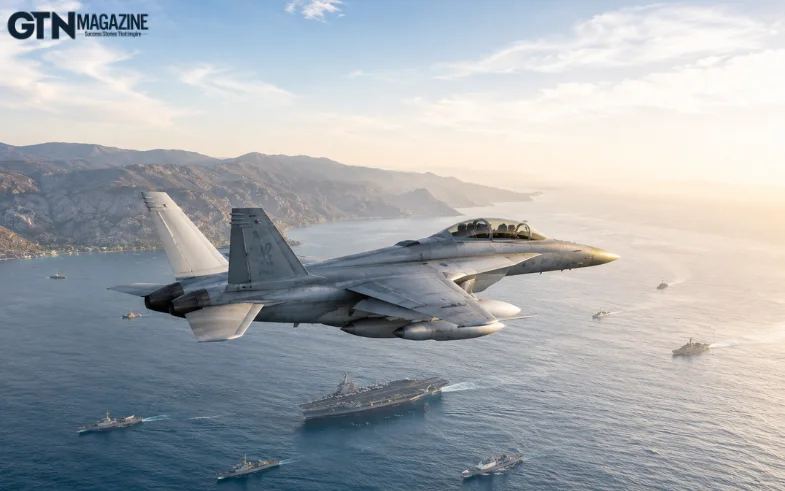
The United States launched a large-scale military operation against Iran, targeting more than 80 military sites after Tehran allegedly attacked three commercial vessels transiting the Strait of Hormuz, according to the U.S. Central Command (CENTCOM). The strikes mark one of the most significant escalations between the two countries since the ceasefire agreement reached in June.
In an official statement posted on X, CENTCOM said U.S. forces carried out a "series of powerful strikes" aimed at degrading Iran's military capabilities and preventing further attacks on international shipping operating in one of the world's busiest maritime trade routes.
According to CENTCOM, the operation struck air defense systems, command-and-control facilities, anti-ship missile positions, and other strategic military infrastructure across Iran. More than 60 small boats operated by the Islamic Revolutionary Guard Corps (IRGC) were also reportedly destroyed during the mission.
U.S. officials said the military action was conducted in direct response to Iranian attacks on three commercial vessels navigating the Strait of Hormuz, describing those incidents as "unwarranted, dangerous, and a clear violation" of the existing ceasefire framework.
"The operation was intended to impose significant costs for attacks targeting innocent civilian crews operating in international waters," CENTCOM said.
The latest exchange has reignited concerns over security in the Strait of Hormuz, a critical global energy corridor through which nearly 20% of the world's oil supply is transported. Any prolonged disruption in the waterway could have significant consequences for global energy markets and international trade.
Following the strikes, Bahrain's Interior Ministry advised residents to seek the nearest safe location as a precaution, highlighting growing regional concerns over the possibility of further military escalation.
Iran strongly criticized the U.S. operation. Iranian Parliament Speaker Mohammad Bagher Ghalibaf accused Washington of violating the memorandum of understanding signed in June, which was intended to reduce hostilities and ensure the reopening of the Strait of Hormuz.
In a statement shared on social media, Ghalibaf said the United States had committed "major violations" of the agreement and warned that Iran would not yield to external pressure.
The renewed conflict comes just weeks after both countries agreed to pause military operations following earlier exchanges that disrupted shipping activity and temporarily affected oil exports through the strategic waterway. Diplomatic negotiations aimed at preventing further escalation had continued despite periodic tensions.
Earlier on Tuesday, Washington also revoked a sanctions waiver related to Iranian oil exports, adding further economic pressure as geopolitical tensions intensified.
The latest military developments have already influenced global financial markets, with oil prices rising sharply on renewed fears of supply disruptions and heightened uncertainty across the Middle East.
President Donald Trump, currently attending the NATO Summit in Ankara, Türkiye, has repeatedly stated that the United States' objective remains preventing Iran from developing a nuclear weapon while protecting international shipping routes and regional stability.
Security analysts believe the coming days will be critical as the international community closely watches Iran's response and assesses whether diplomatic efforts can prevent the conflict from widening further.
Must Read:-