

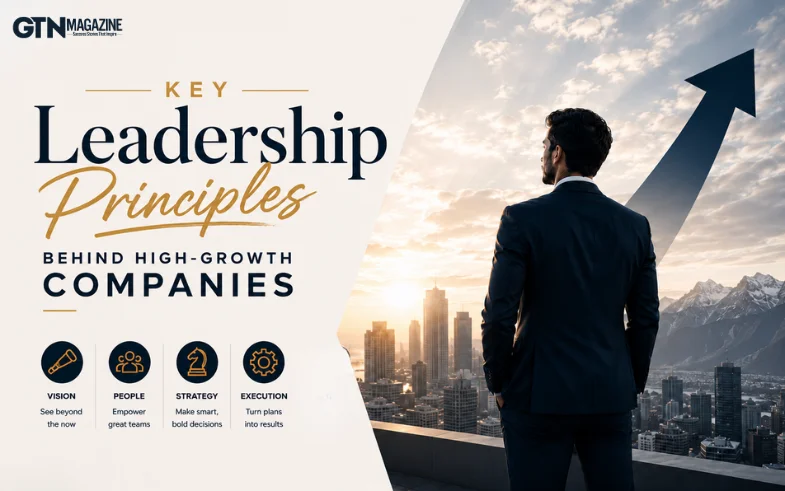
When people discuss high-growth companies, the conversation often revolves around innovative products, disruptive technologies, successful funding rounds, or aggressive expansion strategies. While these factors undoubtedly contribute to business growth, they rarely tell the complete story. Behind every organization that achieves sustainable growth is a leadership team capable of guiding people, making strategic decisions, and building a culture that supports long-term success.
Growth does not happen by accident. It is the result of countless decisions made over time, many of which are shaped by leadership. Companies that consistently outperform competitors are often led by individuals who understand that business growth is not solely about increasing revenue or entering new markets. It is about creating an organization that can adapt, innovate, and thrive in an increasingly complex business environment.
Effective leadership becomes even more important as organizations scale. What works for a small team may not work for a company with hundreds or thousands of employees. Leaders must continuously evolve their approach while ensuring that the organization remains aligned with its vision and values. The most successful companies recognize that leadership is not simply a management function; it is a strategic advantage that influences every aspect of business performance.
A Clear Vision Creates Direction and Momentum
One of the defining characteristics of high-growth companies is the presence of a clear and compelling vision. Successful leaders understand that people perform at their best when they know where the organization is heading and why its mission matters.
A strong vision serves as a roadmap for the entire company. It helps employees understand how their individual contributions connect to larger business objectives. It also provides clarity during periods of uncertainty, allowing teams to make decisions that support long-term goals rather than reacting to short-term challenges.
Organizations without a clear vision often struggle with inconsistent decision-making, conflicting priorities, and reduced employee engagement. In contrast, companies led by vision-driven leaders tend to experience stronger alignment across departments because everyone is working toward the same destination.
Leaders who effectively communicate their vision create a sense of purpose that extends beyond financial performance. Employees become more invested in the company's success because they understand the broader impact of their work. This shared commitment often becomes a powerful driver of growth and innovation.
People Development Is a Growth Strategy
Many organizations focus heavily on product development, market expansion, and operational efficiency while overlooking one of their most valuable assets: their people. High-growth companies take a different approach. They recognize that sustainable success depends on developing talented individuals who can contribute to the organization's future.
Strong leaders invest time and resources in helping employees expand their skills, increase their confidence, and prepare for greater responsibilities. Rather than viewing learning and development as optional initiatives, they treat them as strategic priorities.
When employees feel supported in their professional growth, they are more likely to remain engaged, productive, and committed to the organization. This creates a positive cycle where improved performance contributes to business growth, which in turn creates new opportunities for employees.
Some of the most effective people-development practices include:
-
Leadership training programs
-
Mentorship and coaching initiatives
-
Internal promotion opportunities
-
Continuous learning and professional education
-
Cross-functional project participation
-
Performance feedback and career planning
Organizations that prioritize talent development often build stronger leadership pipelines and reduce their dependence on external hiring for key positions.
Building a Culture of Accountability
Growth can quickly become unsustainable when accountability is lacking. As organizations expand, leaders must ensure that responsibilities remain clear and that employees understand how their actions influence business outcomes.
Accountability is often misunderstood as a system of control or supervision. In reality, it is about ownership. High-performing organizations create environments where individuals take responsibility for their work, proactively solve problems, and remain committed to delivering results.
Effective leaders reinforce accountability by setting clear expectations, providing necessary resources, and measuring performance against defined objectives. They also hold themselves accountable, demonstrating through their actions that responsibility applies to everyone regardless of position.
When accountability becomes part of company culture, organizations typically benefit from improved efficiency, better communication, and stronger execution. Employees understand what success looks like and feel empowered to contribute meaningfully to organizational goals.
Innovation Thrives Under the Right Leadership
Innovation is frequently associated with technology companies, but the ability to innovate is valuable in every industry. Whether improving customer experiences, optimizing operations, or creating new business models, innovation enables organizations to remain competitive and relevant.
High-growth leaders understand that innovation requires more than creativity. It requires an environment where employees feel comfortable sharing ideas, challenging assumptions, and exploring new possibilities.
Organizations that discourage risk-taking often struggle to adapt to changing market conditions. In contrast, companies that encourage experimentation are better positioned to identify opportunities before competitors.
Successful leaders foster innovation by:
-
Encouraging open communication
-
Rewarding creative thinking
-
Supporting calculated risk-taking
-
Learning from failures rather than punishing them
-
Investing in research and development
-
Staying informed about industry trends
By creating a culture that embraces continuous improvement, leaders position their organizations for sustained growth in evolving markets.
Customer-Centric Leadership Drives Long-Term Success
No company can achieve sustainable growth without understanding and serving its customers effectively. High-growth organizations consistently place customer needs at the center of strategic decision-making.
Customer-centric leaders spend time listening to feedback, analyzing market trends, and identifying ways to improve the customer experience. They recognize that long-term success depends on delivering genuine value rather than simply increasing sales.
As companies grow, maintaining close connections with customers becomes more challenging. Leaders must ensure that expansion does not create distance between the organization and the people it serves.
Businesses that remain customer-focused often experience:
-
Higher customer retention rates
-
Increased referrals and recommendations
-
Stronger brand reputation
-
Greater customer loyalty
-
Improved product and service development
-
More sustainable revenue growth
Companies that consistently prioritize customer satisfaction often outperform competitors because they build relationships rather than transactions.
Trust and Transparency Strengthen Organizations
Trust is one of the most important elements of effective leadership. Employees are more likely to follow leaders they respect, support organizational goals they understand, and remain committed during periods of uncertainty when communication is transparent.
High-growth leaders recognize that trust is built through consistent actions rather than promises. They communicate openly, share relevant information, and remain honest about challenges facing the organization.
Transparency becomes especially important during periods of rapid change. Employees want to understand how decisions are made and how those decisions may affect their roles. Leaders who communicate clearly reduce uncertainty and strengthen engagement.
The benefits of trust-based leadership include:
-
Stronger employee engagement
-
Better collaboration across teams
-
Increased innovation and idea sharing
-
Higher retention rates
-
Improved organizational resilience
-
Greater alignment with company objectives
Organizations built on trust are often more adaptable because employees feel confident contributing their ideas and addressing challenges proactively.
Resilience Helps Companies Navigate Uncertainty
Every business faces setbacks. Economic downturns, industry disruptions, competitive pressures, and operational challenges are unavoidable realities of growth. What distinguishes successful companies is how their leaders respond when difficulties arise.
Resilient leaders remain focused during challenging periods. Rather than reacting emotionally to setbacks, they assess situations objectively, identify solutions, and maintain confidence in the organization's long-term direction.
Resilience also influences organizational culture. Employees often take cues from leadership when facing uncertainty. Leaders who demonstrate optimism, adaptability, and determination help teams remain productive and motivated even under pressure.
Organizations led by resilient leaders are better equipped to recover from setbacks because they view challenges as opportunities to learn, improve, and strengthen their competitive position.
Data-Informed Decision-Making Improves Performance
Modern business leaders have access to more information than ever before. However, growth is not driven by data alone—it is driven by the ability to interpret information effectively and use it to make better decisions.
High-growth leaders combine experience, strategic thinking, and data analysis to guide business decisions. They use insights to understand customer behavior, evaluate performance, identify opportunities, and measure progress toward goals.
Rather than relying solely on assumptions, they focus on evidence-based decision-making that reduces uncertainty and improves outcomes.
Key areas where data-driven leadership creates value include:
-
Market analysis
-
Customer experience improvement
-
Operational efficiency
-
Sales performance tracking
-
Financial planning
-
Strategic growth initiatives
Organizations that consistently use data to support decision-making are often more agile and better prepared to respond to changing business conditions.
Alignment Across the Organization Accelerates Growth
As companies expand, maintaining alignment becomes increasingly important. Growth often introduces additional layers of management, larger teams, and more complex operations. Without alignment, organizations can become fragmented and inefficient.
Strong leaders ensure that employees understand company priorities, strategic objectives, and their individual responsibilities. They create systems that encourage collaboration and ensure that departments work toward shared goals.
When organizational alignment is strong, teams move faster, resources are used more effectively, and execution improves significantly. Alignment also reduces confusion and helps organizations maintain consistency as they scale.
Conclusion
The success of high-growth companies is rarely the result of a single strategy, product, or market opportunity. More often, it reflects the quality of leadership guiding the organization through periods of expansion and change.
Exceptional leaders provide vision, develop people, foster innovation, build trust, and create cultures rooted in accountability and continuous improvement. They understand that sustainable growth depends not only on achieving business objectives but also on creating environments where employees can thrive and customers can receive meaningful value.
As competition intensifies and industries continue to evolve, leadership will remain one of the most important factors influencing business success. Companies that embrace these leadership principles are better positioned to achieve growth that is not only rapid but also sustainable, resilient, and impactful for years to come.
You may also like:-