


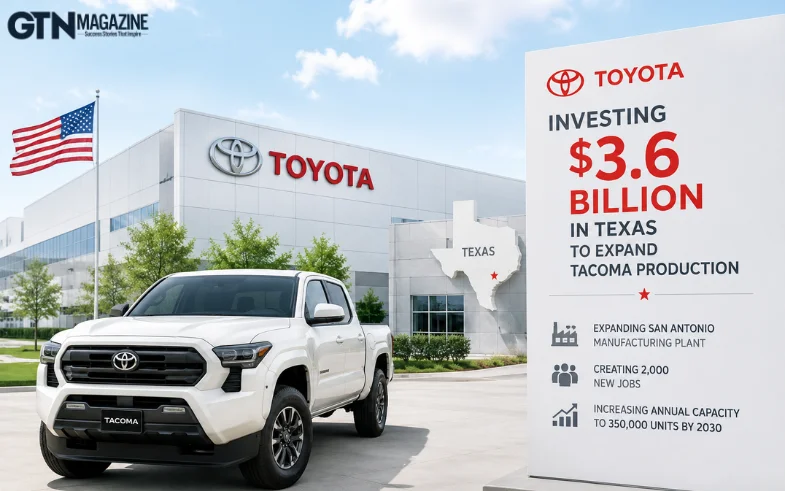
Toyota Motor Corporation has announced plans to invest $3.6 billion to expand its manufacturing operations in Texas, reinforcing its commitment to U.S. production by shifting a significant portion of Toyota Tacoma pickup truck manufacturing from Mexico to its San Antonio facility.
The multi-year investment will add a second vehicle assembly line to Toyota's Texas plant, create approximately 2,000 new jobs, and increase the facility's annual production capacity from 200,000 to 350,000 vehicles by 2030. The expansion is expected to significantly increase the size of the San Antonio campus, which currently manufactures the Toyota Tundra pickup and the Toyota Sequoia hybrid SUV.
The move forms part of Toyota's broader strategy to strengthen its manufacturing footprint in North America. The company has previously announced plans to invest up to $10 billion more in its U.S. operations by the end of the decade, reflecting growing confidence in domestic production and long-term market demand.
While a portion of Tacoma production will gradually shift from Toyota's plant in Tijuana, Mexico, over the next four years, the company confirmed that its facility in Guanajuato, Mexico, will continue producing the model, ensuring Mexico remains an important part of Toyota's regional manufacturing network.
Toyota said the expansion is intended to improve production flexibility, enhance supply chain resilience, and better meet rising demand for pickup trucks across North America.
"Toyota's continued investment in North America reflects our confidence in the region's skilled workforce, advanced manufacturing capabilities, and long-term growth opportunities," said Ted Ogawa, President and CEO of Toyota Motor North America. He added that the project demonstrates the company's ongoing commitment to American manufacturing while supporting economic growth and job creation.
The announcement comes as global automakers continue to reassess their production strategies amid evolving trade policies, supply chain shifts, and increased emphasis on localized manufacturing. Expanding U.S. production is expected to help Toyota respond more efficiently to market demand while reducing logistical complexities.
Toyota has steadily expanded its presence in Texas since opening the San Antonio plant in 2003. Including the latest investment, the company will have committed more than $8 billion to the site, which is also preparing to launch a new rear axle manufacturing facility later this year.
The increased production capacity is expected to strengthen Toyota's position in the highly competitive U.S. pickup truck market. With strong consumer demand for both traditional pickups and hybrid vehicles, the automaker aims to improve vehicle availability, boost manufacturing efficiency, and support its long-term growth strategy across North America.
Must Read:-