


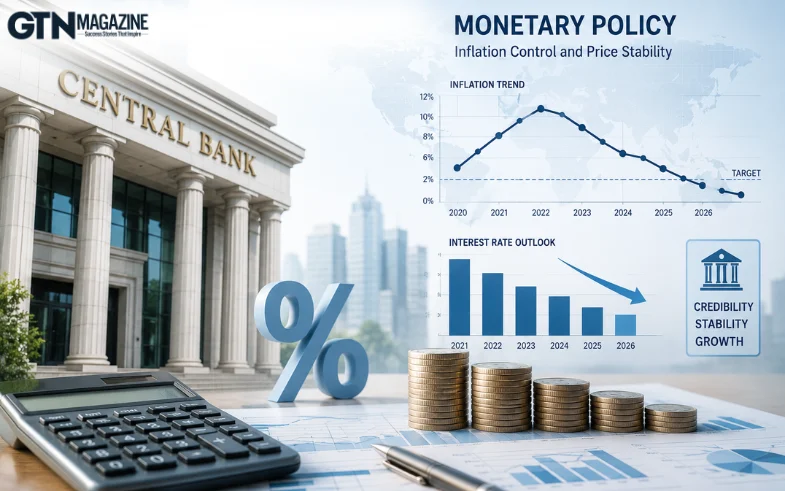
Central banks around the world are being urged to exercise caution before lowering interest rates, as economists warn that premature policy easing could prolong inflation and undermine public confidence in monetary policy.
The concerns were raised during the inaugural Monetary Policy Dialogue in Tashkent, where policymakers, economists, and representatives from the International Monetary Fund (IMF) discussed the challenges of managing inflation amid continued global economic uncertainty.
Experts noted that the post-pandemic economy has highlighted the importance of carefully timed monetary decisions. While inflation has eased in many countries, they cautioned that reducing borrowing costs too quickly could reverse recent progress in stabilizing prices.
Athanasios Orphanides, professor at the Massachusetts Institute of Technology and former Governor of the Central Bank of Cyprus, said several central banks underestimated inflationary pressures during the pandemic recovery, resulting in prolonged price increases. He stressed that policymakers should avoid repeating the mistake by easing monetary policy before inflation is firmly under control.
Participants also emphasized that repeated global disruptions—including supply chain bottlenecks, geopolitical tensions, and shifting demand patterns—have made inflation more difficult to predict. These challenges require central banks to remain flexible while maintaining clear and credible policy frameworks.
The conference highlighted inflation targeting as one of the most effective strategies for preserving economic stability. By focusing on price stability, central banks can better anchor inflation expectations and provide businesses and households with greater confidence in future economic conditions.
Uzbekistan was presented as an example of progress under this framework. According to data shared during the event, the country's inflation rate has declined significantly over recent years, accompanied by lower inflation expectations and reduced reliance on foreign-currency deposits. Officials said these developments reflect growing confidence in the country's monetary policy and broader financial reforms.
The Central Bank of Uzbekistan also reaffirmed its commitment to maintaining a disciplined monetary stance while continuing reforms aimed at strengthening domestic financial markets and supporting long-term economic stability.
Economists concluded that preserving credibility will remain one of the most important responsibilities for central banks as they balance inflation control with supporting economic growth in an increasingly uncertain global environment.
Must Read:-