
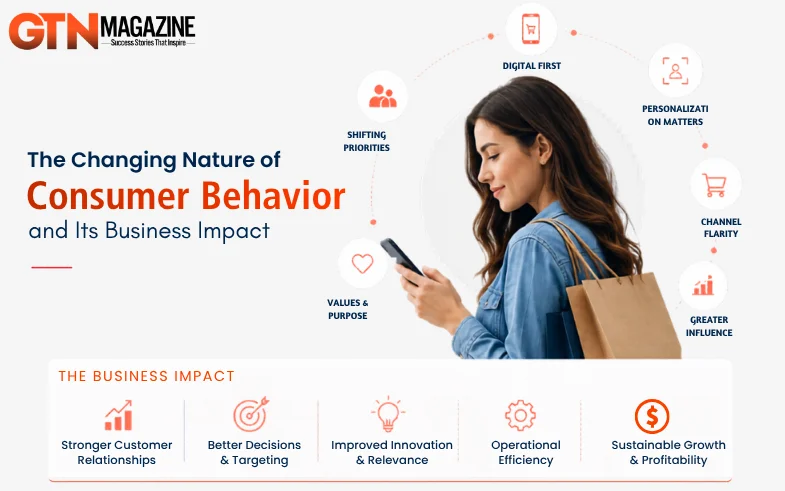
Consumer behavior has never been static, but the pace of change in recent years has been significantly faster and more complex than before. Advancements in technology, greater access to information, shifting economic conditions, and changing social priorities have fundamentally altered how consumers think, decide, and spend. The modern consumer is more informed, more selective, and far less predictable than in previous decades.
For businesses, this shift is not just about adapting marketing strategies, it affects every part of the organization, from product development and pricing to operations and customer experience.
Understanding these behavioral changes is no longer optional. It is essential for survival and long-term relevance.
From Passive Buyers to Active Decision-Makers
One of the most important shifts is the transformation of consumers from passive buyers to active decision-makers.
Today’s consumers do not rely solely on brand messaging. They research, compare, evaluate, and often seek validation before making a purchase. Access to digital platforms has made information widely available, reducing the influence of traditional advertising.
This has created a more balanced dynamic between businesses and consumers.
Customers now expect:, Transparency in pricing and communication
- Authenticity in brand messaging
- Clear value beyond basic product features
As a result, businesses must build trust continuously rather than rely on one-time engagement.
The Rise of Value-Conscious Consumption
Economic uncertainty and inflationary pressures have made consumers more conscious of how they spend.
This does not necessarily mean they are spending less it means they are spending more carefully. Consumers are evaluating purchases based on value rather than impulse.
This shift is visible across industries, where buyers are:
- Comparing alternatives before making decisions
- Prioritizing quality and durability
- Seeking products that justify their cost
For businesses, this requires a stronger focus on delivering measurable value rather than relying on brand positioning alone.
Digital Influence and Multi-Channel Behavior
Consumer journeys are no longer linear.
A single purchase decision may involve multiple touchpoints online research, social media, reviews, physical stores, and peer recommendations. Consumers move seamlessly across channels, expecting a consistent experience at every stage.
This behavior has created a need for businesses to operate in an integrated manner.
Key aspects of modern consumer behavior include:
- Cross-platform engagement before purchase
- Increased reliance on digital reviews and recommendations
- Expectation of seamless online and offline experiences
- Preference for convenience and accessibility
Businesses that fail to align their channels often struggle to meet these expectations.
The Shift Toward Personalization
Modern consumers expect experiences that are tailored to their preferences.
Generic messaging and broad targeting are becoming less effective. Instead, consumers respond more positively to personalized interactions that reflect their needs and behaviors.
Personalization now influences:
- Product recommendations
- Pricing strategies
- Communication and engagement
However, this also requires businesses to manage data responsibly and ensure that personalization does not feel intrusive.
Changing Expectations Around Brand Responsibility
Consumers are increasingly aware of the broader impact of businesses.
They pay attention not only to products and services but also to:
- Ethical practices
- Environmental impact
- Social responsibility
While not all purchasing decisions are driven by these factors, they influence brand perception and long-term loyalty.
Businesses are expected to demonstrate consistency between their messaging and their actions.
Key Behavioral Shifts Businesses Must Recognize
To adapt effectively, businesses must understand the major patterns shaping consumer behavior today:
- Informed decision-making – Consumers rely on research and data before purchasing
- Value prioritization – Spending is aligned with perceived utility and quality
- Channel flexibility – Buyers move across multiple platforms seamlessly
- Experience expectation – Customer experience is as important as the product
- Trust and transparency – Brands are evaluated on credibility and consistency
Recognizing these patterns helps businesses align their strategies with actual consumer expectations.
Operational Impact on Businesses
The shift in consumer behavior is not limited to marketing, it has direct operational implications.
Businesses must rethink how they:
- Design products and services
- Structure pricing models
- Manage supply chains
- Deliver customer support
For example, increased demand for convenience requires faster delivery systems, while value-conscious consumption demands more efficient cost structures.
This means that consumer behavior is now influencing core business operations, not just front-end engagement.
Challenges Businesses Face in Adapting
While the direction of change is clear, adapting to it is not always straightforward.
Businesses often struggle with:
- Integrating digital and physical channels effectively
- Managing large volumes of consumer data
- Maintaining consistency across customer touchpoints
- Balancing personalization with privacy concerns
These challenges require not just strategy, but continuous execution and refinement.
How Businesses Can Respond Effectively
To stay relevant, businesses need to move beyond reactive adjustments and adopt a structured approach.
Some key responses include:
- Building strong data-driven decision systems
- Aligning product offerings with real consumer needs
- Investing in customer experience across all channels
- Maintaining transparency in communication and operations
- Continuously monitoring and adapting to behavioral trends
The goal is not to predict every change, but to remain flexible and responsive.
Conclusion
The changing nature of consumer behavior reflects a broader shift in how markets operate.
Consumers are more informed, more selective, and more demanding not in an unreasonable way, but in a way that reflects greater awareness and access to information.
For businesses, this means moving beyond traditional approaches and building systems that can adapt to evolving expectations.
Success in this environment is not determined by how well a company markets its products, but by how effectively it aligns its entire operation with the needs and behavior of its customers.
You may also like:-
- Building a Business Without Overdependence on External Funding
- Why Most Business Strategies Fail in Execution, Not Planning
- Interest Rates Explained: What Higher or Lower Rates Mean for Companies