


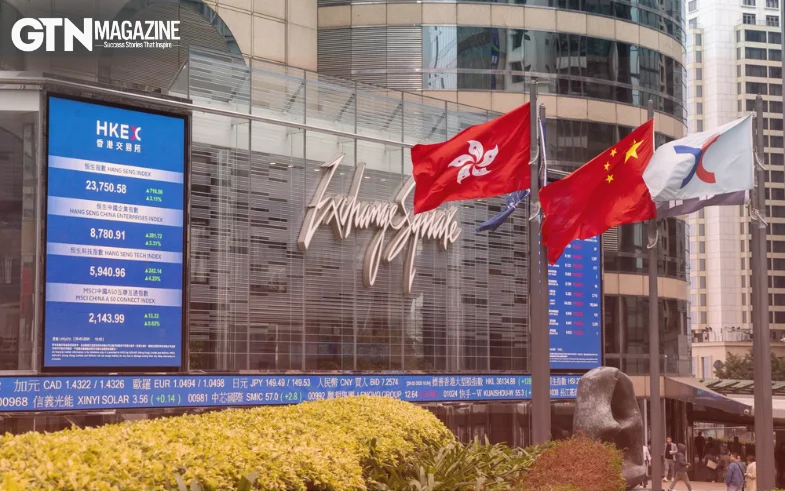
China is stepping up efforts to restrict domestic retail investors' access to U.S. stock markets, a move that analysts say could further strengthen Hong Kong's position as the preferred gateway for Chinese capital and corporate listings.
China is stepping up efforts to restrict domestic retail investors' access to U.S. stock markets, a move that analysts say could further strengthen Hong Kong's position as the preferred gateway for Chinese capital and corporate listings.
Chinese regulators have intensified scrutiny of offshore brokerage platforms that enable mainland investors to trade overseas securities. The country's securities watchdog recently pledged to crack down on what it described as illegal cross-border securities activities involving several online brokerage firms, including Tiger Brokers, Futu Holdings and Longbridge Securities.
The latest regulatory action forms part of Beijing's broader campaign to tighten oversight of cross-border capital flows and reduce financial risks while strengthening control over China's rapidly evolving financial sector.
Analysts believe the move could gradually reduce the flow of mainland Chinese funds into U.S.-listed Chinese companies, commonly known as American Depositary Receipts (ADRs). As a result, Hong Kong-listed shares may become increasingly attractive to investors, particularly companies eligible for the Stock Connect program, which allows mainland investors to buy approved Hong Kong-listed stocks through local brokerages.
"The latest measures may potentially reduce funds flowing into U.S.-listed Chinese equities," market analysts noted, adding that Hong Kong's financial market stands to benefit from the shift in investment activity.
Despite concerns about tighter regulations, experts say the impact on foreign investors and broader market liquidity is likely to remain limited. Mainland Chinese investors affected by the crackdown account for only a small share of total trading activity on offshore brokerage platforms, and many may still find alternative channels to access international markets.
Instead, the most significant consequence could be the continued migration of Chinese companies and investor activity toward Hong Kong, a financial center that Beijing increasingly views as a more manageable offshore market amid ongoing geopolitical tensions.
The trend has been developing for several years as Chinese companies sought secondary or primary listings in Hong Kong while reducing reliance on U.S. capital markets. Many major Chinese technology and consumer firms now record a larger share of trading volumes in Hong Kong than on U.S. exchanges.
Market strategists also see the latest regulatory measures as part of China's broader strategy to direct domestic investment toward homegrown technology leaders and strategic industries. Beijing has been actively supporting sectors such as semiconductors, artificial intelligence, robotics and advanced manufacturing as it seeks to reduce dependence on foreign technologies.
Several high-profile Chinese companies preparing for public listings could benefit from the policy shift. Industry observers point to expected initial public offerings from memory chipmaker CXMT, robotics company Unitree and semiconductor manufacturer YMTC as potential beneficiaries of stronger domestic investor demand.
The developments come at a time when China is seeking to strengthen its domestic capital markets while encouraging investment in industries considered vital to long-term economic and technological competitiveness.
As regulatory scrutiny intensifies, analysts expect Hong Kong to play an even greater role as a bridge between mainland Chinese investors and global financial markets, reinforcing its status as China's primary international financial center.
More News:-