
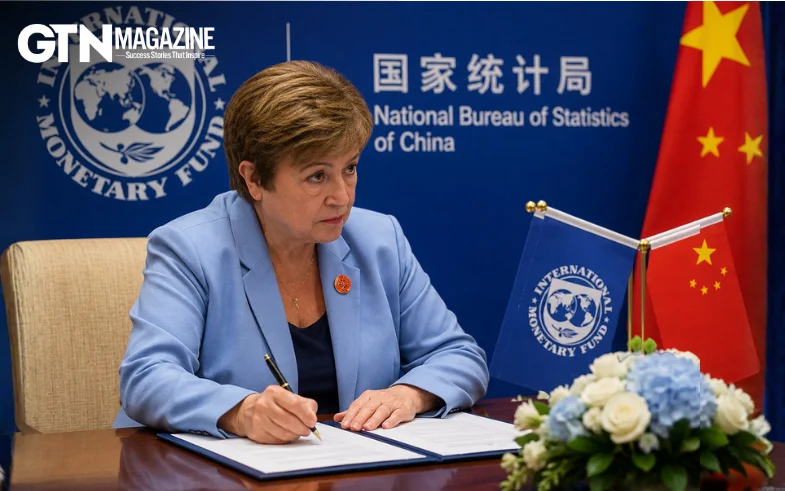
The International Monetary Fund (IMF) and China's National Bureau of Statistics have signed a new Memorandum of Understanding (MoU) to strengthen the measurement of China's rapidly growing digital economy. The agreement marks an important step toward modernizing economic statistics and improving transparency as digital industries continue to reshape global markets.
The partnership will focus on implementing the United Nations System of National Accounts 2025 (SNA 2025), the latest international framework for measuring economic activity. The updated standard introduces new approaches for accounting for digital assets, data, and emerging technologies, representing the first major revision to global national accounting standards in nearly two decades.
China's digital economy has expanded significantly in recent years, driven by advancements in artificial intelligence, cloud computing, e-commerce, digital platforms, and other technology-driven industries. As these sectors contribute an increasing share of economic output, traditional statistical methods have become less effective in capturing the value created by intangible assets such as software, data, cloud services, and digital infrastructure.
Under the agreement, the IMF and China's statistical authorities will collaborate to develop more advanced methodologies for measuring key components of the digital economy. Areas of focus include artificial intelligence, cloud computing, digital intermediation platforms, and recognizing data as an economic asset.
The cooperation will include technical workshops, expert consultations, joint analytical research, high-level exchanges, and the sharing of international best practices. According to the IMF, these efforts are intended to improve the consistency, transparency, and global comparability of official economic statistics.
The initiative comes as digital transformation continues to redefine economic growth worldwide. More accurate measurement of digital industries will help governments, policymakers, businesses, and investors better evaluate productivity, innovation, and long-term economic performance.
The agreement also comes amid ongoing global discussions surrounding technology competition, trade dynamics, and supply chain resilience. As digital technologies become increasingly central to economic development, reliable statistical frameworks are expected to play a larger role in informing policy decisions and strengthening investor confidence.
By aligning its statistical practices with internationally recognized standards, China aims to provide a more comprehensive picture of its evolving digital economy while improving the quality and transparency of its official economic reporting.
The collaboration reflects the IMF's broader commitment to supporting countries in modernizing statistical systems as digitalization continues to transform the global economy and reshape the way national growth is measured.
More News:-