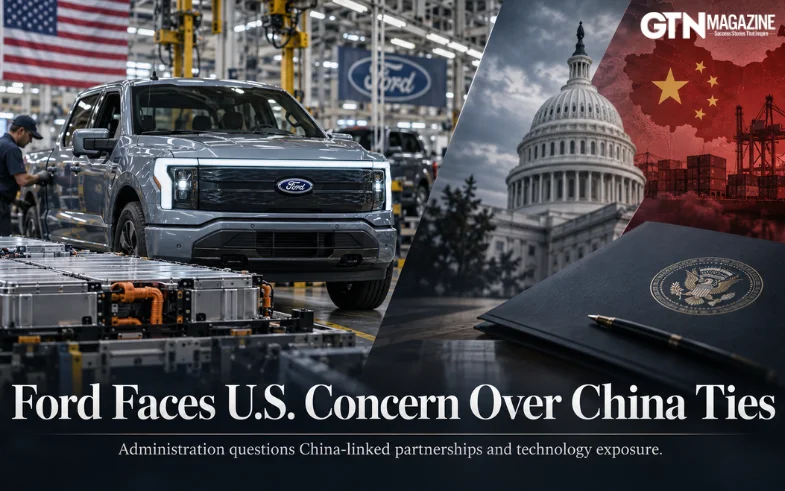


China has introduced a new round of trade and technology restrictions targeting the United States, adding pressure to an already fragile economic relationship between the world’s two largest economies.
The measures include tighter controls on exports of drones and related technologies, restrictions on dealings with several American organisations, and changes affecting US companies involved in China’s product certification system.
Beijing says the actions are a response to recent US restrictions on Chinese technology companies and products. The latest measures come only weeks before Chinese President Xi Jinping is expected to travel to the United States on September 24, following an invitation extended after his meeting with US President Donald Trump in Beijing earlier this year.
China Tightens Scrutiny of Drone Exports to US
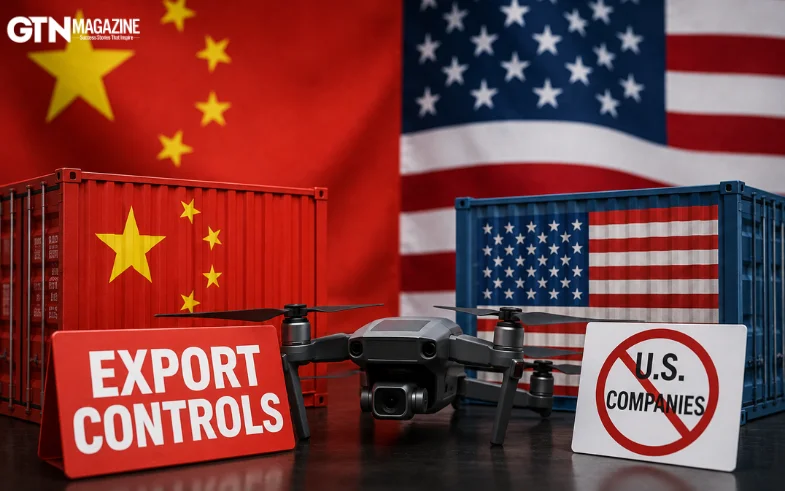
One of the most significant measures involves unmanned aerial vehicles, or drones.
Chinese authorities will subject exports of controlled drones, key components and related technologies destined for the United States to stricter case-by-case licensing reviews.
The restrictions apply to products already covered under China’s dual-use export-control framework because such technologies can have both civilian and military applications.
The measure does not amount to a complete ban on Chinese drone exports to the US, but the tougher approval process could delay or restrict shipments of affected equipment.
Six US Organisations Face Business Restrictions
China has separately prohibited domestic organisations and individuals from conducting business with six US entities that Beijing says supported Washington’s Xinjiang-related restrictions.
The organisations named include Applied DNA Sciences, Stratum Reservoir, Altana Technologies, the Responsible Business Alliance, Verité Group and Human Rights in China.
Several of the organisations work in areas such as supply-chain monitoring, labour-risk assessment, technology and human-rights advocacy.
China did not announce asset freezes or travel restrictions as part of these particular measures.
Compliance Testing Also Barred
In a separate action, Beijing targeted Arizona-based Compliance Testing LLC.
Chinese organisations and individuals have been prohibited from dealing or cooperating with the testing and certification company.
China’s Commerce Ministry accused the firm of supporting recent US Federal Communications Commission measures that Beijing says have damaged the legitimate interests of Chinese companies.
Taken together, the two actions effectively impose business restrictions involving seven US organisations, although Compliance Testing was sanctioned through a separate measure.
Beijing Responds to US Technology Restrictions
China said the latest countermeasures were triggered by a series of actions taken by Washington.
Among them is the FCC’s decision to tighten controls on foreign-made drone equipment. In December 2025, the FCC added certain foreign-produced unmanned aircraft systems and critical components to its Covered List on national-security grounds.
Beijing has also pointed to the US Department of Homeland Security’s recent addition of more than 40 Chinese entities to the Uyghur Forced Labor Prevention Act entity list.
Products associated with companies on that list can face restrictions entering the United States because of concerns over forced labour in supply chains.
Chinese officials described their response as necessary and called on Washington to reverse measures Beijing considers harmful to Chinese businesses.
Certification Rules Add Another Layer of Pressure
The latest dispute extends beyond drones.
China’s State Administration for Market Regulation has restricted US-based organisations from carrying out certain follow-up factory inspections used in the country’s China Compulsory Certification, or CCC, system.
CCC certification is required for various categories of products sold in China and is intended to demonstrate compliance with safety and technical requirements.
The change means affected manufacturers may need to work with designated certification organisations outside the United States, potentially adding complexity and expense to the approval process.
China Launches Security Review of Office Equipment
Chinese authorities have also opened a national-security investigation involving imported printing, copying and other office equipment.
No specific American company was named in connection with the investigation.
However, China’s Commerce Ministry presented the review alongside its broader response to recent US trade and technology measures.
US-China Relations Face Fresh Test Before Xi Visit
The new restrictions arrive at a sensitive moment for Washington and Beijing.
Trump and Xi met in Beijing in May, raising expectations that the two countries could stabilise relations after repeated disputes involving tariffs, advanced technology, national security and market access.
Preparations are now underway for Xi’s expected September visit to the United States, while officials from both sides continue discussions on areas including artificial intelligence and economic relations.
Despite those diplomatic efforts, the latest measures show that neither side has stepped away from using targeted economic restrictions when national-security or commercial disputes arise.
Trade Dispute Becomes Increasingly Technology-Focused
US-China economic tensions have expanded well beyond conventional tariffs.
Drones, telecommunications equipment, advanced computing, robotics, supply chains and certification standards are increasingly becoming part of the strategic competition between the two countries.
Washington argues that restrictions on selected Chinese technologies are necessary to protect US national security.
Beijing, meanwhile, says many of the measures unfairly restrict Chinese companies and has developed its own export-control and counter-sanctions tools in response.
For businesses operating across both markets, the increasingly complex regulatory environment could mean additional compliance costs, supply-chain adjustments and uncertainty.
The next major test for the relationship could come when Xi and Trump meet again in September, with trade and technology likely to remain central issues despite attempts by both governments to keep the broader relationship from deteriorating further.
Must Read:-