

Leopold Aschenbrenner, the former OpenAI researcher who gained global recognition for his predictions about artificial intelligence, has suffered a dramatic setback after his AI-focused hedge fund reportedly lost most of its value within days following a sharp decline in semiconductor stocks.
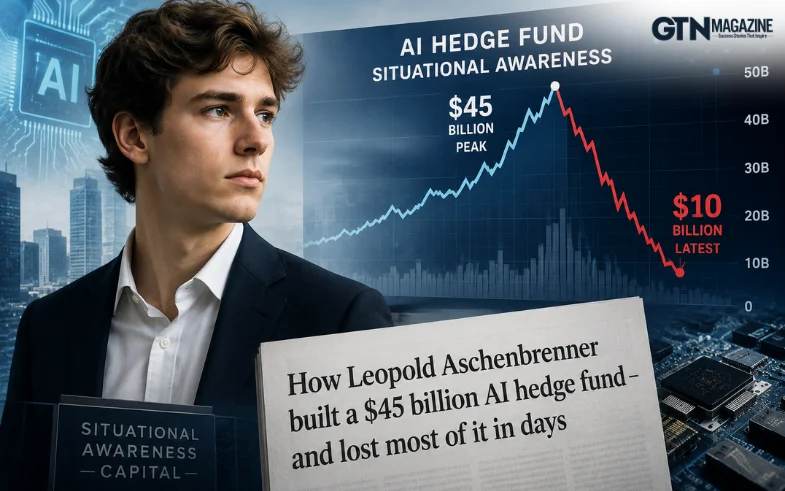
Situational Awareness, the hedge fund launched by Aschenbrenner in July 2024, saw its assets fall from an estimated $45 billion at their peak earlier this month to roughly $10 billion, according to people familiar with the matter. The collapse followed heavy losses on highly leveraged investments and mounting margin calls as AI-related stocks retreated.
Sources familiar with the transactions said the fund was forced to unwind all of its leveraged public equity positions, including major holdings in semiconductor and AI infrastructure companies such as SK Hynix and CoreWeave. The positions were reportedly acquired by Citadel, led by billionaire investor Ken Griffin, at discounted prices.
The sudden decline marks one of the most significant setbacks in the AI investment boom and has drawn widespread attention from both Wall Street and Silicon Valley, where Aschenbrenner had become one of the industry's most closely watched figures.
The 24-year-old investor first rose to prominence after publishing his 2024 essay, Situational Awareness, which argued that artificial general intelligence could arrive sooner than many experts expected. The publication gained significant traction within the technology industry and helped establish Aschenbrenner as a prominent voice on AI development.
Shortly after leaving OpenAI, he transformed that growing reputation into an investment business, reportedly securing around $225 million in initial backing from prominent technology entrepreneurs and investors. The fund later generated extraordinary gains as enthusiasm surrounding artificial intelligence fueled sharp increases in AI-related equities.
Before the recent sell-off, industry reports indicated that Situational Awareness had delivered returns exceeding 1,000% since its launch, making it one of the fastest-growing hedge funds in recent years.
However, market participants had also raised concerns about the fund's aggressive investment strategy. Reports suggested the portfolio employed leverage of up to 400%, significantly increasing exposure to market volatility.
Analysts said such leverage left the fund vulnerable to rapid declines once semiconductor shares reversed course.
"A highly leveraged strategy can generate exceptional gains during strong markets, but it also magnifies losses when sentiment changes," market observers noted, adding that margin calls can quickly force investors to liquidate positions regardless of long-term conviction.
The fund's difficulties come amid a broader pullback in several AI-related stocks after months of exceptional gains. Investors have become increasingly cautious as valuations across parts of the artificial intelligence sector reached record levels.
Aschenbrenner's career has drawn both admiration and criticism. Supporters have described him as one of the technology industry's brightest young thinkers, while critics questioned his limited experience in professional asset management before launching the hedge fund.
Prior to founding Situational Awareness, Aschenbrenner worked on OpenAI's Superalignment team under AI researcher Ilya Sutskever. He later departed the company following disagreements over the handling of internal information, a matter both sides have publicly disputed.
His earlier career also included a brief role at FTX's philanthropic Future Fund before the cryptocurrency exchange collapsed in 2022.
Despite the sharp losses in its public equity portfolio, sources said Situational Awareness continues to hold significant investments in private AI companies, including a multibillion-dollar stake in Anthropic, although the value of those holdings has not been independently confirmed.
The fund has not publicly commented on the reported losses.
The rapid rise and equally dramatic decline of Situational Awareness underscores the risks associated with concentrated and highly leveraged investments, even in sectors experiencing strong long-term growth. While artificial intelligence remains one of the world's fastest-growing industries, the episode highlights how quickly market sentiment can shift when valuations and leverage collide.
Must Read:-