
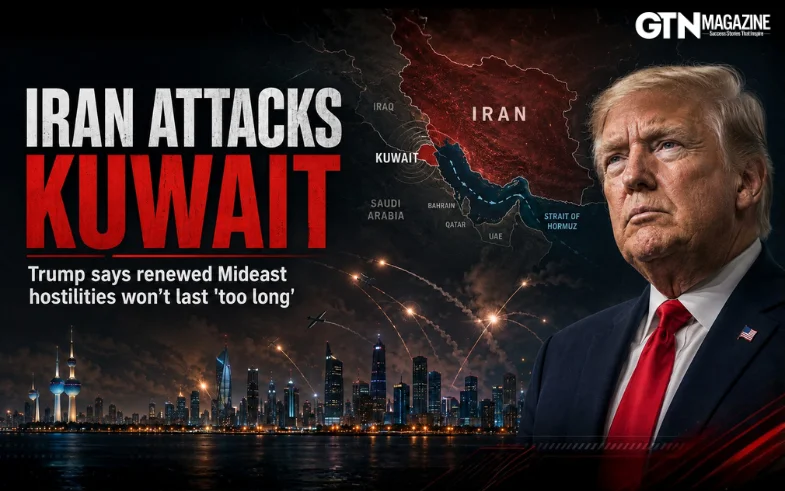
Tensions across the Middle East have escalated sharply after Iran launched missile and drone attacks toward Kuwait, following a new wave of U.S. strikes on Iranian military and maritime targets.
Kuwaiti authorities said their air defenses were responding to hostile targets and urged residents to follow official safety instructions. Some explosions heard across the country were attributed to air-defense systems intercepting incoming threats.
The attacks came after Iran retaliated against a major U.S. military operation targeting Iranian facilities along the Strait of Hormuz. Tehran also launched attacks toward other countries hosting U.S. forces, including Bahrain, Jordan and Iraq, raising concerns that the conflict could spread further across the Gulf.
Trump Says Fighting Will Not Continue for Long
Despite the latest escalation, U.S. President Donald Trump said he does not expect the renewed hostilities with Iran to continue for “too long.”
Trump described the latest U.S. operation as a “very heavy attack” and said American forces had destroyed Iranian radar, missile and maritime capabilities that had been rebuilt along the Strait of Hormuz. He also warned that the U.S. remains prepared to launch additional strikes if necessary.
His comments offer a more optimistic assessment of the conflict, but the continuing Iranian attacks suggest that the immediate risk of further escalation remains high.
Kuwait Caught in the Middle of the Conflict
Kuwait has become increasingly exposed because it hosts important U.S. military facilities and sits close to Iran and the Strait of Hormuz.
Iran has said its attacks on Gulf targets are retaliation for U.S. military action. Kuwait, however, has condemned the attacks and emphasized its right to protect its territory and population.
The situation has also raised concerns for commercial aviation and shipping. The Strait of Hormuz is one of the world's most important energy routes, and renewed military activity in and around the waterway has already disrupted shipping and pushed oil prices higher.
Regional Tensions Continue to Build
The latest exchange marks the most serious direct escalation between Iran and the United States since July. Iran has warned that it is preparing a new military strategy, while Washington has maintained that it can carry out further attacks whenever it considers them necessary.
For Gulf countries such as Kuwait and Bahrain, the biggest concern is that they could become increasingly involved in a conflict they did not start. With missiles and drones now reaching U.S. facilities across the region, governments are increasing security measures and closely monitoring the situation.
For now, Trump's prediction that the fighting will end soon remains uncertain. The continued exchange of attacks, threats against U.S. bases and disruption around the Strait of Hormuz suggest that the Middle East remains on edge, with the possibility of another escalation still hanging over the region.
Must Read:-