


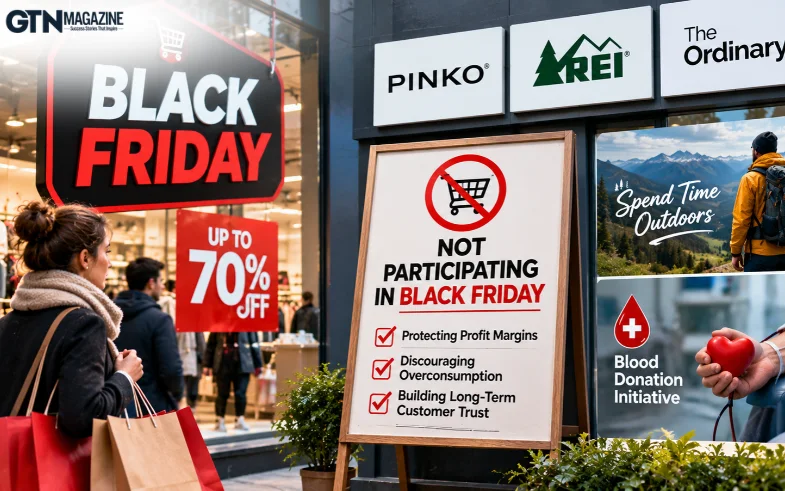
While retailers worldwide are preparing major discounts for Black Friday 2026, several well-known brands are choosing to stay away from the annual shopping event. Their decisions reflect growing concerns about shrinking profit margins, excessive consumption and declining consumer trust in promotional offers.
According to a Reuters report published on November 26, companies including Italian fashion label Pinko, outdoor retailer REI and skincare brand The Ordinary are taking different approaches to the shopping season rather than competing through aggressive price cuts.
Why Some Brands Are Avoiding Black Friday
Pinko has decided to skip Black Friday promotions for the first time this year. Its chairman, Pietro Negra, believes frequent discount campaigns create a cycle that encourages customers to wait for lower prices instead of purchasing products at their regular value.
The company estimates that avoiding the event could cost around €2 million in revenue. However, Negra expects the impact on profitability to be considerably smaller.
British outdoor clothing manufacturer Buffalo Systems is also avoiding Black Friday, citing its commitment to local manufacturing and its business model.
Meanwhile, US outdoor retailer REI continues its annual tradition of closing stores on Black Friday and encouraging employees and customers to spend time outdoors.
The Ordinary Promotes Responsible Consumption
The Ordinary, owned by Estée Lauder Companies, is taking a different approach by closing its stores and website for the shopping event.
Instead of promoting discounts, the skincare brand plans to organise blood donation activities in locations including New York and Toronto.
The company says the initiative encourages customers to reconsider unnecessary purchases and focus on more meaningful activities.
Discount Fatigue Changes Shopping Behaviour
Retail analysts say years of frequent promotions have made consumers increasingly sceptical about advertised discounts. Many shoppers question whether Black Friday offers represent genuine savings or simply reflect inflated original prices.
However, not every brand can afford to avoid the event. British beauty company UpCircle, for example, combines environmental messaging with a 25% discount across its products. The company says the three-week period around Black Friday generates approximately 20% of its annual online sales.
The contrasting strategies highlight a changing retail environment. While discounts remain important for attracting customers, some brands are prioritising long-term customer relationships, brand identity and profitability over short-term sales growth.
News Highlights:-