


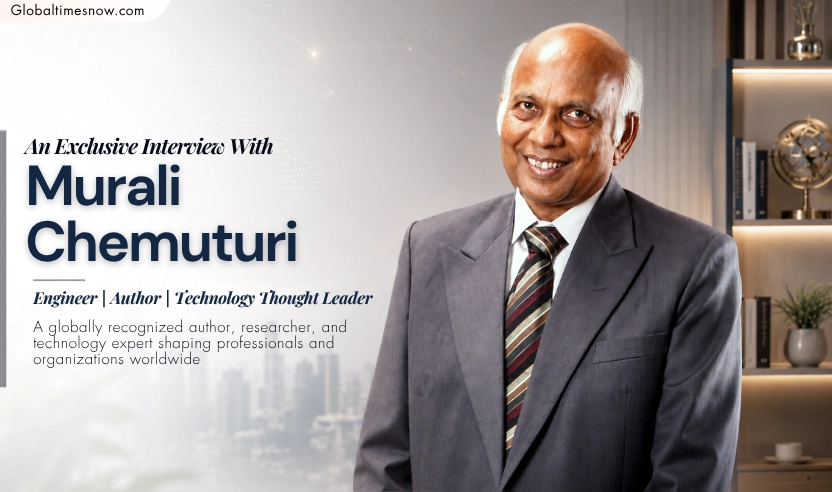
Success is often measured by titles, positions, or accolades. Yet, some journeys stand apart because they are built on something far more enduring, the relentless pursuit of knowledge, the courage to embrace change, and the determination to contribute more than one receives. Murali Chemuturi's story is one such journey.
From humble beginnings in a small village to becoming a respected engineer, software professional, consultant, author, researcher, and thought leader, his career reflects a lifelong commitment to learning and excellence. Over the decades, he has contributed to critical technological advancements, authored books that are used in universities across the world, published influential technical papers, and earned recognition from some of the most respected professional institutions. More importantly, he has consistently transformed experience into knowledge and knowledge into lasting impact.
His journey is not merely a chronicle of professional achievements; it is a testament to the power of perseverance, intellectual curiosity, and an unwavering belief that continuous learning can open doors far beyond one's circumstances. Whether discussing leadership, quality, technology, innovation, or personal growth, his experiences offer valuable lessons for professionals across generations.
In this insightful feature, Murali Chemuturi reflects on the milestones that shaped his career, the principles that guided his leadership, his contributions to technology and management literature, and his perspectives on the future of artificial intelligence and digital transformation. His story serves as an inspiring reminder that true success is not only about personal accomplishment but also about creating knowledge, sharing wisdom, and leaving a meaningful legacy for others to build upon.
From Humble Beginnings to Global Recognition
For Murali Chemuturi, the inspiration behind his professional journey was neither ambition nor circumstance alone, it was necessity. As he often says, necessity is the mother of invention, and in his case, the necessity to take up a job and earn money became the foundation of a remarkable career spanning engineering, software development, consulting, authorship, and thought leadership.
His father was a lower-middle-class man struggling to provide for his family. Against this backdrop, Murali Chemuturi began his career at Hyderabad-based Electronics Corporation of India Limited (ECIL), working in a division that manufactured control systems for nuclear reactors used for electricity generation. Looking back, he considers this his first major milestone.
ECIL was home to some of the finest minds in India. During those years, professional competition certainly existed, but knowledge sharing was equally commonplace. His nearly twenty-year stint at ECIL shaped him both professionally and personally, helping him develop as an engineer and software developer while instilling a lifelong commitment to learning and innovation.
Following his tenure at ECIL, he worked with several respected organizations, including TCS, Metamor, Satyam, and Vistaaar. Each role expanded his perspective and experience, but another defining milestone arrived in 2001 when he established his own consultancy under the banner of Chemuturi Consultants.
Starting his consultancy gave him something invaluable, complete freedom to bring his ideas to fruition. During this period, he developed several software products, some of which continue to function successfully even today without any significant issues.
At the same time, he began documenting the knowledge he had accumulated throughout his career. This decision would lead to one of the most meaningful achievements of his professional life.
He was delighted when his first book on Software Estimation was accepted by the American publisher J. Ross Publishing. The experience of receiving his first published copy remains unforgettable. Seeing his name on the cover and holding the book in his hands filled him with immense pride. One of the first things he did was place the book at the feet of his mother. She was equally delighted that her son had become an author. For him, this represented much more than a publication, it marked his transformation from being merely a consumer of knowledge into becoming a producer of knowledge.
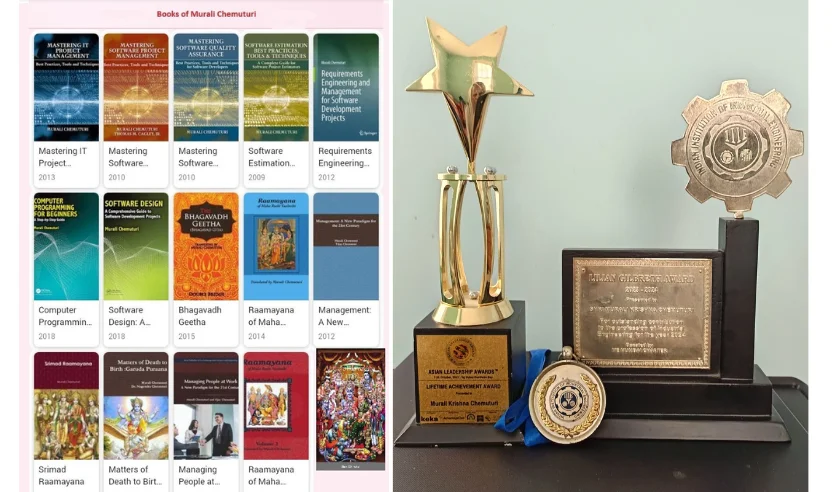
This milestone opened the door to many more accomplishments. He went on to author six additional books on information technology, further strengthening his contribution to the profession.
Another extraordinary moment arrived in 2011 while browsing the web. He happened to visit the website of the IT University of Copenhagen in Denmark and discovered something that left him overwhelmed with pride. The syllabus outline for their Software Project Management subject contained chapter titles identical to those in his book, and his publication had been prescribed as required reading.
The experience was surreal. A book written by someone from a small agrarian village in India had been selected to educate postgraduate students in one of the most developed countries in the world. He often describes this moment as going beyond cloud nine and landing on top of the rainbow. It was another milestone that reinforced his belief in the power of knowledge and perseverance.
Building upon his success in technology publishing, he later authored a number of books on management, drawing inspiration from his experiences in leadership and management roles. Today, many of these books are used as prescribed reading in more than sixty universities across more than twenty countries, including India and the United States.
In addition to books, he authored numerous technical papers that were published in professional journals in both India and the United States. He actively participated in seminars and conferences, presenting papers and sharing insights gathered throughout his career.
Among those experiences, one presentation remains especially memorable. He presented a paper on measuring customer satisfaction using internal data at the prestigious Union Jack Club in London, United Kingdom, to the UK Software Metrics Association (UKSMA). It was a moment of immense pride and recognition.
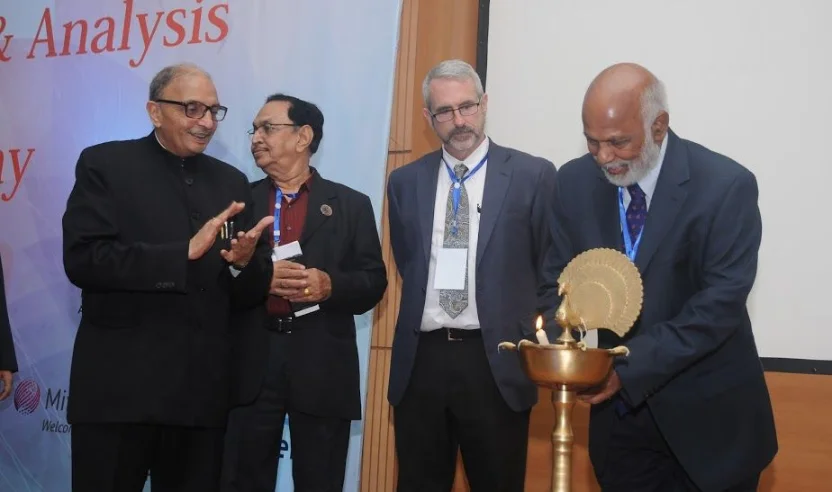
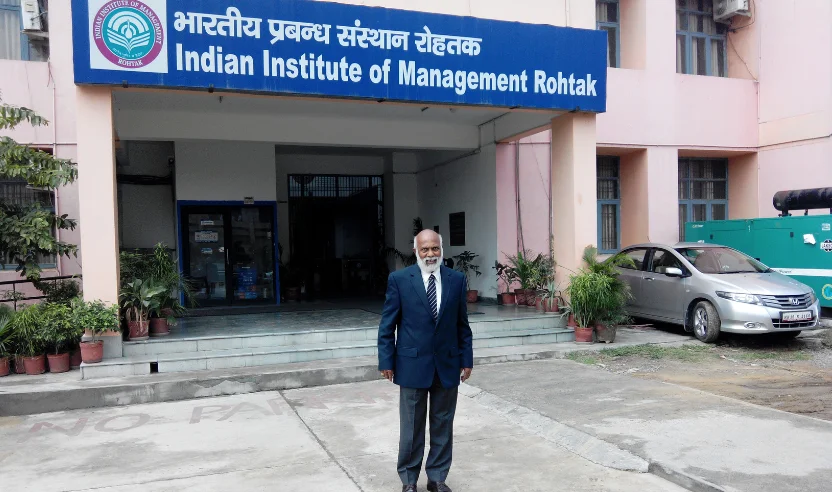
Another major milestone arrived in 2016 when he inaugurated the International Software Measurement and Analysis Conference (ISMA 13) at IIT Bombay by lighting the ceremonial lamp. Being entrusted with such an honor at one of India's most respected educational institutions remains one of the defining moments of his professional journey. Another moment of recognition arrived when he was invited to give a guest lecture at the hoary IIM at Rohtak to their final year students on the topic of Creativity and Innovations.
Having made significant contributions to technology, software engineering, project management, and management literature, Murali Chemuturi eventually turned his attention toward another passion, making ancient Indian wisdom accessible to modern readers. He began translating several ancient Sanskrit epics into English, including the Ramayana, Uttara Ramayana, Bhagavad Gita, Garuda Purana, Shanthi Parva, Anushasana Parva, and Ashwamedha Parva.
The Foundation of Excellence at ECIL
Murali Chemuturi believes that his twenty-year stint at ECIL left an indelible mark on his personality and professional outlook.
The experience exposed him to state-of-the-art technology and demonstrated what could be achieved through dedication, excellence, and collaboration. It also instilled in him a deep confidence that human beings are capable of extending the horizons of knowledge when they are committed to learning and innovation.
Throughout those years, he had the opportunity to work alongside individuals of exceptional character who were not only great engineers but also remarkable human beings. Their influence helped shape his own professional values and standards.
He often points to the fact that the first nuclear reactor commissioned in 1970 has continued to operate successfully over the decades as evidence of the quality of work carried out by ECIL, an organization of which he was proud to be a small part.
The organization transformed him into a well-rounded professional, expanded his knowledge base, and ignited an enduring hunger to continue learning throughout his life. Even today, he regards ECIL as the finest organization he has ever worked for.
Thriving Through Change and Innovation
Murali Chemuturi's ability to adapt across multiple industries and technological transformations can largely be attributed to the environment in which he began his career.
It was a period when India was expanding rapidly and striving to establish itself among the developed nations of the world. ECIL was at the forefront of this transformation, manufacturing control systems and computers that were, until then, largely associated with developed countries.
The organization provided numerous opportunities for innovation and experimentation. One of his notable contributions was introducing Computer-Aided Design (CAD), the first implementation of its kind within a production organization in Hyderabad. He successfully implemented and institutionalized the system.
He also introduced a PC-network-based material management system at ECIL, which continues to operate successfully even today. Alongside these initiatives were numerous other projects aimed at solving operational challenges permanently rather than temporarily.
Because ECIL worked with sophisticated equipment and advanced systems, there was never a shortage of opportunities to simplify processes and improve operations. Over time, his senior colleagues recognized his ability to solve complex problems and increasingly entrusted him with difficult assignments.
Rather than avoiding these challenges, he welcomed them enthusiastically. Those opportunities ultimately helped him become proficient across multiple domains and technologies.
Another major factor behind his adaptability was his commitment to continuous learning. He has always been a voracious reader who regularly consumed journals, books, and technical publications. He consistently invested in expanding his knowledge at his own expense and on his own initiative.
To further improve his qualifications and knowledge, he enrolled in night school while continuing to work. Learning was never something he viewed as optional; it was a lifelong responsibility.
Even today, he makes it a point to learn something new regularly.
This dedication to reading and self-improvement enabled him to transition smoothly from engineering into computing. During those years, online resources did not exist, and professionals had to work through extensive technical manuals to learn new systems and technologies.
His habit of reading and his ability to absorb knowledge quickly proved invaluable, allowing him to adapt seamlessly as technology continued to evolve.
Leading Through Trust and Empowerment
Throughout his career, Murali Chemuturi has viewed leadership as a double-edged sword. In his opinion, leadership can either be used as authority to command others or as a means to coach, develop, and empower people.
As a leader, he always believed that the responsibility for delivery rested squarely on his shoulders, while the team existed to assist in achieving the objective. He embraced the philosophy that all failures belonged to him, while all successes belonged to the team.
Rather than relying on the traditional "carrot and stick" approach to management, he consistently adopted a trust-based model of leadership. He believed that people perform best when they are trusted, respected, and given the freedom to contribute.
He also drew upon the Expectancy Theory of Motivation by ensuring that team members clearly understood what was expected of them and what outcomes they were working toward. By setting the right expectations and creating an environment where individuals could succeed, he found that people naturally became more motivated and committed.
As a leader, he saw his role primarily as that of a facilitator. His responsibility was to select the right person for the right task, establish clear expectations, provide the freedom necessary for execution, remove obstacles that stood in the way, and support individuals in meeting those expectations.
This approach consistently yielded positive results throughout his career. According to him, the outcome was simple: he never failed in any project that met his expectations because the teams were empowered, motivated, and aligned toward a common objective.
From Industry Expertise to Published Knowledge
The motivation to write books on project management, quality assurance, and management emerged naturally from his consulting journey.
When his first book on Software Estimation was published, the response exceeded his expectations. In fact, the publisher was sufficiently impressed to offer him a contract for another book without even asking for a formal proposal. That gesture itself became a powerful source of motivation.
Encouraged by this confidence, he authored Software Project Management with his friend Tom Cagley as co-author and submitted it to the publisher.
Having spent years in software development, he had observed something that deeply concerned him, software quality often received far less attention than it deserved. He believes that anyone who spends even a few minutes studying failures caused by defective software would be astonished by the magnitude of losses resulting from poor quality.
Millions of dollars have been lost due to software failures, yet he remains convinced that even today many organizations do not devote sufficient attention to software quality.
Drawing on his experiences at ECIL and observations gathered throughout his career in software development organizations, he authored a book on Software Quality Assurance. His objective was not merely to document theoretical concepts but to provide practical insights that could help organizations improve quality standards and avoid costly mistakes.
His attention then shifted to another critical area of software development, requirements engineering. Based on his observations, he concluded that more projects fail because of poorly defined requirements than for any other reason.
This led him to author a book focused on requirements management, which was subsequently published by Springer.
From there, he turned his attention to another essential discipline within software development, software design. Recognizing that design decisions significantly influence the success or failure of software systems, he authored a book dedicated to this area as well.
In many ways, each book represented an effort to capture and share the knowledge, lessons, and experiences accumulated throughout his career. As he often says, he drew upon the last ounce of his knowledge and expertise while writing these works.
The widespread adoption of these books as prescribed reading at the postgraduate level has provided strong validation of their value and relevance.
Collectively, his books represent approximately 3,500 pages of technical knowledge. For him, this accomplishment signifies a profound transformation, from being a consumer of knowledge to becoming a producer and contributor of knowledge. That transition remains one of the most satisfying aspects of his professional life.
Why Quality Still Defines Success
When discussing the challenges organizations face today, Murali Chemuturi believes that while technologies evolve, the fundamental business challenges remain remarkably similar to those that emerged during the Industrial Revolution.
In every industry, there is typically a trailblazer and there are competitors.
The trailblazer introduces a new concept, overcomes barriers, and creates innovative products or solutions. Soon afterward, competitors enter the market with similar offerings, often attempting to attract customers through lower prices.
As more competitors enter the market, products and services undergo continuous transformation. At the same time, investors expect increasing returns, creating significant pressure on senior management teams.
In such environments, quality often becomes one of the first casualties.
However, customers continue to value quality above almost everything else.
To illustrate this principle, he points to a powerful example from recent history. During the 1950s, General Motors was the dominant automobile manufacturer in the world. Recognizing the importance of industrial development, the Japanese government engaged renowned American quality experts such as Philip Crosby, Joseph Juran, W. Edwards Deming, and others.
These consultants encouraged Japanese automobile manufacturers to focus relentlessly on quality improvement.
Within approximately thirty years, Japanese automobiles had surpassed General Motors in many respects. Today, companies such as Honda and Toyota sell vehicles worldwide on a scale that reflects the enduring value of quality-driven manufacturing.
For Murali Chemuturi, the lesson is clear and timeless: customers may forgive delays, but they rarely forgive poor quality.
Organizations that consistently provide value to customers will continue to grow. Creating a culture of quality, ensuring that products exceed specifications, and focusing on customer satisfaction are critical ingredients for long-term success.
Yet quality itself cannot exist without motivated people.
He firmly believes that a motivated team will outperform a group of highly talented but disengaged individuals. Similarly, a cohesive team focused on collective success will often outperform a collection of champions focused only on individual achievement.
The challenge for leaders, therefore, is to create trust, fairness, and motivation throughout the organization. While the mechanics of motivation may be a separate discussion, he considers it one of the most important responsibilities of leadership.
Embracing the Future of Technology and AI
Having witnessed several decades of technological evolution, Murali Chemuturi views artificial intelligence as a natural continuation of a long historical progression.
He traces this journey back to the introduction of IBM's personal computer in 1982, after which technology began evolving at an increasingly rapid pace. Today, he observes that technology upgrades often occur within cycles of approximately three years.
Programming itself has undergone several generations of transformation.
The earliest computers were programmed directly using binary code, zeros and ones.
The second generation relied on Assembly language.
The third generation introduced procedural programming languages.
The fourth generation moved toward event-based programming languages.
What had long been described as the fifth generation has now arrived in the form of Artificial Intelligence.
According to his perspective, each generation reduced the complexity of interacting with technology and expanded access to a broader group of people.
The first generation required scientists.
The second generation required postgraduate engineers.
The third generation could be managed by graduate engineers.
The fourth generation became accessible to graduates with appropriate training.
Today, the fifth generation enables even intelligent high-school graduates to build solutions using AI-driven tools.
In his view, technological research continuously reduces the effort required from human beings. AI follows the same pattern. By automating complex tasks and reducing dependency on highly specialized resources, organizations can achieve greater efficiency and lower operational costs.
However, he does not see AI as a threat. Instead, he views it as another stage in the evolution of human productivity.
Just as buses replaced horse-drawn carriages and mechanization transformed agriculture, AI will inevitably shift the nature of work and create new vocational opportunities.
While some professions may change or disappear, others will emerge.
For him, this transition is both natural and necessary, and he believes that the world will ultimately become a better place as a result.
A Legacy Built on Knowledge and Contribution
Looking back on his career, Murali Chemuturi identifies several accomplishments that remain especially meaningful to him.
The first source of pride comes from the contributions he made to the organizations he served. Throughout his professional life, he followed a simple principle, that his contribution should always exceed the compensation he received.
This philosophy was influenced by a memorable article published in Reader's Digest during the 1970s, which promoted the idea: "Do it well or not at all."
He was also deeply influenced by J. R. D. Tata's principle that the quality of one's deliverables should be determined by personal culture and standards rather than by the compensation offered by a client.
Equally influential was the poetry of Rabindranath Tagore, particularly the lines:
"Where tireless striving stretches its arms toward perfection"
and
"Where knowledge is free."
These ideas became guiding principles throughout his life and career.
Another accomplishment that brings him immense pride is the quality of his technical papers. One of his published papers was used as evidence in the famous Oracle versus SAP case, and in 2013 he was invited to Philadelphia to provide testimony as an expert witness.
He is also deeply proud of the books he authored, which are used as prescribed reading at postgraduate levels in more than sixty universities across more than twenty countries.
For him, these books symbolize his evolution from merely consuming knowledge to actively producing and sharing it.
His book on Software Quality Assurance can be found in renowned institutions such as CERN, Stanford University, and Princeton University. As he often remarks, his books reached places where he himself could not.
He also takes pride in the fact that, despite never heading a major organization or serving as a university professor, he was able to present papers at seminars and conferences around the world. These experiences ultimately culminated in his inauguration of an international seminar at the prestigious IIT Bombay.
His achievements have also been recognized through numerous honors and awards, including the Lillian Gilbreth Award from the Indian Institution of Industrial Engineering, the Lifetime Achievement Award from the Asian Leadership Awards, the Hall of Fame Award from the Computer Society of India, Mumbai, Fellowship of the Indian Institution of Industrial Engineering, and recognition as a Senior Member of IEEE.
Finally, and perhaps most importantly, he is proud of demonstrating that in a country like India, an individual from a tribal village, without wealth, privilege, or influential connections, can rise, succeed, and earn recognition through knowledge, perseverance, and hard work alone.
Words of Wisdom for Future Leaders
Reflecting on the lessons he has learned throughout his life and career, Murali Chemuturi believes that while the world undergoes constant transformation, certain values remain eternal.
Technology changes. Languages evolve. Family structures transform. Governments, regulations, and even human interactions continue to undergo metamorphosis.
Yet values such as honesty, integrity, sincerity, hard work, and the commitment to deliver more than one receives remain timeless.
He strongly encourages young professionals to cultivate and protect these values throughout their careers.
He also emphasizes the importance of continuous learning. In his view, knowledge should never be treated as optional. Reading regularly, connecting with knowledgeable people, and learning from their experiences are essential habits for personal and professional growth.
He recommends dedicating at least one hour every day to reading technical material relevant to one's profession and consistently investing time in expanding one's knowledge base.
Murali Chemuturi also offers a candid perspective regarding distractions that can divert young people from meaningful growth. He believes that many forms of entertainment often promote unrealistic expectations and misguided values. For this reason, he advises young professionals, particularly in India, to focus their energy on learning, self-development, and acquiring knowledge rather than becoming consumed by distractions.
Above all, his message is simple and powerful: the greatest obstacle to growth is often oneself.
The world has a way of recognizing genuine talent and sustained effort. Recognition may not arrive immediately, but consistent hard work, perseverance, and dedication rarely go unnoticed forever.
For those willing to continue learning, improving, and striving for excellence, success remains not only possible but inevitable.
Conclusion
Murali Chemuturi's journey is a powerful example of how perseverance, curiosity, and a commitment to excellence can transform humble beginnings into a legacy of lasting impact. From contributing to India's technological progress and leading complex initiatives to authoring influential books and sharing knowledge with learners across the world, his career reflects a lifelong dedication to growth, innovation, and meaningful contribution.
What makes his story particularly inspiring is not only the breadth of his accomplishments but also the principles that have guided them. Throughout his career, he has remained committed to continuous learning, quality, integrity, and the belief that true leadership is rooted in trust, responsibility, and service. His transformation from a consumer of knowledge to a producer of knowledge stands as a testament to the value of sharing expertise for the benefit of future generations.
As technology continues to evolve and industries undergo rapid change, the lessons from his journey remain remarkably relevant. His perspective reminds us that while tools, technologies, and professions may transform over time, the enduring values of hard work, sincerity, discipline, and lifelong learning will always remain the foundation of meaningful success.
More than a story of professional achievement, Murali Chemuturi's journey is a reminder that one's circumstances do not define one's destination. With determination, knowledge, and a willingness to contribute beyond expectations, it is possible to create a lasting legacy that extends far beyond individual success and continues to inspire others for years to come.
- LinkedIn - Murali Chemuturi
You may also like:-








MSN Acharyulu
We proud of him because he was born in our village. He is a motivator and inspiratory to me and several my known people. My love n wishes to him ... 🙏💐❤️😀
Cris Galiano
I am so happy and py of you Mr. Murali! GOD was put on my life a nice co_worked, Friend, and like a brother to me and yo my family ! You are special, Smart , Cain & great blessings Friend on my life ! Congratulations for all your achievements!!